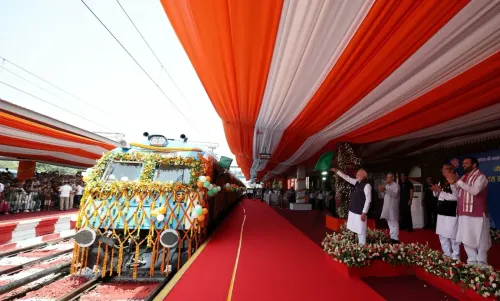
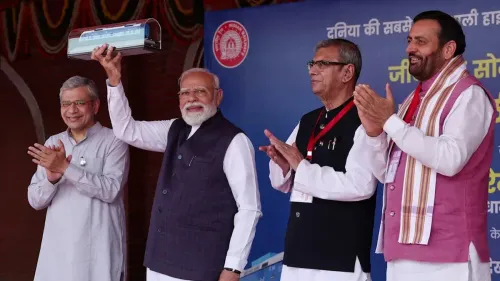
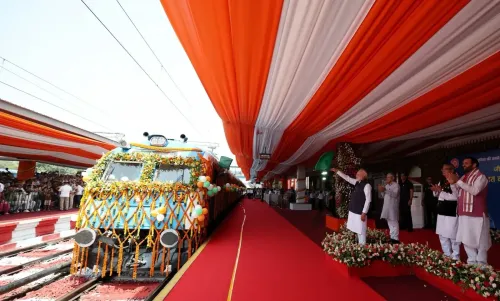
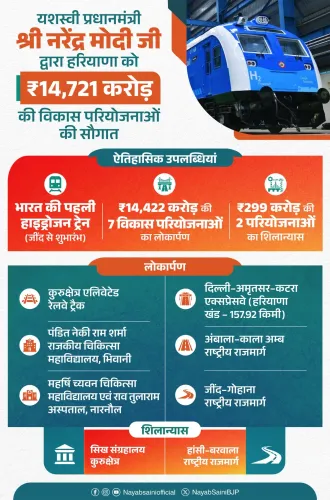
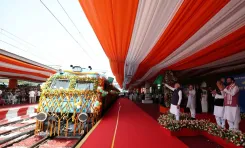
CM Saini Hails India's First Hydrogen Train NaMoGreenRail Launch
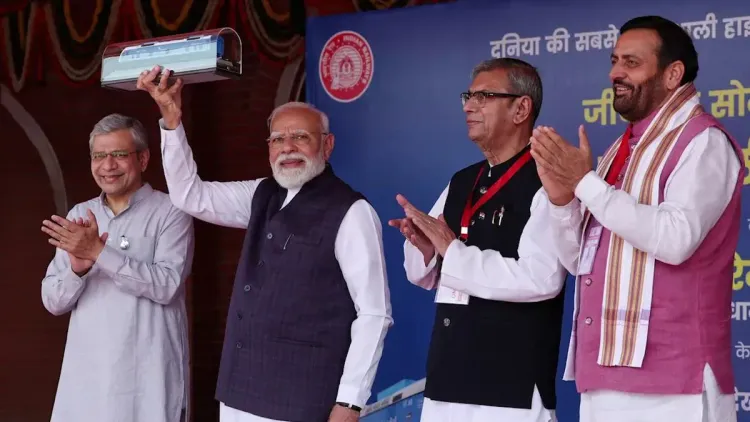
Synopsis
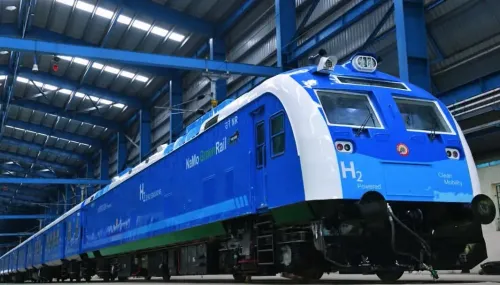
Haryana Chief Minister Nayab Singh Saini welcomed the launch of India's first hydrogen-powered train, NaMoGreenRail, on 17 July 2026, calling it a milestone for indigenous innovation, clean transport, and the Atmanirbhar Bharat mission.
Key Takeaways
Haryana CM Nayab Singh Saini publicly welcomed the launch of India's first hydrogen train on 17 July 2026 .
The train is branded NaMoGreenRail and is associated with a visit or event involving Prime Minister Narendra Modi .
Saini described the launch as the start of a 'green rail revolution' and a symbol of indigenous technological capability.
The project aligns with Indian Railways' net-zero emissions targets and the National Green Hydrogen Mission .
The Atmanirbhar Bharat framework underpins the political and policy narrative around the hydrogen train initiative.
Route-wise rollout and fleet scaling remain the key milestones to watch following the inaugural launch.
Haryana Chief Minister Nayab Singh Saini on Friday, 17 July 2026, welcomed the launch of India's first hydrogen-powered train, describing it as the beginning of a green rail revolution and a symbol of the country's indigenous technological capability. Saini, posting on X, framed the development as a milestone for self-reliant India and clean transportation.
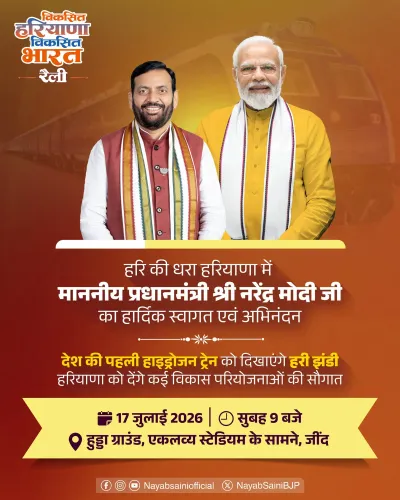
In his post, Saini wrote: 'शक्तिशाली #HydrogenTrain से हरित रेल क्रान्ति की शुरुआत!' ('The beginning of a green rail revolution with the powerful #HydrogenTrain!'), adding that the train, branded #NaMoGreenRail, represents new India's technological strength and homegrown innovation. The hashtag #HaryanaWelcomesModiJi in the post signals the occasion is tied to a visit or event involving Prime Minister Narendra Modi.
Context
The launch of NaMoGreenRail marks a significant step in Indian Railways' long-stated ambition to decarbonise its fleet. Hydrogen fuel-cell trains produce zero direct emissions, with water vapour as the primary exhaust — a sharp contrast to diesel-powered rolling stock that still operates on non-electrified sections of the Indian rail network. The event appears to have drawn senior political participation, with Saini's post indicating Haryana's formal welcome to the Prime Minister for the occasion.
Policy Backdrop
Indian Railways outlined plans to develop and trial hydrogen fuel-cell trains as part of its net-zero emissions commitment, with early signals appearing in 2022-23 Railway Budget discussions. The hydrogen train initiative sits within the broader National Green Hydrogen Mission, which targets the creation of domestic manufacturing capacity for hydrogen technologies across sectors including transport. The Atmanirbhar Bharat policy framework — emphasising indigenous design, manufacturing, and deployment — has been the consistent political and administrative lens through which such launches are presented. Saini's post explicitly invokes this framing, calling the train a symbol of 'स्वदेशी नवाचार' ('indigenous innovation') and stating it will strengthen India's resolve toward self-reliance.
Stakeholders and Impact
Railway passengers on routes where hydrogen trains are eventually deployed stand to benefit from quieter, cleaner journeys, particularly on sections currently served by ageing diesel locomotives. The renewable energy and green hydrogen sector — including electrolyser manufacturers, hydrogen storage firms, and fuel-cell developers — gains a high-visibility demonstration project that could accelerate domestic investment and procurement pipelines. For Haryana specifically, the political optics of hosting or being associated with the launch carry significance for the ruling BJP government ahead of any future electoral cycle.
What's Next
The immediate question following any inaugural run is the timeline for route-wise rollout and fleet scaling. Indian Railways is expected to announce further corridors where hydrogen trains will be deployed, with state-level green hydrogen hubs — flagged in subsequent railway budgets — likely to play a role in fuelling infrastructure. Integration with India's broader green hydrogen production targets will determine whether the NaMoGreenRail remains a flagship demonstration or becomes the foundation of a transformed national fleet. Observers will watch for procurement orders and public-private partnership announcements in the months ahead.
Point of View
Tying a long-gestation railways decarbonisation project to the BJP's Atmanirbhar Bharat narrative ahead of any electoral cycle. CM Saini's enthusiastic endorsement reflects Haryana's positioning as a willing partner in Centre-led flagship initiatives, a pattern consistent with BJP-governed states amplifying Delhi's policy announcements for local political dividend. The hydrogen train fits into a broader arc where India has moved from announcing green mobility targets to delivering visible, inauguration-ready demonstrations — a shift from aspiration to optics-driven execution. Whether the project translates into meaningful fleet expansion or remains a high-profile pilot will be the true measure of its policy significance.
NationPress
17 Jul 2026
Frequently Asked Questions
What is India's first hydrogen train NaMoGreenRail?
NaMoGreenRail is the branding given to India's first hydrogen-powered train, launched in July 2026 as part of Indian Railways' push toward zero-emission transport and the National Green Hydrogen Mission.
What did Haryana CM Nayab Singh Saini say about the hydrogen train?
CM Saini called the NaMoGreenRail launch the beginning of a green rail revolution, describing it as a symbol of India's indigenous technological strength and a step forward for the Atmanirbhar Bharat mission.
How does the hydrogen train fit into India's green energy plans?
The hydrogen train aligns with the National Green Hydrogen Mission, which aims to build domestic manufacturing capacity for hydrogen technologies, and with Indian Railways' commitment to achieving net-zero carbon emissions.
What is Atmanirbhar Bharat and how does it relate to the hydrogen train?
Atmanirbhar Bharat is the government's policy promoting self-reliance and indigenous manufacturing. The NaMoGreenRail is presented as a product of this policy, built on homegrown innovation in fuel-cell and green transport technology.
Which routes will India's hydrogen train operate on?
Specific route-wise deployment details are yet to be announced. Indian Railways is expected to expand the hydrogen train network in phases, with state-level green hydrogen hubs likely to support fuelling infrastructure.