PM Modi Flags Off Hydrogen Train From Haryana's Jind
Synopsis
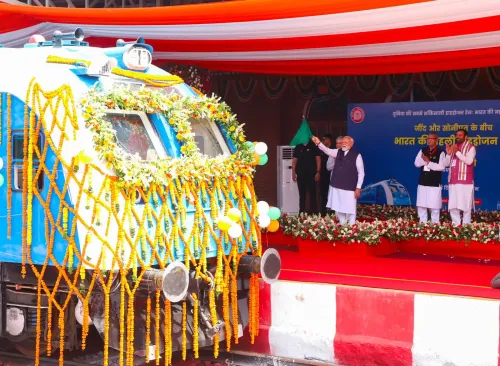
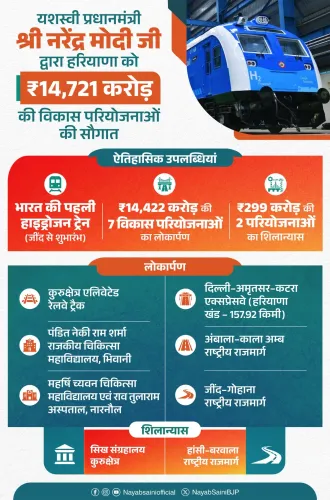
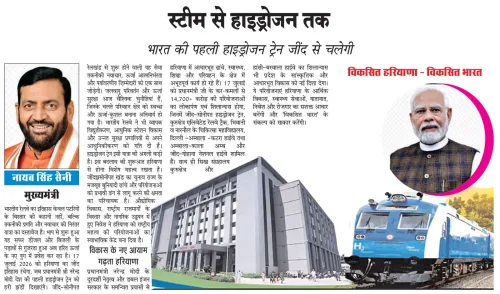
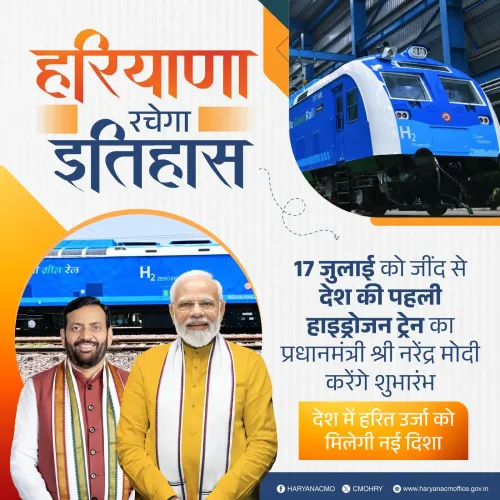
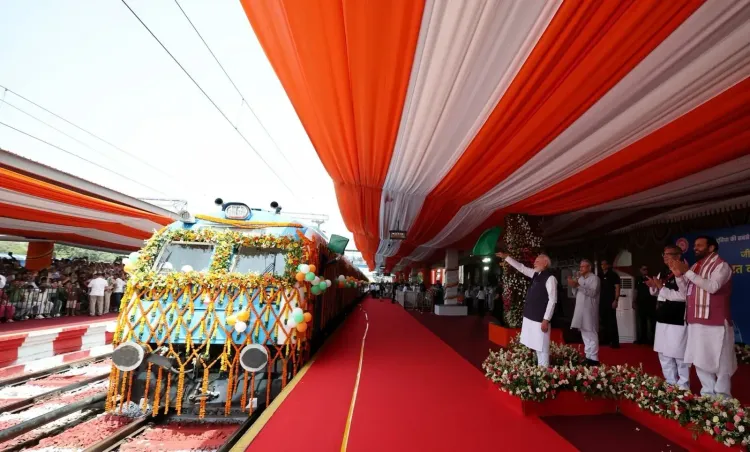
Prime Minister Narendra Modi flagged off India's first hydrogen train from Jind, Haryana on 17 July 2026, with Chief Minister Nayab Saini in attendance. The launch is positioned as a milestone for India's green rail revolution, Atmanirbhar Bharat, and the National Green Hydrogen Mission.
Key Takeaways
PM Narendra Modi flagged off the hydrogen train from Jind, Haryana on 17 July 2026 .
Haryana CM Nayab Saini was present at the inauguration ceremony.
The launch is framed as the start of India's 'green rail revolution' under the Atmanirbhar Bharat and Viksit Bharat goals.
Indian Railways has a net-zero emissions target by 2030 , with hydrogen trains as a key pilot technology.
The National Green Hydrogen Mission (launched 2023 ) provides the policy foundation for this initiative.
India joins Europe and Japan in running hydrogen rail pilots as part of a global clean transport shift.
The Chief Minister's Office of Haryana announced on Friday, 17 July 2026 that Prime Minister Narendra Modi flagged off what is being described as the world's longest and most powerful Hydrogen Train from Jind, Haryana, marking what the government called a historic launch of India's 'green rail revolution.' Haryana Chief Minister Nayab Saini was present at the ceremony alongside the Prime Minister.
Context
The Chief Minister's Office shared the announcement in Hindi, stating that 'प्रधानमंत्री श्री नरेंद्र मोदी जी ने जींद से दुनिया की सबसे लंबी एवं सबसे शक्तिशाली हाइड्रोजन ट्रेन को हरी झंडी दिखाकर भारत की हरित रेल क्रांति का ऐतिहासिक शुभारंभ किया' — ('Prime Minister Narendra Modi flagged off the world's longest and most powerful Hydrogen Train from Jind, making a historic start to India's green rail revolution'). The post further described the milestone as one that 'will give new momentum to the resolve of Atmanirbhar Bharat, clean energy, and Viksit Bharat.'
Policy Backdrop
Indian Railways has been pursuing decarbonisation through hydrogen-based propulsion as part of its broader net-zero emissions target by 2030. The National Green Hydrogen Mission, launched in 2023, set the policy foundation for scaling domestic production and deployment of green hydrogen across transport and industry. Under the Hydrogen for Heritage programme, Indian Railways has been piloting hydrogen trains on select routes, positioning the technology as central to a low-emission future for the network. Railways, as one of India's largest diesel consumers, has identified hydrogen fuel-cell technology as a key lever to cut operational emissions while supporting domestic manufacturing.
Stakeholders and Impact
The inauguration at Jind carries significance for the renewable energy sector, which stands to benefit from sustained government demand for green hydrogen as a transport fuel. Railway passengers on routes where hydrogen trains are deployed can expect lower-emission travel without changes to the passenger experience. The event also reinforces Haryana's role as a host for flagship national infrastructure launches, with Chief Minister Nayab Saini visibly associating the state government with the milestone. India's hydrogen rail push parallels similar pilot programmes underway in Europe and Japan, placing the country in a competitive global conversation on clean transport technology.
What's Next
Attention will now shift to performance data emerging from the initial operational routes of the hydrogen train, which will inform decisions on series production of hydrogen rakes. Upcoming railway budgets and tenders will be closely watched for follow-on orders that could signal whether the technology transitions from pilot to mainstream deployment. The success of this launch is also likely to shape India's commitments under its 2070 net-zero pledge, where green hydrogen in transport is a critical pillar.
Point of View
It reinforces the 'Viksit Bharat' narrative by linking rail modernisation to self-reliance and climate commitments simultaneously. The choice of hydrogen — rather than battery electric, which dominates global rail electrification — signals India's intent to build a domestic green hydrogen economy with railways as an anchor demand source. Whether the pilot scales into a procurement programme will be the real test of the policy's depth.
NationPress
17 Jul 2026
Frequently Asked Questions
Where was India's hydrogen train flagged off?
India's hydrogen train was flagged off from Jind , a district in Haryana , by Prime Minister Narendra Modi on 17 July 2026 .
What is India's hydrogen train and how does it work?
India's hydrogen train is a fuel-cell-powered rail vehicle that uses hydrogen as its energy source, producing water vapour instead of carbon emissions. It is part of Indian Railways' decarbonisation push under the National Green Hydrogen Mission .
What is the Hydrogen for Heritage programme?
Hydrogen for Heritage is an Indian Railways initiative to introduce hydrogen-powered trains on select routes, initially targeting heritage and tourism corridors, as a low-emission alternative to diesel traction.
What is India's green hydrogen mission?
The National Green Hydrogen Mission , launched in 2023 , aims to scale domestic production and use of green hydrogen across sectors including transport and industry, supporting India's 2070 net-zero climate target.
Who is Nayab Saini and why was he at the hydrogen train launch?
Nayab Saini is the Chief Minister of Haryana . He attended the inauguration at Jind because the launch took place in his state, and the event carries significance for Haryana's profile in national infrastructure projects.