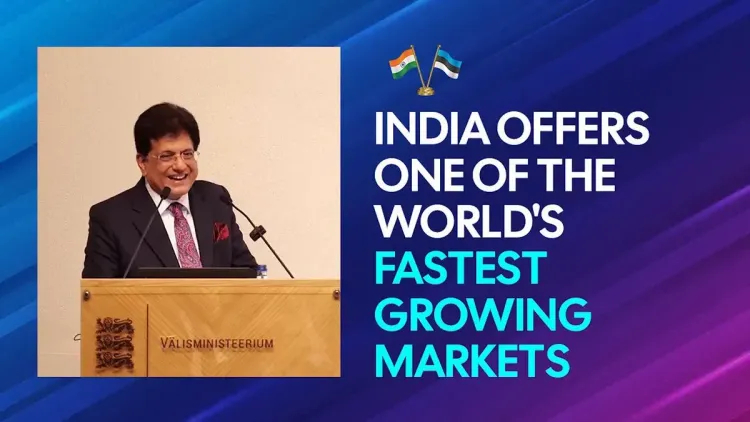
Goyal pitches India as world's fastest-growing market
Synopsis
Union Commerce Minister Piyush Goyal declared on 17 July 2026 that India is one of the world's fastest-growing markets for businesses, reinforcing three decades of FDI liberalisation and ongoing trade negotiations with key global partners.
Key Takeaways
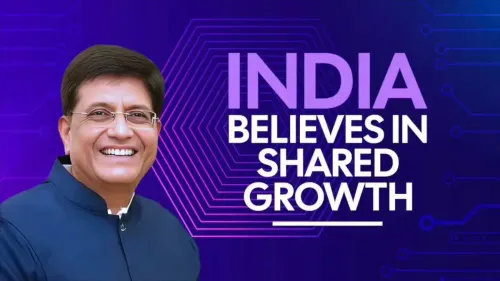
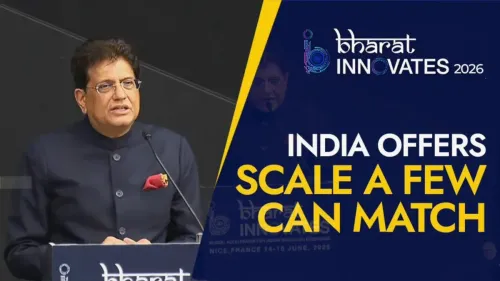
Piyush Goyal , Union Minister of Commerce and Industry, posted on 17 July 2026 that India offers one of the fastest-growing markets in the world for businesses.
India is currently the fifth-largest economy by nominal GDP, with growth rates above most G20 peers.
The Make in India programme (2014) and Production Linked Incentive scheme (2020) form the policy backbone of India's investment pitch across 25-plus sectors .
The 1991 liberalisation and successive FDI policy revisions have progressively opened most sectors to automatic foreign investment approval.
Ongoing negotiations on the India-EU Broad-based Trade and Investment Agreement and upcoming DPIIT FDI data will test how the pitch translates into capital flows.
MSME exporters , Indian manufacturers and foreign investors are the primary stakeholders positioned to gain from continued market-growth momentum.
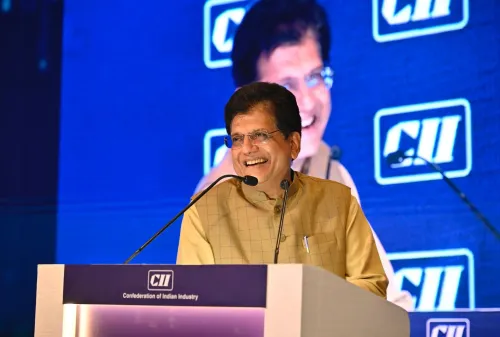
Union Commerce and Industry Minister Piyush Goyal on Friday, 17 July 2026 took to X to make a pointed pitch to global businesses, asserting that India offers one of the fastest-growing markets in the world. The statement, brief but deliberate, comes at a time when New Delhi is actively courting foreign investment and deepening trade negotiations with key partners.
Context
In his post, Goyal stated plainly: 'India offers one of the fastest-growing markets in the world for businesses.' The message is directed squarely at foreign investors and multinational corporations weighing their next major market entry or expansion. As the minister responsible for trade policy and industrial development, Goyal has consistently used public platforms to amplify India's economic credentials to a global audience.
India is currently the fifth-largest economy by nominal GDP and has recorded annual growth rates that outpace most G20 peers in recent years. The Commerce Ministry's messaging reinforces a long-standing government posture: that India is not merely a consumption market but an alternative or complementary production and investment base, particularly as global supply chains undergo realignment.
Policy Backdrop
India's pitch to global business rests on more than three decades of incremental reform. The landmark 1991 economic liberalisation dismantled the Licence Raj, ended industrial licensing across most sectors and opened the door to foreign direct investment. Successive governments have since widened automatic FDI approval routes, raised sectoral caps in areas such as single-brand retail, aviation and insurance, and cut the corporate tax rate to make India more competitive.
The Make in India programme, launched in 2014, set out to raise manufacturing's share of GDP and establish the country as a global production hub across 25 sectors. It was followed by the Production Linked Incentive (PLI) scheme in 2020, which offers direct financial incentives to domestic and foreign firms in electronics, pharmaceuticals and other priority sectors. The introduction of the Goods and Services Tax (GST) in 2017 unified multiple central and state levies into a single national market, reducing compliance complexity for businesses operating across state lines.
The Department for Promotion of Industry and Internal Trade (DPIIT) has periodically revised FDI norms, and ongoing negotiations — including the India-EU Broad-based Trade and Investment Agreement — signal continued momentum in opening new corridors for commerce.
Stakeholders and Impact
The minister's message is aimed primarily at foreign investors and multinationals, but its implications extend across the domestic economy. Indian manufacturers and MSME exporters stand to benefit from increased foreign partnerships, technology transfers and expanded export demand that typically accompany higher FDI inflows. A growing market also creates downstream opportunities in logistics, financial services and digital infrastructure.
For global businesses, India's large and youthful consumer base, improving digital public infrastructure and expanding middle class represent a compelling long-term demand story. The government's sustained reform narrative — backed by policy instruments like PLI incentives and streamlined approvals — is designed to convert that story into binding investment commitments.
What's Next
Attention will now turn to the DPIIT's forthcoming quarterly FDI statistics, which will provide a data-backed measure of whether investor sentiment is translating into actual capital flows. Progress on the India-EU trade agreement and other bilateral negotiations will be closely tracked as indicators of how effectively India's market-growth pitch is landing with institutional partners. Goyal's continued public advocacy suggests the Commerce Ministry intends to keep India's investment narrative front and centre in global economic conversations.
Point of View
Arriving as India pursues multiple bilateral trade agreements and competes with other emerging markets for supply-chain diversification investment. It fits a well-established Commerce Ministry pattern of using ministerial social-media presence as a soft-diplomacy tool to keep India's economic narrative alive in international business circles. The brevity of the statement is itself a choice — a confident, assertion-style pitch rather than a data-heavy brief — reflecting the government's view that India's growth story is now established enough to sell in a single sentence. Analysts will watch whether the rhetoric is backed by the next DPIIT FDI report and tangible progress on the India-EU trade deal.
NationPress
17 Jul 2026
Frequently Asked Questions
Why is Piyush Goyal calling India one of the fastest-growing markets?
As Union Minister of Commerce and Industry, Piyush Goyal regularly promotes India's economic credentials to attract foreign investment. His 17 July 2026 post reiterates a long-standing government position backed by India's status as the fifth-largest economy and sustained high GDP growth rates.
What policies support India's claim as a fast-growing market for businesses?
Key policies include the Make in India programme launched in 2014 , the Production Linked Incentive (PLI) scheme introduced in 2020 , and the GST unified tax framework from 2017 . Successive FDI liberalisation measures since 1991 have also opened most sectors to automatic foreign investment approval.
What is the Make in India scheme?
Make in India is a central government initiative launched in 2014 to attract domestic and foreign investment and position India as a global manufacturing hub across 25 sectors , aiming to raise manufacturing's share of GDP.
How does India rank among the world's largest economies?
India is currently the fifth-largest economy by nominal GDP and has consistently recorded annual growth rates above most G20 peers, making it one of the most closely watched emerging markets for global investors.
What trade deals is India currently negotiating?
India is engaged in negotiations on the India-EU Broad-based Trade and Investment Agreement , among other bilateral deals. Progress on these agreements is seen as a key test of whether India's market-growth pitch translates into binding trade and investment commitments.