CM Gujarat Backs Amrit Bharat Station Scheme as Rail Overhaul

Synopsis
The Chief Minister's Office of Gujarat on 17 July 2026 promoted the Amrit Bharat Station Yojana, framing the world's largest station redevelopment scheme as a national campaign to fast-track the Viksit Bharat @ 2047 vision under PM Modi's leadership.
Key Takeaways
The Chief Minister's Office of Gujarat posted on 17 July 2026 amplifying the Amrit Bharat Station Yojana .
The scheme is described as the world's largest station redevelopment programme , launched in February 2023 with 508 stations initially selected.
The post frames station upgrades as a fast-track pillar of the Viksit Bharat @ 2047 national vision.
The programme aims to convert railway stations into modern multimodal hubs with upgraded passenger amenities.
Gujarat's state government signalled continued alignment with PM Modi 's central infrastructure agenda.
Railway passengers and urban local bodies near major junctions are the primary stakeholders.
The Chief Minister's Office of Gujarat on Friday, 17 July 2026 highlighted the Amrit Bharat Station Yojana, describing it as a reflection of the world-class transformation underway in Indian Railways under the leadership of Prime Minister Narendra Modi. The post called the scheme not merely a station-renovation initiative but a national campaign for fast-tracking the 'Viksit Bharat @ 2047' vision.
Context
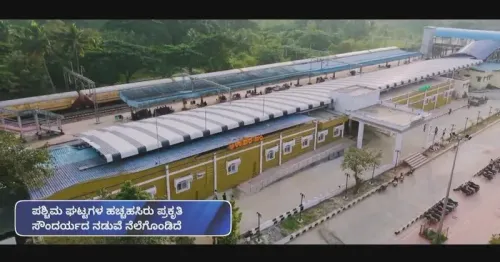
The Gujarati-language post from the Chief Minister's Office of Gujarat describes the Amrit Bharat Station Yojana as 'વિશ્વની સૌથી મોટી સ્ટેશન રીડેવલપમેન્ટ સ્કિમ' — 'the world's largest station redevelopment scheme'. It frames the programme as a 'national campaign for the fast-track construction of Viksit Bharat @ 2047', linking physical infrastructure directly to India's long-term development target. The post was accompanied by a video, underscoring the state government's effort to amplify the Union government's infrastructure messaging.
Policy Backdrop
The Amrit Bharat Station Yojana was launched in February 2023 with an initial list of 508 stations selected for comprehensive redevelopment into modern, multimodal hubs equipped with upgraded passenger amenities. The scheme sits within a broader infrastructure push that includes the PM Gati Shakti master plan and dedicated freight corridors, all initiated after 2014. Successive Union budgets have progressively increased allocations for station upgrades as part of a nationwide modernisation drive, with the programme widely described by the government as the largest of its kind globally.
The overarching Viksit Bharat @ 2047 vision — a government-articulated target to attain developed-economy status by India's centenary of independence — provides the ideological scaffolding for these infrastructure investments. Station redevelopment is presented in official communications as one of the visible, citizen-facing pillars of that ambition.
Stakeholders and Impact
Railway passengers across the country stand as the most direct beneficiaries of the scheme, with redeveloped stations expected to offer improved waiting areas, better accessibility, and seamless connectivity with local transport networks. Urban local bodies adjacent to major railway stations are also stakeholders, as station upgrades often catalyse commercial and real estate activity in surrounding areas. For Gujarat, a state with several high-traffic railway junctions, the amplification of this scheme by the Chief Minister's Office signals continued alignment between state and central infrastructure priorities.
What's Next
State-wise progress reports on station completion timelines and integration with multimodal transport plans are expected to feature in upcoming railway budget statements and policy reviews. The Chief Minister's Office of Gujarat's active promotion of the scheme suggests the state may highlight its own station redevelopment milestones in the near term. Observers will watch for announcements linking specific Gujarat stations to the broader national programme as the 2047 deadline for the Viksit Bharat vision draws political attention.
Point of View
The post elevates a routine scheme update into a nation-building motif, reinforcing the government's preferred framing ahead of budget cycles. The choice of Gujarati-language content also signals a deliberate outreach to the home-state audience of the Prime Minister. Sustained promotion of Amrit Bharat Yojana across state channels suggests the Centre is building a broad coalition of state-level validators for its railway modernisation story.
NationPress
16 Oct 2026
Frequently Asked Questions
What is the Amrit Bharat Station Yojana?
The Amrit Bharat Station Yojana is a central government scheme launched in February 2023 to comprehensively redevelop Indian railway stations into modern multimodal hubs. An initial list of 508 stations was selected for upgrades covering passenger amenities, accessibility, and connectivity.
Why is it called the world's largest station redevelopment scheme?
The government describes the Amrit Bharat Station Yojana as the world's largest station redevelopment scheme because it targets hundreds of stations simultaneously across India's vast railway network, a scale not matched by any comparable programme globally.
What is Viksit Bharat @ 2047?
Viksit Bharat @ 2047 is the Indian government's national vision to achieve developed-economy status by 2047, the centenary of India's independence. Infrastructure modernisation, including railway upgrades, is a key pillar of this goal.
What did the Gujarat CMO post about Indian Railways?
On 17 July 2026, the Chief Minister's Office of Gujarat posted in Gujarati highlighting the Amrit Bharat Station Yojana, calling it a reflection of world-class transformation in Indian Railways under PM Modi and a national campaign for fast-tracking Viksit Bharat @ 2047.
Which stations in Gujarat are covered under Amrit Bharat Station Yojana?
Specific Gujarat stations and their completion timelines under the Amrit Bharat Station Yojana have not been officially confirmed in the latest available information. State-wise progress details are expected to emerge in upcoming railway budget and policy announcements.