CM Dhami Orders 24/7 Alert Mode for Monsoon, Char Dham Safety
Synopsis
Chief Minister Pushkar Singh Dhami on 17 July 2026 chaired a state-wide review of monsoon preparedness, Char Dham Yatra safety, and dengue prevention, ordering officials across all districts to remain on 24-hour alert and report every critical incident to the CMO without delay.
Key Takeaways
CM Pushkar Singh Dhami chaired a state-wide monsoon and disaster preparedness review at his Dehradun residence on 17 July 2026 .
Officials were directed to maintain 24-hour alert mode throughout the monsoon season with zero tolerance for negligence or delay in relief operations.
All district magistrates must immediately relay every critical incident to the Chief Minister's Office and the State Disaster Control Room .
The review covered heavy rainfall, Char Dham Yatra safety, dengue prevention , and overall disaster management across all 13 districts .
Cabinet ministers Madan Kaushik and Satpal Maharaj , senior secretaries, and the Dehradun DM attended in person; all district-level officials joined virtually.
Officials were explicitly told to conduct ground-zero inspections rather than limiting themselves to meetings and desk-based reporting.
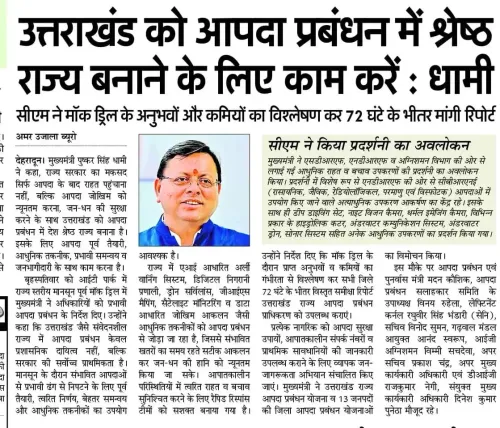
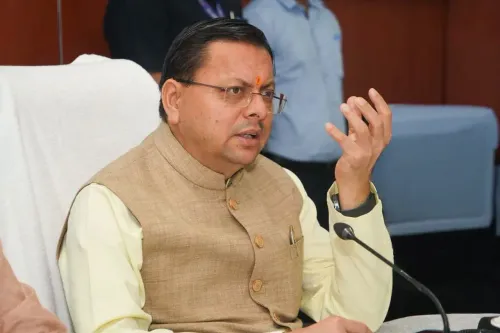
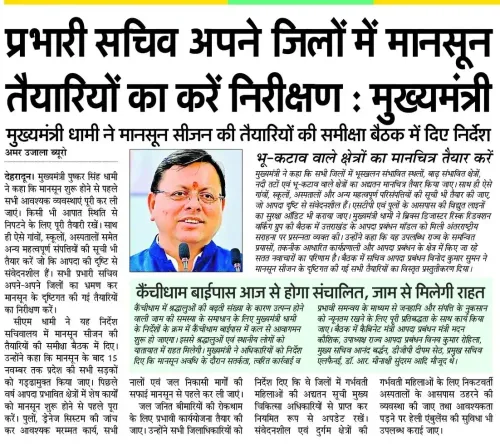
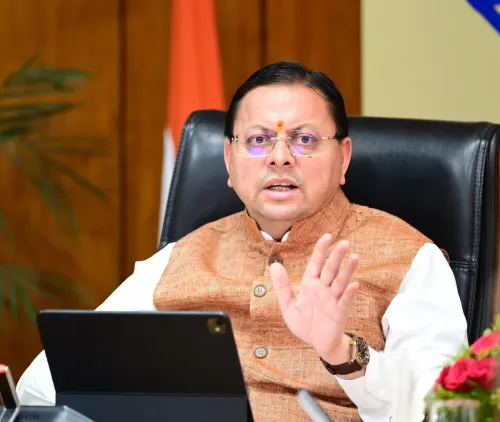
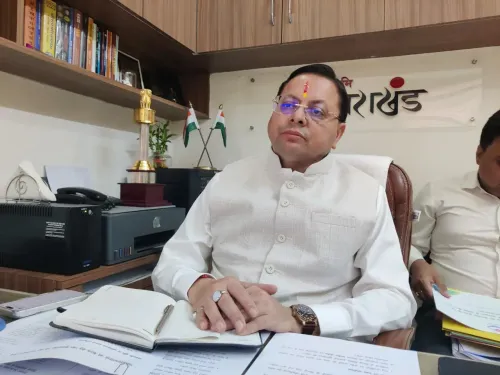
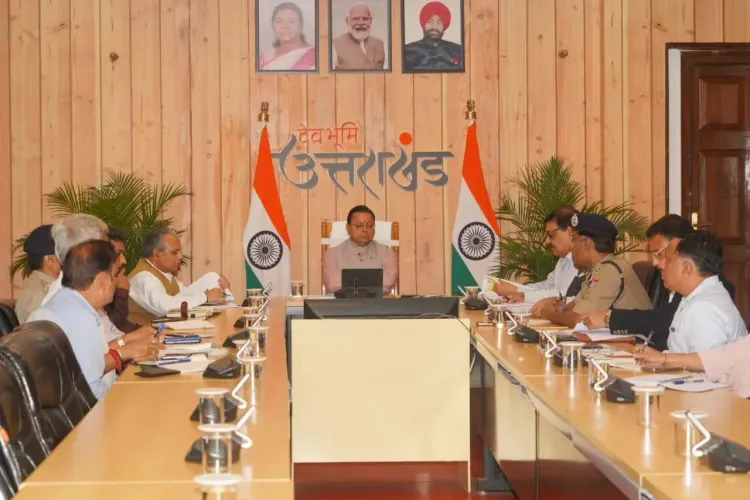
Chief Minister Pushkar Singh Dhami chaired a comprehensive review meeting at the Chief Minister's residence in Dehradun on Friday, 17 July 2026, directing officials across all districts of Uttarakhand to treat public safety as the highest priority during the monsoon season, with zero tolerance for negligence or delay in disaster response.
Context
The meeting covered a wide range of monsoon-season concerns: heavy rainfall (ativrishti), the ongoing Char Dham Yatra, dengue prevention, and overall disaster management preparedness across all districts of the state. CM Dhami was unambiguous in his instruction, stating — as the official post records — that 'janta ki suraksha sarvoch prathamikta hai' ('public safety is the supreme priority') and that negligence, laxity, or indifference at any level would not be accepted under any circumstances.
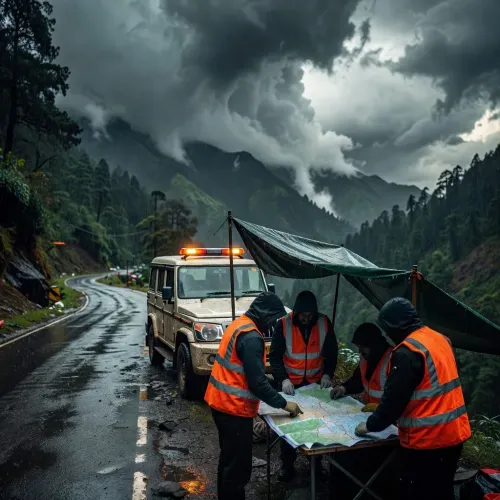
He further directed that officials must not confine themselves to meetings but must personally reach ground zero to inspect arrangements and maintain continuous monitoring of every situation. Every officer, he said, must remain in 24-hour alert mode throughout the monsoon period.
Policy Backdrop
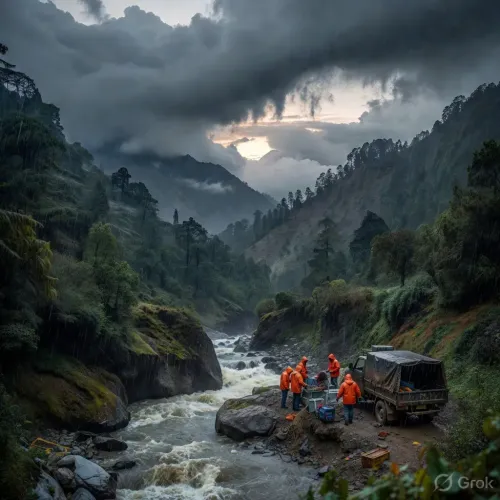
Uttarakhand's Himalayan geography makes it one of India's most disaster-vulnerable states during the June–September monsoon window. Landslides, flash floods, and waterborne disease outbreaks routinely affect hill districts and disrupt the Char Dham Yatra route, which draws millions of pilgrims annually to the shrines of Yamunotri, Gangotri, Kedarnath, and Badrinath.
Following the catastrophic 2013 Kedarnath floods, the state institutionalised real-time reporting protocols and round-the-clock control rooms at both state and district levels. Since 2015, annual pre-monsoon review meetings have required district magistrates to conduct ground-level inspections and escalate critical information immediately to the Chief Minister's Office. The 17 July 2026 meeting is a continuation of this institutionalised framework.
Officials and Directives
The meeting was attended in person by Cabinet Minister Madan Kaushik, Cabinet Minister Satpal Maharaj, Vinay Kumar Rohilla (Vice-Chairman, State Disaster Management Advisory Committee), secretaries Vinod Kumar Suman and Vinay Shankar Pandey, Dehradun District Magistrate Ashish Chauhan, the Senior Superintendent of Police Dehradun, Additional Secretary Banshidhar Tiwari, and Vineet Kumar, along with senior officials from multiple departments.
Via virtual mode, all district magistrates, superintendents of police, and officers from the departments of disaster management, health, public works, electricity, drinking water, urban local bodies, and other related agencies joined the review. CM Dhami directed all district magistrates to immediately relay information on every significant incident to the Chief Minister's Office and the State Disaster Control Room, and to ensure no slackness in relief and rehabilitation operations.
What's Next
With the monsoon season running through September 2026, the state disaster control room will be the nerve centre for real-time incident tracking across Uttarakhand's 13 districts. The emphasis on dengue prevention alongside flood preparedness signals a dual public-health and disaster-management challenge that authorities will need to manage concurrently. Daily rainfall and incident reports from district administrations will test whether the CM's directive for zero administrative delay translates into measurable outcomes on the ground, particularly along the Char Dham Yatra corridor where pilgrim safety remains a national concern.
Point of View
The CM is attempting to break a well-documented bureaucratic tendency to report upward rather than act. The simultaneous focus on Char Dham Yatra safety and dengue prevention reflects the dual pressure of managing a high-profile pilgrimage economy alongside a recurring seasonal health threat. Whether the directive produces measurable outcomes will depend on follow-through mechanisms — a gap that has historically undermined similar pre-monsoon directives in hill states.
NationPress
16 Oct 2026
Frequently Asked Questions
What did CM Dhami say at the monsoon review meeting on 17 July 2026?
CM Pushkar Singh Dhami directed all district officials to treat public safety as the supreme priority, remain on 24-hour alert throughout the monsoon, conduct ground-level inspections personally, and report every significant incident immediately to the Chief Minister's Office and the State Disaster Control Room.
Which departments attended the Uttarakhand disaster management review?
The review included officials from disaster management, health, public works, electricity, drinking water, and urban local bodies, along with all district magistrates and superintendents of police, who joined virtually. Cabinet ministers Madan Kaushik and Satpal Maharaj attended in person.
Why is monsoon preparedness critical for Uttarakhand?
Uttarakhand's Himalayan terrain makes it highly vulnerable to landslides, flash floods, and waterborne diseases during the June–September monsoon, which also coincides with the Char Dham Yatra pilgrimage season that draws millions of visitors to the state.
What is the Char Dham Yatra and why does it need disaster management?
The Char Dham Yatra is an annual Hindu pilgrimage to four sacred shrines — Yamunotri, Gangotri, Kedarnath, and Badrinath — in Uttarakhand. The monsoon season brings landslides and road closures that can strand pilgrims, making coordinated disaster response essential.
What action did CM Dhami take on dengue prevention in Uttarakhand?
The 17 July 2026 review meeting included dengue prevention as a specific agenda item alongside flood and disaster preparedness, indicating the state government is treating the mosquito-borne disease as a concurrent monsoon-season public health priority.