CM Dhami Reviews Char Dham Yatra Safety Ahead of Monsoon Phase
Synopsis
Chief Minister Pushkar Singh Dhami on 2 June 2026 chaired a high-level review of Char Dham Yatra arrangements, ordering detailed SOPs, strict night-time vehicle bans, phased crowd control at holding areas, real-time pilgrim communication via FM and social media, and pre-positioned emergency equipment ahead of the monsoon phase.
Key Takeaways
CM Pushkar Singh Dhami held a high-level Char Dham Yatra review at the Uttarakhand Secretariat on 2 June 2026 .
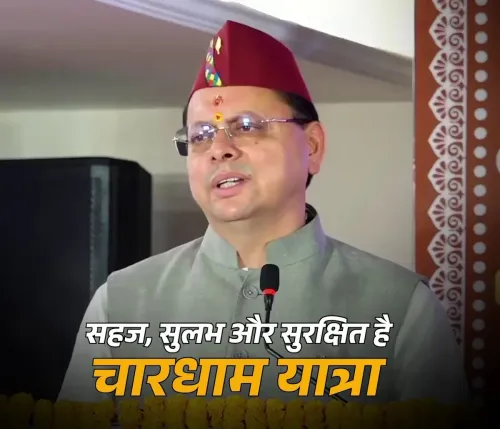
The guiding mantra set for yatra management is 'safe pilgrimage, smooth darshan and continuous communication.' Vehicular movement on Char Dham routes is banned between 10 pm and 4 am ; heavy vehicles are restricted to night hours only.
Detailed SOPs are to be prepared for each shrine based on pilgrim footfall; phased crowd control to be activated at holding areas and checkpoints.
Real-time updates on delays, weather and road conditions to be broadcast via LED displays, WhatsApp channels, FM radio and social media.
A state-level nodal officer for heli-ambulance services is to be appointed; JCBs, satellite phones and ambulances to be pre-positioned at sensitive sites.
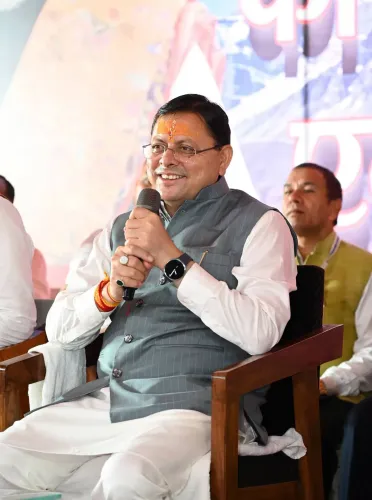
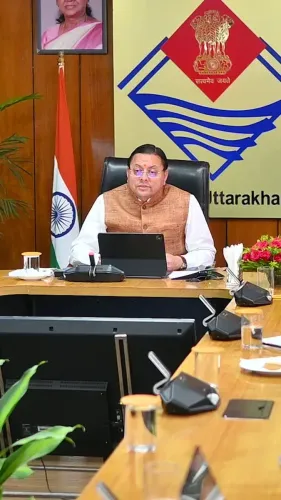
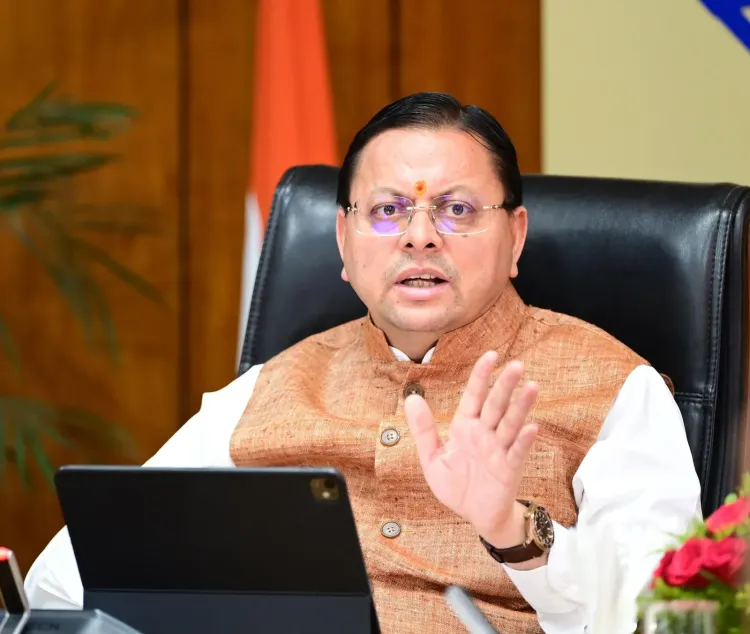
The Chief Minister's Office of Uttarakhand announced on Tuesday, 2 June 2026 that Chief Minister Pushkar Singh Dhami chaired a high-level review meeting at the Secretariat to assess arrangements for the ongoing Char Dham Yatra, directing officials to adopt the guiding principle of 'surakshit yatra, sugam darshan aur satat samvad' — 'safe pilgrimage, smooth darshan and continuous communication'.
Context
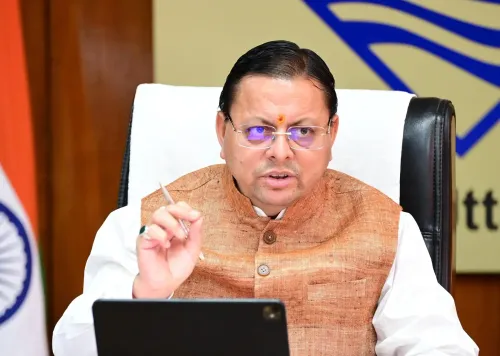
Speaking at the meeting, CM Dhami declared that the safety of pilgrims is the state government's 'topmost priority.' He instructed officials to prepare a detailed Standard Operating Procedure (SOP) calibrated to the footfall at each of the four shrines — Badrinath, Kedarnath, Gangotri and Yamunotri — to make darshan arrangements more systematic. The CM stressed that better coordination, effective communication and well-organised management can make the yatra safer and more successful.
He ordered strict enforcement of the existing ban on vehicular movement on Char Dham routes between 10 pm and 4 am. Trucks and heavy vehicles engaged in essential services are to be permitted only during night hours, with their movement restricted during the day to ease congestion on mountain roads.
Policy Backdrop
The review comes as the yatra moves into what the CM described as its 'second and more challenging phase,' with the monsoon season bringing adverse weather, landslides and unpredictable road conditions. Uttarakhand has reinforced multi-departmental coordination for the Char Dham Yatra since the catastrophic 2013 Kedarnath floods, which killed thousands of pilgrims and reshaped the state's approach to pilgrimage safety. Night-time vehicle restrictions and capacity-based crowd control have been recurring administrative tools in subsequent yatra seasons.
The CM directed that wherever pilgrims are held back due to overcrowding, holding areas and major checkpoints below each shrine must be activated in a phased manner. Crucially, he specified that pilgrims must not merely be stopped — they must be regularly informed of the reason for the delay, the estimated waiting period and onward arrangements, so that confusion and dissatisfaction do not arise.
Stakeholder Impact
For the millions of devotees who undertake the yatra each year, the directives translate into a more structured experience: public address systems, LED displays, WhatsApp channels, social media platforms and FM radio are to broadcast continuous real-time updates on route blockages, weather changes, traffic jams and delays in darshan. All police, administration and yatra-management personnel have been instructed to behave in a 'sensitive, courteous and cooperative' manner towards pilgrims.
Holding areas and stoppage points must be equipped with parking, food, drinking water, toilets and other basic amenities. Hotels, restaurants and dhabas along yatra routes have been directed to mandatorily display rate lists, and food samples are to be tested regularly for quality. The CM also directed that JCB machines, Poklain excavators, satellite phones, ambulances and relief-and-rescue equipment be pre-positioned at sensitive locations.
What's Next
The Garhwal Mandal Commissioner and the Inspector General of Police, Garhwal have been tasked with conducting regular reviews of all yatra arrangements and resolving the grievances of pilgrims and local residents promptly. District Magistrates and Superintendents of Police of all Char Dham districts are to ensure continuous monitoring and effective management. The CM further directed the appointment of a state-level nodal officer for heli-ambulance services, enabling District Magistrates to coordinate emergency medical evacuations to higher-care hospitals without delay. Officials have been asked to conduct daily reviews of pilgrim feedback, complaints and suggestions and take immediate corrective action — a measure that signals the government's intent to shift from reactive to real-time governance of the pilgrimage as the monsoon intensifies.
Point of View
Communication-first pilgrimage governance. By mandating daily feedback loops and real-time public information systems, the Dhami administration is signalling that crowd management is no longer solely a policing function but a service-delivery challenge. The directive to appoint a heli-ambulance nodal officer is a notable operational upgrade, closing a coordination gap that has historically delayed emergency evacuations in the high-altitude terrain. Whether these directives translate into on-ground outcomes will depend on enforcement capacity and inter-departmental coordination during the most weather-volatile weeks of the season.
NationPress
16 Oct 2026
Frequently Asked Questions
What is the Char Dham Yatra and when does it take place?
The Char Dham Yatra is an annual Hindu pilgrimage to the four sacred shrines of Badrinath, Kedarnath, Gangotri and Yamunotri in Uttarakhand. It typically begins in late April or May and continues through November, with the monsoon months of June to September being the most challenging period.
What are the new vehicle restrictions on Char Dham routes in 2026?
CM Dhami has ordered strict enforcement of a ban on all vehicular movement on Char Dham routes between 10 pm and 4 am . Heavy vehicles such as trucks are permitted only during night hours; their movement during the day is restricted to reduce congestion.
How will pilgrims get real-time information during the Char Dham Yatra?
The Uttarakhand government has directed that continuous updates on route blockages, weather changes, traffic jams and darshan delays be broadcast through public address systems, LED displays, WhatsApp channels, social media platforms and FM radio , so pilgrims are never left without information.
What happens when a Char Dham shrine reaches its crowd capacity?
When any shrine or stoppage point exceeds its designated capacity, vehicles and pilgrims are to be held at holding areas and checkpoints lower down the route. These holding points must have parking, food, drinking water, toilets and other basic amenities, and pilgrims must be informed of expected waiting times.
What emergency medical arrangements have been ordered for the Char Dham Yatra?
CM Dhami has directed the appointment of a state-level nodal officer for heli-ambulance services to coordinate rapid medical evacuations. JCB machines, Poklain excavators, satellite phones, ambulances and relief-and-rescue equipment are also to be pre-positioned at sensitive locations along the yatra routes.