Assam's Atmanirbhar Asom Abhiyan: 74,694 entrepreneurs in Phase 2
Synopsis
Assam's Atmanirbhar Asom Abhiyan has scaled sharply in its second phase — 74,694 beneficiaries, each already handed ₹75,000, with district-level training running until 31 July. The scheme's field-assessment model between tranches is a structural departure from conventional grant programmes, and its real test is whether seed capital translates into lasting enterprises.
Key Takeaways
The Chief Minister's Atmanirbhar Asom Abhiyan , launched on 23 September 2023 , aims to convert unemployed youth into entrepreneurs through financial aid and mentoring.
Phase 1 reached more than 25,000 general-category beneficiaries and over 200 professionals ; a field assessment by nearly 100 CM Fellows found 12,331 eligible for the next tranche.
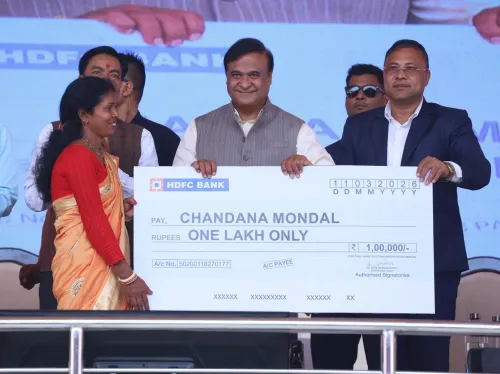
Phase 2 has selected 74,694 beneficiaries — 74,350 general category and 344 professionals — all of whom have received a first instalment of ₹75,000 .
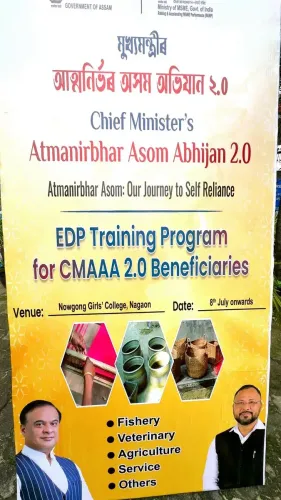
District-level training programmes covering sector-specific skills, accounting, and business management are under way and expected to wrap up by 31 July .
Remaining financial assistance will be disbursed after successful training completion and verification of other formalities.
Assam's flagship self-employment drive, the Chief Minister's Atmanirbhar Asom Abhiyan, has entered a significant new phase, with the state government selecting 74,694 beneficiaries under its second round — all of whom have already received a first instalment of ₹75,000 each. Assam Skill Development, Employment and Entrepreneurship Minister Bimal Borah disclosed the figures while speaking to reporters in Guwahati on Friday, 18 July.
Scheme Background and Design
Launched on 23 September 2023, the Atmanirbhar Asom Abhiyan was conceived to convert unemployed youth into self-sustaining entrepreneurs by pairing financial support with structured skill development and ongoing business mentoring. Minister Borah described the scheme as the state government's long-term strategy to foster self-employment and generate durable livelihood opportunities across Assam.
Phase 1: Reach and Field Assessment
In the first phase, financial assistance was extended to more than 25,000 beneficiaries from the general category, along with more than 200 professionals — including doctors, engineers, pharmacists, chartered accountants, and MBA graduates. Following disbursement, the state deployed nearly 100 Chief Minister's Fellows to conduct an extensive field assessment. The fellows evaluated fund utilisation, tracked enterprise progress, and identified gaps requiring additional mentoring. Based on their findings, 12,331 entrepreneurs were deemed eligible for the next tranche of financial assistance.
Phase 2: Scale and Composition
The second phase marks a sharp scale-up. Of the 74,694 selected beneficiaries, 74,350 belong to the general category while 344 are professionals. All selected participants have already received the initial instalment of ₹75,000, with the remaining financial assistance to follow upon successful completion of training and other prescribed formalities.
District-Level Training in Progress
District-level entrepreneurship development programmes are currently under way across Assam, with training modules tailored to each beneficiary's proposed business activity. Departments including Agriculture and Handloom are delivering sector-specific skills, while all participants are also being trained in accounting, financial discipline, and business management. The training programmes are expected to conclude by 31 July.
What Comes Next
Once training concludes and formalities are cleared, eligible beneficiaries will receive the remaining financial assistance under the scheme. The phased, assessment-driven structure — field evaluation between tranches — distinguishes this initiative from conventional one-time grant programmes and is intended to improve fund utilisation outcomes. How well the second phase converts ₹75,000 seed capital into viable enterprises will be the real test of the scheme's design.
Point of View
331 of the first-phase cohort cleared the bar for a second tranche suggests a meaningful, if not dramatic, attrition rate. The real accountability question is whether the scheme tracks enterprise survival rates beyond disbursement. Scaling to 74,694 in Phase 2 is an impressive headline, but without published data on Phase 1 enterprise viability, it is difficult to assess whether the model is generating durable livelihoods or simply processing transfers.
NationPress
18 Jul 2026
Frequently Asked Questions
What is the Chief Minister's Atmanirbhar Asom Abhiyan?
The Chief Minister's Atmanirbhar Asom Abhiyan is an Assam government scheme launched on 23 September 2023 to transform unemployed youth into entrepreneurs. It provides financial assistance, skill development training, and continuous business mentoring to eligible beneficiaries across the state.
How many beneficiaries are covered under Phase 2 of the scheme?
Phase 2 of the Atmanirbhar Asom Abhiyan covers 74,694 beneficiaries — 74,350 from the general category and 344 professionals. All selected beneficiaries have already received a first instalment of ₹75,000 each.
What happened after Phase 1 disbursements?
After Phase 1 disbursements to more than 25,000 general-category beneficiaries and over 200 professionals, the state government deployed nearly 100 Chief Minister's Fellows to assess fund utilisation and enterprise progress. Based on their evaluation, 12,331 entrepreneurs were found eligible for the next phase of financial assistance.
When will the Phase 2 training programmes end?
District-level entrepreneurship development programmes currently under way across Assam are expected to conclude by 31 July. Remaining financial assistance will be released to eligible beneficiaries after successful training completion and fulfilment of other formalities.
Which departments are involved in the training?
Multiple state departments are involved, including Agriculture and Handloom, which deliver sector-specific skills. All participants are also trained in accounting, financial discipline, and business management as part of the district-level entrepreneurship development programmes.