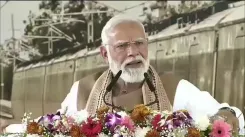
Gujarat CM Bhupendra Patel reforms 75-yr-old Tukda Dhara land law

Synopsis
The Gujarat government, under Chief Minister Bhupendra Patel, has announced landmark amendments to the 75-year-old Tukda Dhara 1947, aiming to simplify land sale and transfer processes for lakhs of farmers, reduce land disputes, and bring greater transparency to agricultural land transactions across the state.
Key Takeaways
The Gujarat government has amended the Tukda Dhara 1947 , a law governing agricultural land fragmentation that has been in force for 75 years .
The reforms are being carried out under the guidance of Chief Minister Bhupendra Patel .
The amendments are expected to benefit lakhs of farmers across Gujarat by easing legal complications in land sales and transfers.
The government says the changes will lead to a significant reduction in land-related disputes in the state.
Land buying, selling, and transfer processes will be made simpler, faster, and more transparent under the revised framework.
The reform is part of Gujarat's broader push for land record digitisation and administrative modernisation.
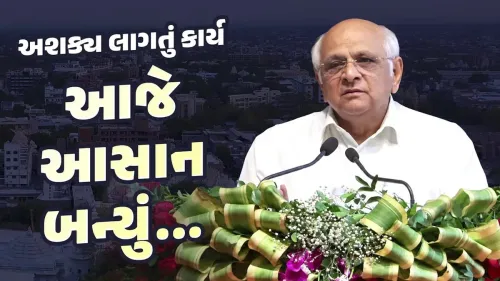
The Chief Minister's Office of Gujarat announced on Friday, 17 July 2026, that the Gujarat government, under the guidance of Chief Minister Bhupendra Patel, has carried out landmark amendments to the Tukda Dhara 1947 — a 75-year-old law governing the fragmentation and consolidation of agricultural land holdings in the state. The reforms are aimed at easing long-standing legal complications for lakhs of farmers across Gujarat in the sale and transfer of their land.
The official post from the Chief Minister's Office stated that the amendments will bring relief to farmers from 'years-old legal entanglements' (વર्षो જૂની કાયદાકીય ગૂંચવણો) in land transactions, reduce land-related disputes significantly, and make the processes of buying, selling, and transferring land 'simpler, faster, and more transparent' (સરળ, ઝડપી અને પારદર્શક).
Context
The Bombay Prevention of Fragmentation and Consolidation of Holdings Act, 1947 — commonly referred to as Tukda Dhara — was originally enacted to prevent the excessive subdivision of agricultural land into uneconomically small parcels. While the law served an important purpose at the time of enactment, its provisions have over decades become a source of complex litigation and procedural delays for farmers seeking to sell or transfer their land. The Gujarat government's move marks one of the most significant overhauls of this legislation since its passage nearly eight decades ago. The Chief Minister's Office described the decision as 'historical' (ઐतिहासिक), framing it as a milestone on the path from 'good governance to prosperity' (સુशासनथी સমૃद्धिની दिशामां).Policy Backdrop
Gujarat is not alone in revisiting mid-20th century land fragmentation statutes. Multiple Indian states have in recent years amended similar legislation to reduce litigation, enable smoother title transfers, and support the consolidation of operational holdings. Gujarat has simultaneously pursued the digitisation of land records and mutation processes as part of a broader administrative modernisation drive. The Tukda Dhara amendments sit within this wider pattern of land-law reform, where state governments have sought to align colonial and early-independence era statutes with contemporary agricultural and economic realities. The reforms are positioned as empowering dhartiputron — 'sons of the soil' — to become more economically capable.Stakeholders and Impact
The primary beneficiaries of the amendments are Gujarat's farming community, particularly those who have faced years of legal hurdles in attempting to sell, subdivide, or transfer agricultural plots. Land-related disputes have historically clogged revenue courts across the state, and the government has indicated that the reforms are expected to bring a 'major reduction' in such disputes. Broader stakeholders include landowners, rural households, and prospective buyers of agricultural land, all of whom stand to benefit from streamlined and more transparent transaction processes. The reform is also expected to have downstream economic effects by unlocking land assets that have remained tied up in legal uncertainty.What's Next
The immediate next step will be the gazette notification of the precise amendments, followed by the rollout of revised mutation and sale procedures through Gujarat's revenue offices. The government has framed the reform as part of its commitment to farmer welfare and inclusive development under CM Bhupendra Patel's leadership. If implementation proceeds smoothly, the amendments could serve as a model for other states still grappling with similarly outdated land fragmentation laws, reinforcing Gujarat's positioning as a governance reform leader within India's federal structure.Point of View
Long seen as obstacles to rural economic mobility, are now squarely in the reform crosshairs. By framing the move as farmer welfare rather than land liberalisation, the ruling party is carefully calibrating its messaging ahead of any future electoral cycle in Gujarat. The reform fits a pan-India pattern of BJP-governed states revisiting mid-century agrarian statutes to reduce state-mediated bottlenecks in land markets. Whether the implementation through revenue offices matches the ambition of the announcement will be the true test of this milestone.
NationPress
16 Oct 2026
Frequently Asked Questions
What is Tukda Dhara 1947 in Gujarat?
Tukda Dhara 1947 refers to the Bombay Prevention of Fragmentation and Consolidation of Holdings Act, 1947, a law that restricts the subdivision of agricultural land into uneconomically small parcels. It has governed farm land transactions in Gujarat for 75 years and has been a source of legal disputes and delays for farmers.
What changes has the Gujarat government made to Tukda Dhara?
The Gujarat government under Chief Minister Bhupendra Patel has announced landmark amendments to Tukda Dhara 1947 aimed at simplifying land sale and transfer processes, reducing land-related disputes, and making transactions faster and more transparent. The exact text of the amendments will be detailed in the official gazette notification.
How will the Tukda Dhara amendment benefit Gujarat farmers?
Lakhs of farmers in Gujarat will get relief from long-standing legal complications in selling or transferring their agricultural land. The amendments are expected to reduce disputes in revenue courts and make the overall process of land transactions simpler and quicker.
Who announced the Tukda Dhara 1947 reform in Gujarat?
The Chief Minister's Office of Gujarat announced the reform on 17 July 2026, attributing the decision to the guidance of Chief Minister Bhupendra Patel.
Is Gujarat the first state to amend land fragmentation laws?
No. Multiple Indian states have in recent years amended similar mid-20th century land fragmentation and ceiling statutes to reduce litigation and enable smoother land transfers. Gujarat's move is part of this broader national trend of modernising agrarian land laws.