Gujarat Establishes Standardized Framework for Resolving Land Survey Discrepancies in Promulgated Villages
Synopsis
The Gujarat government is launching a uniform system to address land measurement errors in promulgated villages, aiming for transparency and efficiency. This initiative, driven by Chief Minister Bhupendra Patel, seeks to protect farmers' interests and streamline the land administration process.
Key Takeaways
Standardized Framework: Gujarat is implementing a uniform system for land survey corrections.
Land Demarcation Committees: Committees will be set up in each district to oversee the process.
Seven Categories: Applications will be classified into seven distinct groups for efficient handling.
Enhanced Local Authority: Local officials are given additional powers to expedite resolutions.
Transparency: The initiative aims to ensure transparency and protect farmers' interests.
Gandhinagar, March 11 (NationPress) The government of Gujarat is set to implement a standardized and systematic framework throughout the state to address outstanding applications concerning inaccuracies in land measurements within promulgated villages.
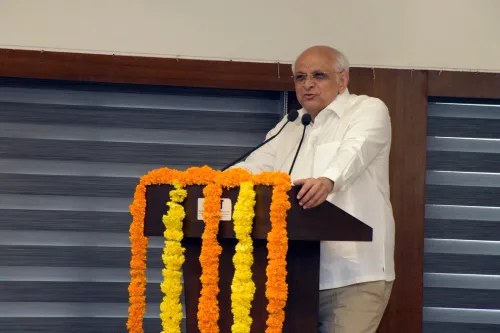
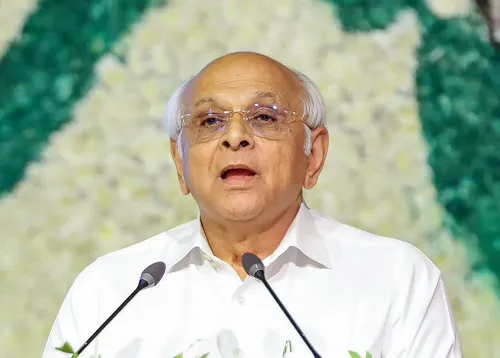
This initiative follows directives from Chief Minister Bhupendra Patel during a recent high-level revenue department meeting.
The aim is to tackle grievances from farmers about land surveys conducted during the promulgation process and to ensure a transparent and accurate resolution of such issues, protecting the interests of rural landowners.
State officials revealed that land demarcation will be approached in a structured manner, introducing a uniform procedure for managing correction requests arising from discrepancies in agricultural land records.
This program is anticipated to simplify administrative tasks related to land records and enhance the ease of doing business in rural regions.
As part of this strategy, 'Land Demarcation Committees' will be formed in each district, chaired by the district collector.
These committees will oversee and assess land demarcation activities and the resolution of applications seeking corrections to survey errors.
The district-level committees will consist of the resident additional collector, SLR or deputy director of the land records office, prant officer, officials from the District Inspector of Land Records (DILR), mamlatdar, taluka development officer, land acquisition officer, and representatives from agencies involved in land acquisition, including the Sardar Sarovar Punarvasvat Agency, where necessary.
To systematically manage applications received post-promulgation, the revenue department has categorized cases into seven distinct groups.
These categories include cases with no reduction in government or public land and no objections raised; situations where no reduction has occurred, and no objections are pending; and instances where objections remain despite no government land reduction.
Additional categories encompass cases where government or public land has seen reductions with pending objections, villages with over 30% of survey numbers reflecting changes in possession, cases limited to specific village areas, and those involving changes in over 30% of survey numbers that lead to substantial alterations in land shape.
A unique category is designated for villages where promulgation has yet to occur.
The chief minister has also instructed that complex matters arising from survey error corrections be resolved promptly, ensuring applicants do not have to make repeated visits to government offices.
To aid this, additional authorities have been assigned to taluka development officers and mamlatdars.
These cases will be addressed through Mobile Magistrate Court Committees, which will take action in accordance with Sections 119 and 120 of the Gujarat Land Revenue Act and Rules 21(1), 21(2), and 21(3) of the Gujarat Land Revenue Rules, 1972.
Officials stated that the revenue department has been directed to ensure that the majority of survey-related correction issues are resolved swiftly and transparently through a consistent statewide procedure, enabling citizens to experience effective governance in land administration.
Point of View
Gujarat's initiative to standardize land survey error resolution is a commendable effort to enhance transparency and protect rural landowners' interests, reflecting a commitment to effective governance in land administration.
NationPress
29 Sept 2026
Frequently Asked Questions
What is the purpose of the new land survey mechanism in Gujarat?
The new mechanism aims to resolve pending applications related to land measurement errors in promulgated villages, ensuring transparency and protecting the interests of farmers.
Who will oversee the land demarcation process?
Land Demarcation Committees will be established in every district, chaired by the district collector, to monitor and review demarcation work.
How will the revenue department categorize applications?
The revenue department has categorized applications into seven groups based on the status of government land reductions and pending objections.
What additional powers have been given to local officials?
Taluka development officers and mamlatdars have been delegated additional powers to expedite the resolution of survey error corrections.
How will complex issues be addressed?
Complex issues arising from survey error corrections will be managed through Mobile Magistrate Court Committees, acting in accordance with relevant land revenue laws.