Jitendra Singh rejects Rahul Gandhi's claim of Amit Shah ordering firing on students
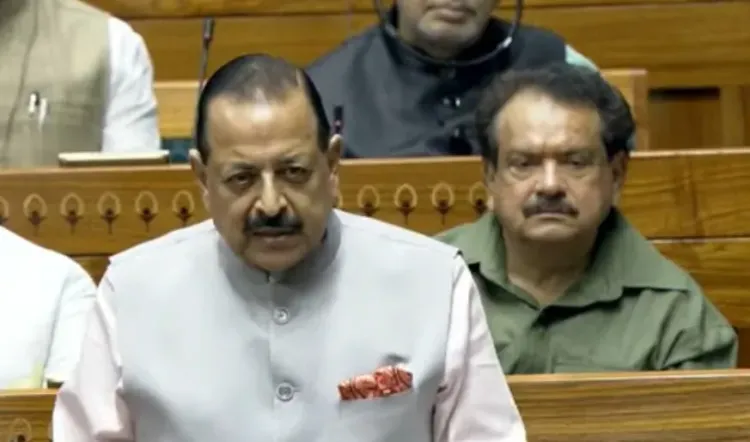
Synopsis
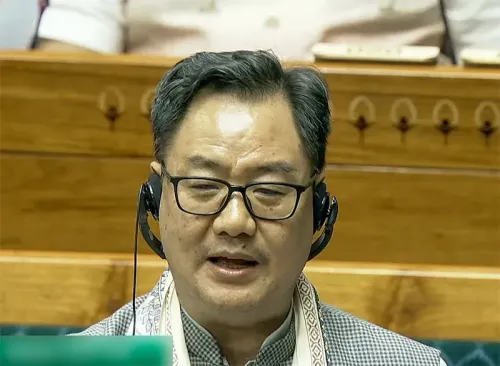
Union Minister Jitendra Singh didn't just rebut Rahul Gandhi in Parliament — he turned the exchange into a civics lesson. His core point: under Indian administrative law, no minister can order action on protesters; that power rests with district magistrates. The claim, if accurate, strips Gandhi's allegation of its central premise.
Key Takeaways
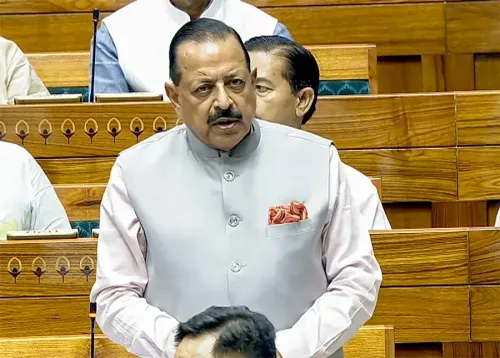
Union Minister Jitendra Singh on 29 July rejected Rahul Gandhi's claim that Home Minister Amit Shah ordered action against protesting students.
Singh stated that under Indian administrative procedure, only a magistrate, DM, or SDM can issue such orders — not a minister.
Singh disputed that firing occurred, saying only tear gas was used during the incident in question.
He also denied Gandhi's claim that Shah was abroad at the time, calling it unsupported by evidence.
The exchange took place during the debate on the Public Examinations (Prevention of Unfair Means) Amendment Bill, 2026 .
Singh criticised Gandhi's language in the House as 'inappropriate' and unbecoming of the Leader of the Opposition.
Union Minister Jitendra Singh on Wednesday, 29 July sharply rebuked Rahul Gandhi, Leader of the Opposition in the Lok Sabha, for alleging that Home Minister Amit Shah had ordered action against protesting students — calling the claim factually baseless and a reflection of poor understanding of basic administrative procedures.
What Singh Said on the Floor
Speaking during the debate on the Public Examinations (Prevention of Unfair Means) Amendment Bill, 2026, Singh criticised the Opposition for attempting to politicise a legislation he described as a commitment of Prime Minister Narendra Modi towards fairness in public examinations. 'First of all, it is disappointing to see the conduct of the Opposition when such an important Bill is being discussed,' Singh said, adding that the Opposition chose disruption over constructive engagement.
The Administrative Rebuttal
Singh directly challenged Gandhi's allegation that Amit Shah had ordered action against students. 'When Rahul Gandhi claims that Amit Shah ordered action against students, he has failed to provide any evidence to support the allegation. For basic information, no minister can issue such orders. Such decisions are taken by a magistrate, District Magistrate (DM), or Sub-Divisional Magistrate (SDM). This is basic administrative knowledge, and it appears he lacks even this understanding,' Singh said.
He also contested Gandhi's characterisation of the nature of the action taken. 'There was no firing; only tear gas was used,' Singh said, directly contradicting Gandhi's framing. He further dismissed Gandhi's claim that Shah had been travelling abroad at the time, saying there was 'no evidence to support that claim' and that 'Amit Shah has not gone abroad.'
Conduct in Parliament Under Scrutiny
Singh also took exception to the language Gandhi used during his parliamentary address. 'I am surprised by the behaviour of the Leader of the Opposition. The kind of language he used in Parliament was inappropriate. Such expressions should not be used in the House,' he said. Singh added that the office of the Leader of the Opposition carried significant institutional weight, and that Gandhi appeared unaware even of basic parliamentary norms.
He raised a pointed question about who Gandhi's remarks were actually directed at — students or the government — suggesting that if students were being described in the terms Gandhi used, 'nothing could be more unfortunate.'
Context and What It Signals
The exchange unfolded during a legislative session focused on examination integrity — a politically sensitive issue following controversies around public examination irregularities in recent years. The BJP-led government has framed the Amendment Bill as a corrective measure, while the Opposition has used the debate as a platform to raise broader accountability questions, including the handling of student protests.
This is not the first time parliamentary debates on student-related legislation have spilled into confrontations between the ruling alliance and Congress. The pattern reflects a deepening divide over how the government responds to student unrest, with each side contesting both the facts and the framing. As the Bill moves toward a vote, the political temperature around examination reform is unlikely to cool.
Point of View
And it is a point Gandhi's camp has not directly answered. But the BJP's counter-offensive risks sidestepping the underlying question: what did happen during the student protests, and who gave the operational orders on the ground? Rebutting the messenger's credentials does not resolve the factual dispute. Parliament would be better served by a verified account of events than by competing assertions about who knows their civics.
NationPress
13 Sept 2026
Frequently Asked Questions
What did Rahul Gandhi allege about Amit Shah and the student protests?
Rahul Gandhi alleged during a parliamentary debate that Home Minister Amit Shah had ordered action against protesting students. He also claimed Shah was travelling abroad at the time and that Shah's convoy comprised around 30 vehicles. Gandhi did not present documentary evidence for these claims during the debate.
How did Jitendra Singh respond to Gandhi's allegations?
Singh said Gandhi's claims were factually incorrect and lacked any supporting evidence. He specifically argued that under Indian administrative law, ministers cannot issue orders for action against protesters — that authority rests with magistrates at the district or sub-divisional level.
Was there firing on the protesting students?
According to Singh, there was no firing on students; only tear gas was used. This directly contradicts the framing in Gandhi's remarks, though Singh did not provide an independent verification of the sequence of events.
What is the Public Examinations (Prevention of Unfair Means) Amendment Bill, 2026?
It is a legislative measure introduced by the central government aimed at curbing malpractice in public examinations. The government has described it as a priority reform under Prime Minister Narendra Modi's agenda for examination integrity. The Bill was under debate in the Lok Sabha on 29 July when the exchange between Singh and Gandhi occurred.
Why does the dispute over administrative procedure matter?
Singh's argument hinges on a specific point of law: that orders for crowd-control action must come from a magistrate, not a minister. If accurate, this would mean Gandhi's allegation misidentifies the decision-maker. However, the broader question of accountability for what occurred during the protests remains unresolved in the parliamentary record.