Rajasthan CMO: ₹91,000 Cr Parvati-Kalisindh-Chambal Project to End Eastern Rajasthan Water Crisis
Synopsis
The Rajasthan CMO announced the ₹91,000 crore revised Parvati-Kalisindh-Chambal Link Project as a permanent water solution for eastern Rajasthan, covering Dausa, Sawai Madhopur, and surrounding districts, with ₹23,312 crore of seven drinking water schemes already in active progress.
Key Takeaways
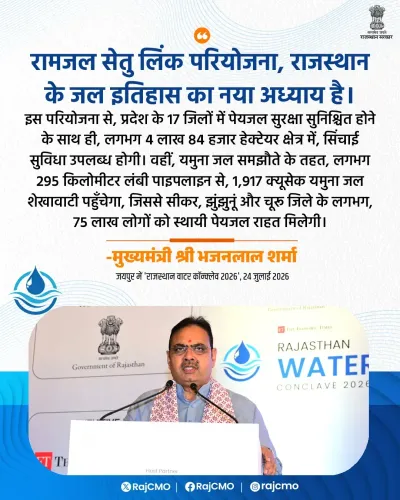
The Parvati-Kalisindh-Chambal Link Project has been revised to a cost of ₹91,000 crore and targets permanent water security across eastern Rajasthan.
Dausa and Sawai Madhopur districts are specifically named as primary beneficiaries alongside the broader eastern Rajasthan region.
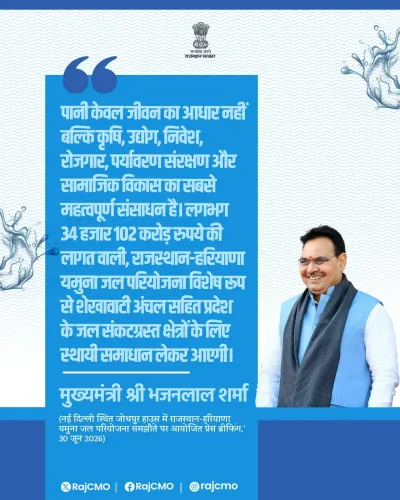
The project promises adequate water for agriculture, industry, and drinking purposes — addressing multiple demand sectors simultaneously.
Seven drinking water works worth ₹23,312 crore are currently in progress under the broader project budget.
The initiative is framed as a 'double engine government' achievement, with BJP ruling both Rajasthan and the Centre.
River interlinking in Rajasthan traces back to the Chambal Valley Project of 1954 ; the PKC scheme represents its most ambitious modern successor.
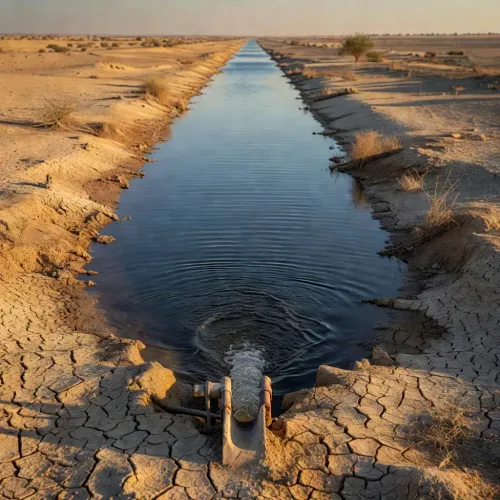
A river-interlinking scheme worth ₹91,000 crore is being positioned as the permanent fix to one of eastern Rajasthan's most stubborn crises — water scarcity. The Chief Minister's Office of Rajasthan announced on Wednesday, 28 October 2026 that the revised Parvati-Kalisindh-Chambal (PKC) Link Project will deliver adequate water for farming, industry, and drinking needs across the region, with special focus on Dausa and Sawai Madhopur districts.
The CMO's post, attributed to the office of Chief Minister Bhajan Lal Sharma, framed the project as a signature achievement of the 'double engine government' — BJP administrations running simultaneously in Jaipur and New Delhi. The announcement highlighted that out of the total outlay, ₹23,312 crore worth of seven drinking water works are already in progress, signalling that the project has moved beyond blueprint into active execution.
Why Eastern Rajasthan Has Waited Decades for This Water
Eastern Rajasthan's water stress is neither new nor superficial. Districts like Dausa and Sawai Madhopur have long contended with erratic monsoons, falling groundwater tables, and agricultural cycles dictated more by scarcity than by choice. The Chambal Valley Project — launched as far back as 1954 as a joint Rajasthan–Madhya Pradesh initiative for irrigation and hydropower — was among the first institutional attempts to channel the Chambal basin's surplus. Seven decades later, the PKC Link Project picks up that thread at a far larger scale, aiming to redistribute water from Chambal tributaries — the Parvati and Kalisindh rivers — into districts that have historically sat at the tail end of supply chains. India's National Perspective Plan for river interlinking has always identified Rajasthan's arid and semi-arid zones as priority beneficiaries. The PKC project is among the most consequential links in that national mosaic for the state.Seven Drinking Water Schemes Already Breaking Ground
The political signal embedded in Wednesday's announcement is deliberate: the government is not just promising water, it is pointing to seven active drinking water works backed by ₹23,312 crore in allocations. For rural households across eastern Rajasthan — where women and children often bear the daily burden of water collection — that distinction between promise and progress matters enormously. Farmers in the region stand to gain reliable irrigation across multiple cropping seasons, potentially shifting cultivation patterns away from drought-resistant but low-yield crops. Local industries, which have historically struggled to scale in water-scarce zones, could see new viability if the project delivers consistent industrial-use supply. The CMO's use of the hashtag #आपणो_अग्रणी_राजस्थान ('Our Leading Rajasthan') signals how the ruling party intends to brand this infrastructure push heading into future electoral cycles — a tangible, large-number anchor in a campaign narrative built around development. For eastern Rajasthan, the real test will be in the timelines: whether tender progress, central approvals, and fund releases keep pace with the ambition. But if they do, the Parvati-Kalisindh-Chambal Link Project could rewrite the water map of a region that has thirsted long enough.Point of View
Credible number (₹91,000 crore) anchored by a tangible proof point (seven schemes already underway) in a region with acute, long-standing grievances. River interlinking has been a contested policy space nationally — expensive, ecologically debated, and chronically delayed — but state governments have found it electorally potent precisely because water scarcity is visceral and personal for agrarian communities. The 'double engine' framing is deliberate: it ties the project's viability to BJP's continued hold at both state and central levels, making the scheme as much a political contract as a development pledge. Execution milestones, not announcements, will determine whether this becomes a legacy project or a cautionary tale.
NationPress
28 Oct 2026
Frequently Asked Questions
What is the Parvati-Kalisindh-Chambal Link Project in Rajasthan?
The Parvati-Kalisindh-Chambal (PKC) Link Project is a river-interlinking initiative aimed at transferring surplus water from the Chambal basin's tributaries — the Parvati and Kalisindh rivers — to water-scarce districts in eastern Rajasthan. The revised project is estimated to cost ₹91,000 crore and targets districts including Dausa and Sawai Madhopur.
Which districts will benefit from the PKC Link Project?
The project primarily targets eastern Rajasthan, with Dausa and Sawai Madhopur districts specifically named. The broader aim is to resolve water scarcity across the entire eastern Rajasthan region for agriculture, industry, and drinking water needs.
How much money is being spent on drinking water works under this project?
According to the Rajasthan CMO, ₹23,312 crore has been allocated to seven drinking water works that are currently in progress under the broader PKC Link Project budget.
Who is the Chief Minister of Rajasthan overseeing this project?
Bhajan Lal Sharma of the BJP has been Chief Minister of Rajasthan since December 2023. His office made the announcement about the PKC Link Project on 28 October 2026.
What is 'double engine government' in the context of Rajasthan water projects?
'Double engine government' is a phrase used by the BJP to describe situations where the same party governs both a state and the central government, arguing this alignment speeds up approvals and fund flows for large infrastructure projects like the PKC Link Project.