Rahul Gandhi demands Amit Shah's removal, SC-monitored probe into July 20 student crackdown
Synopsis
Rahul Gandhi has drawn a sharp line: either Amit Shah ordered the pellet-gun crackdown on students marching to Parliament on July 20, or he did not know — and in either case, Gandhi argues, he must go. The demand for a Supreme Court-monitored probe is a deliberate escalation that pulls the judiciary into what the government has treated as a routine law-and-order matter.
Key Takeaways
Rahul Gandhi on 29 July demanded the removal of Home Minister Amit Shah over the alleged police crackdown on students on 20 July .
Gandhi called for a Supreme Court-monitored independent investigation into the incident at Jantar Mantar .
He alleged Delhi Police and the Rapid Action Force (RAF) used pellet guns and lathis against peaceful protesters.
Gandhi said he wrote to Amit Shah on 25 July seeking clarification on pellet gun authorisation but received no reply.
He refused to apologise for his remarks in the Lok Sabha , saying: 'I will never apologise to the BJP-RSS.' The Opposition claims to hold photographic and video evidence identifying police personnel involved in the crackdown.
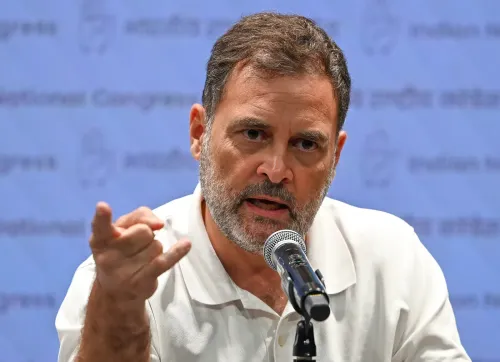
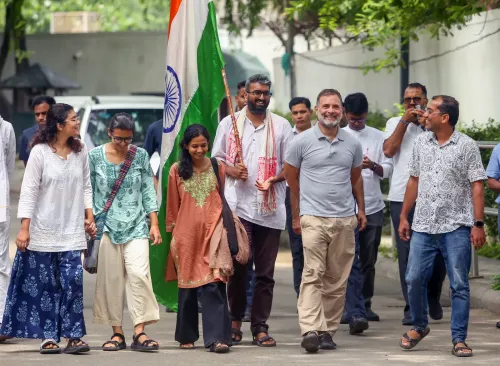
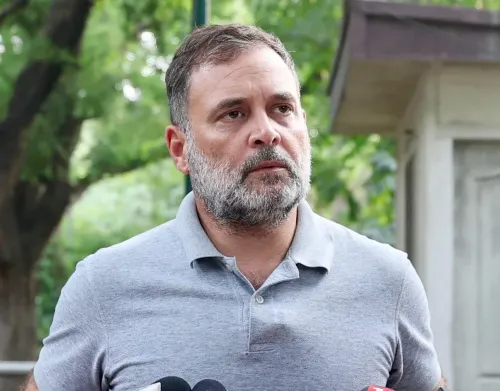
Congress MP and Leader of Opposition in Lok Sabha Rahul Gandhi on Wednesday, 29 July escalated his offensive against Union Home Minister Amit Shah, demanding his removal from office and a Supreme Court-monitored independent investigation into the alleged police crackdown on students during the 20 July protest march to Parliament in New Delhi.
What Gandhi Said at the Press Conference
Addressing reporters, Gandhi urged Prime Minister Narendra Modi to sack the Home Minister, arguing that Shah bore direct responsibility for the conduct of the Delhi Police and the Rapid Action Force (RAF) — both of which function under the Union Home Ministry. He alleged that the two forces used excessive force against protesters, including pellet guns and lathis.
Gandhi framed the accountability question in stark binary terms: 'If he ordered it, he is culpable. If he did not know, then he is incompetent. In either case, he has to go,' he said.
The July 20 Protest and Allegations of Brutality
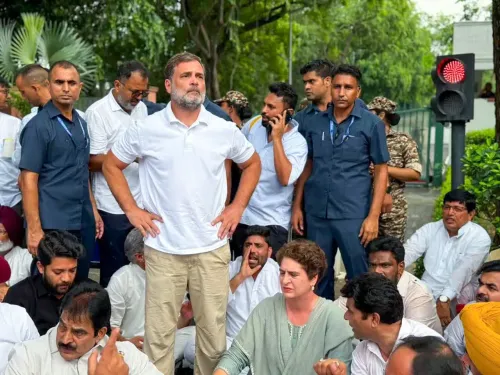
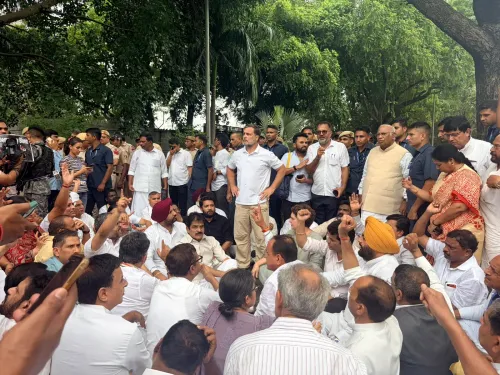
The incident in question took place at Jantar Mantar on 20 July, when students marching to Parliament were allegedly met with force by security personnel. Gandhi described the demonstrators as peaceful citizens asking questions of the government, and alleged they were brutalised and shot with pellet guns. He added that the Opposition had gathered photographic and video evidence identifying police personnel involved in the operation, and raised questions about individuals in plain clothes seen during the crackdown.
Unanswered Letter to Shah
Gandhi disclosed that he had written to Amit Shah on 25 July seeking clarification on whether the deployment of pellet guns had been officially authorised. He said he had received no response as of Wednesday. The silence, he argued, compounded the case for a court-supervised probe.
Parliament Row and Vow to Speak Out
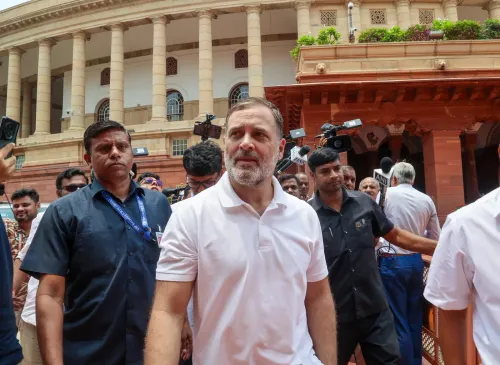
Gandhi also alleged that he had been prevented from raising the matter on the floor of the Lok Sabha and was asked to apologise for his remarks against the Home Minister. He flatly refused. 'I will never apologise to the BJP-RSS,' he asserted, framing the issue as a constitutional duty to speak for students. He promised justice for those allegedly assaulted, signalling that the Opposition intends to sustain pressure both inside and outside Parliament.
What Comes Next
The demand for a Supreme Court-monitored inquiry raises the political stakes significantly, as it would require judicial intervention in a law-and-order matter ordinarily under executive jurisdiction. The government has not publicly responded to Gandhi's demands as of the time of this report. With Parliament in session and the Opposition holding evidence it claims is incriminating, the controversy over the July 20 student protest crackdown is unlikely to recede quickly.
Point of View
But it lands differently when the Opposition claims to hold video evidence of identifiable officers. The real pressure point is not the rhetoric but the unanswered letter of 25 July: if the Home Ministry cannot account for the authorisation of pellet guns against students, the demand for judicial oversight becomes harder to dismiss. The government's silence so far is itself a political choice — one that keeps the controversy alive heading into the next parliamentary sitting. Whether the Supreme Court takes cognisance, voluntarily or on petition, will determine whether this remains a floor-of-the-House skirmish or becomes a constitutional moment.
NationPress
28 Oct 2026
Frequently Asked Questions
What did Rahul Gandhi demand over the July 20 student protest crackdown?
Rahul Gandhi demanded that Prime Minister Narendra Modi remove Home Minister Amit Shah from office and order a Supreme Court-monitored independent investigation into the alleged police crackdown on students during the 20 July march to Parliament. He held Shah directly responsible for the conduct of Delhi Police and the RAF, both under the Home Ministry.
What allegedly happened during the July 20 student protest in New Delhi?
Students marching to Parliament on 20 July were allegedly met with excessive force by Delhi Police and the Rapid Action Force at Jantar Mantar, including the use of pellet guns and lathis. Gandhi described the demonstrators as peaceful and said the Opposition has photographic and video evidence of the incident.
Did Rahul Gandhi contact Amit Shah about the crackdown?
Yes. Gandhi said he wrote to Home Minister Amit Shah on 25 July seeking clarification on whether the use of pellet guns had been officially authorised. He stated he had received no response as of 29 July.
Why did Rahul Gandhi refuse to apologise in the Lok Sabha?
Gandhi said he was asked to apologise for remarks he made against the Home Minister on the floor of the Lok Sabha but refused, saying 'I will never apologise to the BJP-RSS.' He framed raising the student issue as a constitutional duty of the Leader of Opposition.
What is the significance of demanding a Supreme Court-monitored probe?
A Supreme Court-monitored investigation would place the inquiry under judicial oversight rather than executive control, limiting the government's ability to manage the findings. It is a significant escalation because law-and-order matters are ordinarily within executive jurisdiction, and such a demand signals that the Opposition does not trust an internal or government-appointed inquiry.