Rahul Gandhi demands SC probe into student protest crackdown
Synopsis
Congress leader Rahul Gandhi has accused police of using pellet guns, nail-studded lathis, and tear gas on student protesters, charged Home Minister Amit Shah with nearly 20 days of parliamentary silence, and demanded a Supreme Court-monitored inquiry into the alleged crackdown.
Key Takeaways
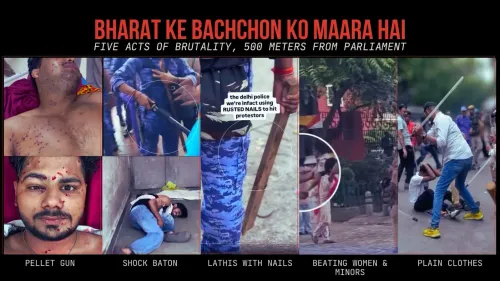
Gandhi's post alleges police used pellet guns , nail-studded lathis , and tear gas against peacefully protesting students.
He specifically alleges young women were beaten by male officers, with injuries to private parts, and minors suffered broken bones.
Gandhi says Amit Shah has not appeared before Parliament in nearly 20 days to answer for the incident.
Every Opposition motion for a parliamentary discussion on the crackdown has, according to Gandhi, been rejected.
Gandhi has demanded a Supreme Court -monitored inquiry and vowed the Opposition will continue pressing for accountability.
The pattern mirrors past standoffs over alleged police excess during the CAA-NRC protests (2019–20) and the farmers' protests (2020–21) .
Pellet guns, nail-studded lathis, and tear gas — deployed against students who, by Congress leader Rahul Gandhi's account, were doing nothing more than asking questions about their own futures. In a sharp post on 10 August 2026, the Leader of the Opposition in the Lok Sabha named weapons, victims, and a minister he says has gone silent for nearly three weeks.
Gandhi's post catalogues a specific and escalating list of alleged police actions: young women beaten by male officers, injuries to private parts, and minors with broken bones. 'This is how the Modi government answers a question,' he wrote, before pivoting to the man he holds accountable — Union Home Minister Amit Shah.
Nearly 20 days, no floor statement from Shah
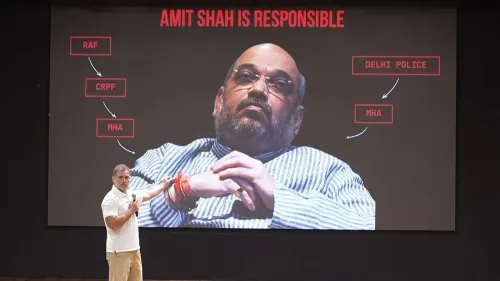
The Opposition's core procedural grievance is parliamentary, not merely political. Gandhi says every motion filed by the Opposition for a floor discussion on the incident has been rejected, and that Amit Shah has not appeared before Parliament to answer for the alleged crackdown in close to 20 days. The charge is pointed: silence, in Gandhi's framing, is not absence — it is endorsement. 'He is either culpable or incompetent,' the post states.
The pattern has precedent. During the 2019–2020 CAA-NRC protests at campuses including Jamia Millia Islamia, Congress and allied parties demanded judicial inquiries into alleged police actions against students. The 2020–2021 farmers' protests produced near-identical parliamentary standoffs, with the Opposition calling on the Home Minister to address the House on reported use of force. Ministries declining floor discussions, opposition walkouts, and calls for Supreme Court oversight have become a recurring sequence in Indian parliamentary politics since 2014.
The Supreme Court demand and what it signals
Gandhi's demand for a Supreme Court-monitored inquiry is a deliberate escalation beyond parliamentary procedure. Opposition parties reach for this instrument when they judge that executive-ordered or state-level probes lack credibility with the public. The apex court has, in past instances involving alleged police excess during protests, accepted PILs and issued directives — lending the demand legal weight beyond rhetoric.
The Congress framing — weapons named, victims categorised by gender and age, a minister held personally responsible — is consistent with a broader party strategy of positioning itself as the defender of civil liberties against executive overreach. Whether PILs materialise before the court, and how the government responds when Parliament next takes up related notices, will determine whether this remains a political charge or becomes a live judicial matter.
For now, Gandhi's closing line sets the terms: 'We will not stop fighting until he is held accountable.' The clock on Amit Shah's silence, by the Opposition's count, is still running.
Point of View
Name the victim, name the minister, then demand a forum (the Supreme Court) the government cannot easily dismiss. The 'culpable or incompetent' binary is designed to eliminate any comfortable middle ground for Shah. This move fits a consistent Congress playbook of using alleged police excess against students and minorities as a civil-liberties frame to broaden its coalition beyond traditional vote banks. The real test is whether a PIL reaches the Supreme Court and survives preliminary scrutiny — that would shift the story from political allegation to judicial proceeding, a far more consequential arena.
NationPress
24 Sept 2026
Frequently Asked Questions
What did Rahul Gandhi say about the student protest crackdown?
Gandhi alleged that police used pellet guns, nail-studded lathis, and tear gas on peacefully protesting students, that young women were beaten by male officers with injuries to private parts, and that minors sustained broken bones. He held Home Minister Amit Shah personally responsible.
Why is Rahul Gandhi demanding a Supreme Court inquiry?
Gandhi is demanding a Supreme Court-monitored inquiry because, he says, every Opposition motion for a parliamentary discussion on the incident has been rejected and Amit Shah has not appeared before Parliament for nearly 20 days to answer for the alleged crackdown.
What has Amit Shah said about the student protest allegations?
According to Gandhi's post, Amit Shah has not come to Parliament to address the matter in nearly 20 days. No statement from Shah on these specific allegations is referenced in the available information.
Has India seen similar Opposition demands over student protests before?
Yes. During the 2019–20 CAA-NRC protests and the 2020–21 farmers' protests, Congress and allied parties made near-identical demands — calling for judicial inquiries into alleged police excess and pressing the Home Minister to address Parliament — following a recurring pattern in Indian parliamentary politics.
What is a Supreme Court-monitored inquiry in India?
It is an investigation overseen directly by the Supreme Court of India, typically ordered or accepted via a Public Interest Litigation (PIL). Opposition parties seek this mechanism when they argue that government-ordered or state-level probes lack independence or credibility.