Lok Sabha passes exam anti-cheat amendment bill, 2026

Synopsis
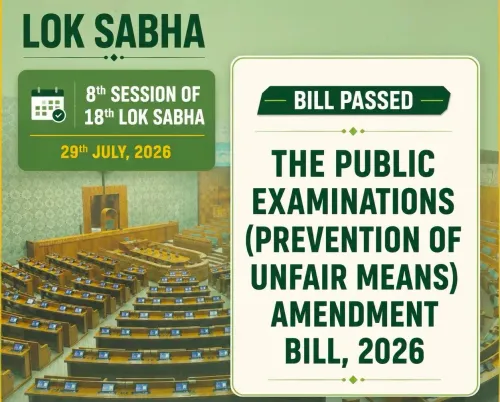
The Lok Sabha has passed the Public Examinations (Prevention of Unfair Means) Amendment Bill, 2026, bringing stricter penalties, fast-track courts, and a stronger investigative framework to combat rampant exam fraud and paper leaks that have plagued India's competitive examination system.
Key Takeaways
The Lok Sabha passed the Public Examinations (Prevention of Unfair Means) Amendment Bill, 2026 on 29 July 2026 .
The bill mandates the establishment of Fast-Track Courts for expedited adjudication of exam malpractice cases.
It introduces harsher penalties and a strengthened investigation mechanism against those involved in paper leaks and unfair means.
The amendment builds on the Public Examinations (Prevention of Unfair Means) Act, 2024 , which was Parliament's first dedicated law against exam fraud.
The bill's stated aim is to fully dismantle paper-leak networks and restore transparency, credibility, and fairness to India's examination system.
The bill must next clear the Rajya Sabha before it becomes law.
India's war on exam fraud just got a sharper edge. The Lok Sabha has passed the Public Examinations (Prevention of Unfair Means) Amendment Bill, 2026, toughening the legal arsenal against paper leaks and malpractice in competitive examinations — a crisis that has derailed the futures of millions of aspirants across the country.
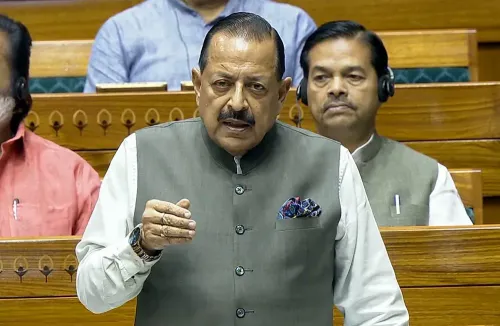
Union Minister Pralhad Joshi shared news of the bill's passage on Wednesday, 29 July 2026, posting in Kannada to highlight its significance. The bill, he noted, brings 'strict penalties, establishment of Fast-Track Courts, further strengthening of the investigation mechanism, and stringent action against those involved in examination malpractices' — a package aimed at dismantling paper-leak networks root and branch.
From the 2024 Act to the 2026 amendment: closing the gaps
The legislative push did not begin in a vacuum. Parliament had already enacted the Public Examinations (Prevention of Unfair Means) Act, 2024, which introduced the first dedicated penalties for exam fraud at the national level. That law was itself a reaction to a wave of high-profile scandals — question papers for examinations such as NEET and multiple state recruitment tests surfacing on messaging apps hours before candidates sat down to write.
The 2026 amendment builds on that foundation by targeting two persistent weaknesses: the slowness of ordinary courts in disposing of malpractice cases, and the perceived inadequacy of existing penalties to deter organised syndicates. The proposed Fast-Track Courts are designed to ensure that accused paper-leak operators face swift adjudication rather than years of procedural delay that can blunt deterrence.
What the bill promises for crores of exam aspirants
The stakes are enormous. Every year, tens of millions of Indian students sit for competitive examinations — from central government recruitment drives to entrance tests for medical and engineering colleges. A single leaked question paper can invalidate months of preparation, force re-examinations, and delay career timelines by years. For aspirants from smaller towns and lower-income households, the cost of a cancelled exam cycle is not merely inconvenience — it can be devastating.
The amendment's stated goal is to restore 'transparency, credibility, and fairness' to the examination system. Harsher sentences for convicted offenders and a reinforced investigation framework are meant to raise the cost of fraud high enough to break the commercial logic that drives paper-leak syndicates.
The bill now moves to the Rajya Sabha for consideration. Whether the upper house passes it in the same session — and how quickly the government notifies the Fast-Track Courts once the law is in force — will determine how soon the new framework reaches the aspirants it is meant to protect.
Point of View
Signalling that the government views the 2024 Act as a necessary but insufficient first step. The introduction of Fast-Track Courts is the most consequential structural addition — it attacks the impunity that organised paper-leak syndicates have historically enjoyed by exploiting slow judicial timelines. For the BJP, passing this bill also carries political utility: exam fraud scandals, particularly around NEET, became a significant liability in the run-up to recent elections, and a tougher law allows the party to reframe the narrative around decisive action. The real test, however, will be implementation — how swiftly courts are constituted and whether enforcement agencies are given the resources to match the law's ambitions.
NationPress
29 Jul 2026
Frequently Asked Questions
What is the Public Examinations (Prevention of Unfair Means) Amendment Bill, 2026?
It is a bill passed by the Lok Sabha in July 2026 that amends the 2024 law on exam fraud, introducing stricter penalties, Fast-Track Courts for quick disposal of malpractice cases, and a stronger investigation framework to combat paper leaks and cheating in competitive public examinations.
What are Fast-Track Courts for exam malpractice?
Fast-Track Courts are specialised courts proposed under the 2026 amendment to ensure swift adjudication of cases involving unfair means in public examinations, reducing the delays that have historically allowed accused individuals to escape timely punishment.
What was the original Public Examinations (Prevention of Unfair Means) Act, 2024?
The 2024 Act was Parliament's first dedicated legislation introducing penalties to deter paper leaks and malpractices in competitive public examinations. The 2026 amendment builds on this law to address gaps in enforcement and judicial speed.
Has the exam anti-cheat bill become law yet?
Not yet. The bill was passed by the Lok Sabha on 29 July 2026 but must still be approved by the Rajya Sabha and receive Presidential assent before it comes into force.
Why is India introducing stricter exam fraud laws?
India has seen repeated high-profile question paper leaks in major examinations including NEET and several state recruitment tests, causing re-examinations and devastating delays for millions of aspirants. The legislation aims to restore credibility and fairness to the examination system.