Pakistan polio eradication at risk as attacks on health workers surge in 2026
Synopsis
Pakistan is closer than ever to eliminating polio — and yet its frontline vaccinators are being killed in the same provinces where the virus persists. With the TTP resurging and the geography of violence and poliovirus nearly identical, the Atlantic Council warns that a faltering campaign could undo thirty years of global progress and risk cross-border transmission.
Key Takeaways
Pakistan and Afghanistan are the only two countries where wild poliovirus remains endemic as of 2026 .
All six global poliovirus cases reported in 2026 are from these two countries; Pakistan accounts for three .
Pakistan recorded 74 polio cases in 2024 , down to 30 in 2025 following intensified vaccination drives.
Over 200 polio workers and police escorts have been killed in Pakistan since the 1990s ; government data since 2012 records 96 deaths and 170 injuries .
The TTP and affiliated militant factions are responsible for the majority of attacks, concentrated in KPK and Balochistan — the same provinces with the highest poliovirus burden.
An Atlantic Council report warns that failure to eradicate polio in Pakistan risks reversing thirty years of global progress.
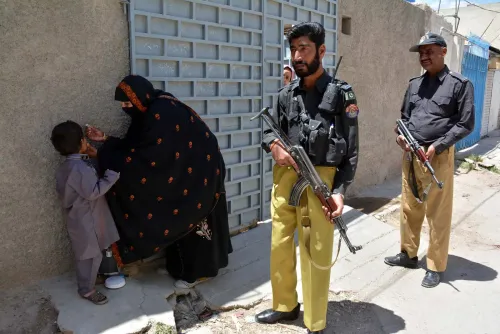
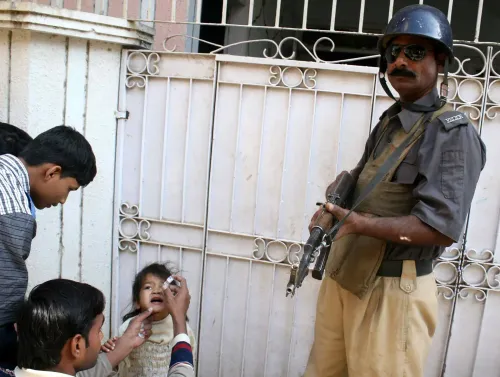
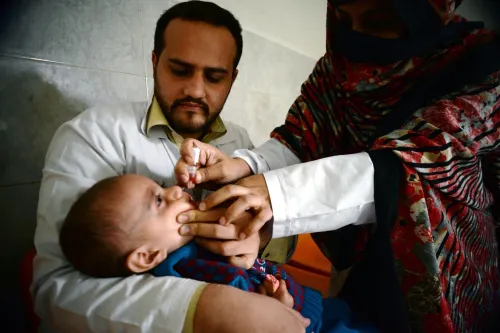
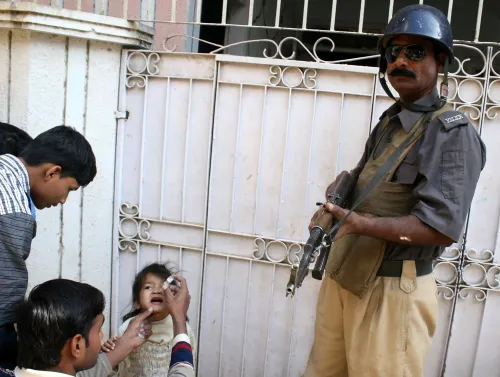
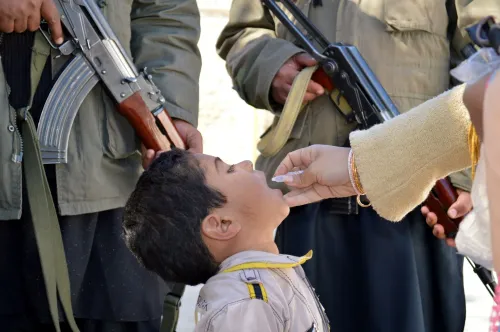
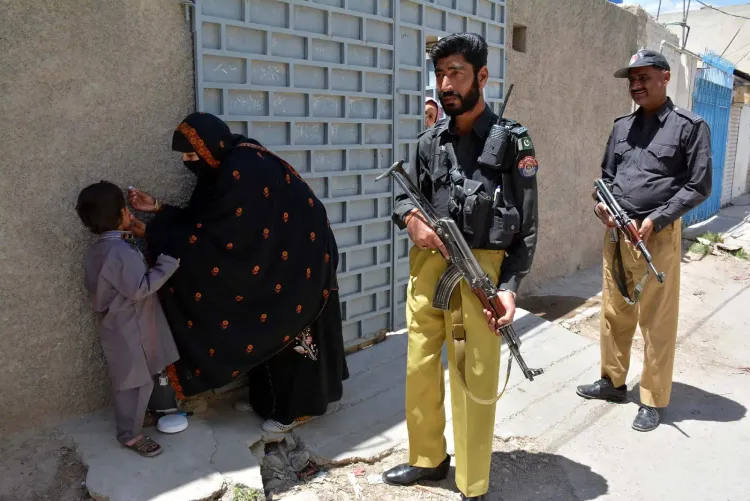
Frontline health workers in Pakistan are conducting polio vaccination drives inside what researchers describe as one of the world's most violent security environments, with repeated armed attacks threatening to derail a decades-long global eradication effort. The country remains one of only two nations — alongside Afghanistan — where wild poliovirus is still endemic.
Recent Attacks on Vaccination Teams
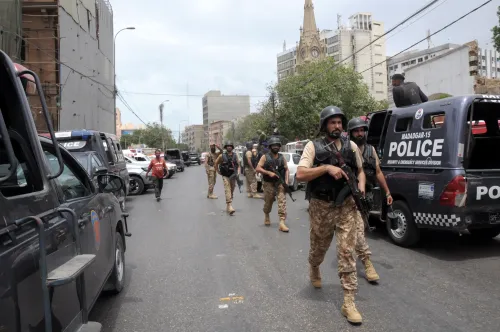
In late April 2026, one police officer was killed and four others were injured when their vehicle, escorting polio vaccinators, was ambushed in Hangu district of Khyber Pakhtunkhwa (KPK) province. On 24 May, a police official deployed with a vaccination team sustained serious injuries in a firing incident near the Ishaqzai Qila area of Chaman district in Balochistan province, though the health workers themselves were unharmed, according to reports.
On 18 May, at least two police personnel escorting polio vaccination teams were killed in separate incidents in Bajaur district, KPK. Unidentified assailants struck teams in the Tabbai and Dag Qila regions of Salarzai, according to a senior police official cited in local media reports.
The Geographic Overlap Between Violence and Poliovirus
A report by Manal Fatima, Assistant Director at the Atlantic Council's Scowcroft Middle East Security Initiative, and Michael Kugelman, a resident senior fellow for South Asia at the Atlantic Council, identifies a troubling pattern: the geography of terrorist violence and poliovirus reservoirs in Pakistan is 'nearly identical.'
'The majority of attacks are concentrated in KPK and Balochistan provinces. Those same two provinces continue to host persistent reservoirs of wild poliovirus, accounting for the bulk of Pakistan's recent caseload, including both KPK cases confirmed so far in 2026. Vaccinators have become the biggest casualty of this geographic overlap,' the report stated.
Scale of the Threat: Militant Groups and Casualty Figures
Pakistani government data tracked since 2012 records 96 deaths and 170 injuries from attacks on polio campaigns, including 61 police officers and 27 health workers. The Tehrik-e-Taliban Pakistan (TTP), an al-Qaeda-allied group, along with affiliated Islamist militant factions, is held responsible for the majority of these attacks. Officials have stated that over 200 polio workers and police escorts have been killed since the 1990s.
The Atlantic Council report warned that the resurgence of the TTP — which was responsible for nearly sixty deaths in assaults on polio workers and their security details between 2012 and 2014 — has compounded the already formidable challenge of reaching the 'final mile' of eradication.
Pakistan's Polio Caseload: Progress and Setbacks
Pakistan reported 74 polio cases in 2024, a more than ten-fold rise from just six cases in 2023. Sustained vaccination campaigns helped bring that figure down to 30 cases in 2025. So far in 2026, Pakistan has confirmed three new polio cases. The Global Polio Eradication Initiative reports that all six poliovirus cases recorded globally in 2026 have been from Pakistan and Afghanistan.
What Is at Stake for Global Eradication
'How Pakistan navigates this paradox this year will shape the outcome of a thirty-year global eradication effort. If the eradication campaign falters, wild poliovirus cases could rise in Pakistan and Afghanistan, squandering years of progress and risking transmission beyond the region,' the Atlantic Council researchers wrote. The stakes, they argue, extend well beyond South Asia — a failure to contain the virus in these two countries could undo gains made across the globe over three decades.
Point of View
Mapped onto the same terrain. The TTP's return has reconstituted the threat environment that decimated the vaccination programme between 2012 and 2014, and the government's response has not materially changed. The caseload drop from 74 in 2024 to 30 in 2025 is real progress, but it was achieved despite the violence, not because it was resolved. If the international community treats this purely as a health story and not a counterterrorism accountability question, the 'final mile' will remain permanently out of reach.
NationPress
13 Oct 2026
Frequently Asked Questions
Why is polio still endemic in Pakistan in 2026?
Pakistan is one of only two countries — alongside Afghanistan — where wild poliovirus has never been fully eliminated. Persistent transmission is concentrated in KPK and Balochistan provinces, where repeated attacks on vaccination teams by militant groups, particularly the TTP, have made it impossible to achieve the consistent coverage needed for eradication.
How many polio cases has Pakistan reported in 2026?
Pakistan has reported three new polio cases so far in 2026. All six poliovirus cases recorded globally in 2026 are from Pakistan and Afghanistan, according to the Global Polio Eradication Initiative.
Who is attacking polio vaccination teams in Pakistan?
The Tehrik-e-Taliban Pakistan (TTP), an al-Qaeda-allied militant group, along with affiliated Islamist factions, is responsible for the majority of attacks on polio workers and their police escorts. Government data tracked since 2012 attributes 96 deaths and 170 injuries to such attacks.
How many polio workers have been killed in Pakistan?
Pakistani officials state that over 200 polio workers and police escorts have been killed since the 1990s. Data tracked since 2012 records 96 deaths — including 61 police officers and 27 health workers — and 170 injuries from attacks on polio campaigns.
What are the global consequences if Pakistan fails to eradicate polio?
Researchers at the Atlantic Council warn that a faltering eradication campaign in Pakistan could cause wild poliovirus cases to rise in both Pakistan and Afghanistan, squander thirty years of global progress, and risk transmission spreading beyond the region to countries that have long been polio-free.