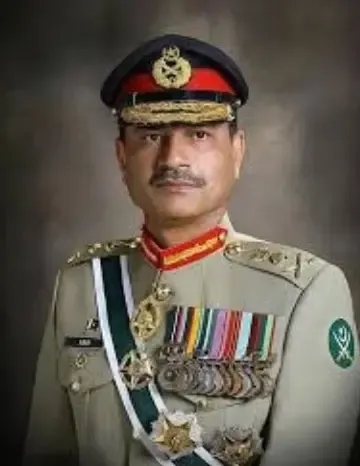
Pakistan's democratic space shrinking under Munir's hard-state grip: Report
Synopsis
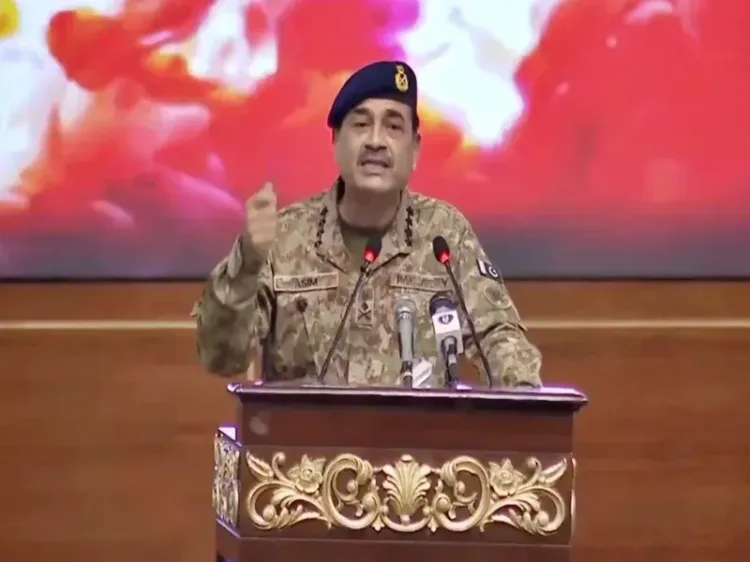
A new report details how Pakistan's military under General Asim Munir is systematically dismantling democratic space — jailing Imran Khan for nearly three years, sentencing human rights lawyers to 17 years under cybercrime law, suppressing Baloch and Pashtun rights movements, and deporting over 146,000 Afghan refugees — all while global scrutiny remains muted.
Key Takeaways
Pakistan's military under General Asim Munir has pursued a 'hard state' strategy combining political repression and constitutional redesign to centralise control.
Former PM Imran Khan and his wife have been imprisoned for nearly three years ; PTI members face both legal and extra-legal repression.
Human rights lawyers Imaan Mazari and Hadi Ali Chatha were sentenced to 17 years under the Pakistan Electronic Crimes Act (PECA) for social media posts.
Rights leaders including Ali Wazir (PTM) and Mahrang Baloch (BYC) have been imprisoned for advocating minority rights.
Human Rights Watch reports over 146,000 Afghan refugees forcibly deported by Pakistan in the current year alone.
The report warns the regime faces little sustained external scrutiny amid a broader global shift toward autocracy.
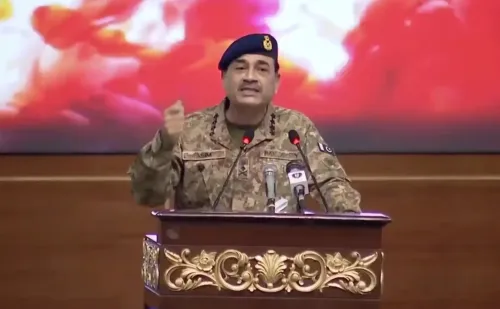
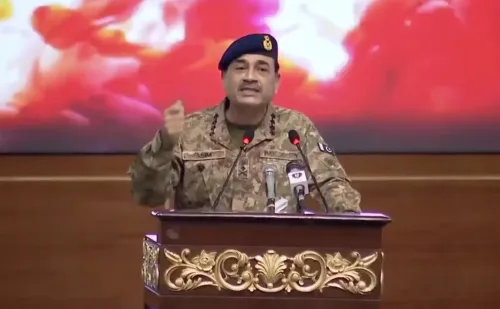
Pakistan's military establishment under General Asim Munir has spent the past three years systematically tightening its grip on political life through what analysts describe as a 'hard state' approach — a militarised framework that combines political repression, constitutional redesign, and the criminalisation of dissent to centralise authority and neutralise opposition. The findings are drawn from a detailed assessment published by Sri Lankan media outlet News Wire.
Political Prisoners and the PTI Crackdown
The number of political prisoners in Pakistan has grown significantly under the current dispensation, according to the report. Former Prime Minister Imran Khan and his wife have remained imprisoned for nearly three years, while members of his party, Pakistan Tehreek-e-Insaf (PTI), have faced both legal and extra-legal repression. Public gatherings — particularly in the capital, Islamabad — are increasingly criminalised.
The report notes that the regime's strategy to suppress street mobilisation and blunt PTI's political momentum has proved 'largely successful', with appetite for confrontational politics in the central province of Punjab having 'significantly dissipated since 2023.' Yet it acknowledges a critical caveat: Khan retains widespread popularity even from behind bars, suggesting the regime's consolidation remains incomplete.
Digital Repression and PECA Prosecutions
Despite the deployment of internet firewalls to restrict unwanted traffic and the enforcement of the Pakistan Electronic Crimes Act (PECA) to criminalise online criticism of government and military officials, the report notes that critical voices have continued in the digital sphere. Two cases have drawn particular attention.
In one widely publicised instance, courts used PECA to sentence human rights lawyers Imaan Mazari and Hadi Ali Chatha to 17 years in prison for social media posts condemning the state's reliance on enforced disappearances in Balochistan. In a separate case, a Canadian doctoral student conducting academic research in Pakistan was charged under PECA for social media posts and was reportedly missing for at least three days before the case became public.
Ethnic Minorities and Peripheral Regions
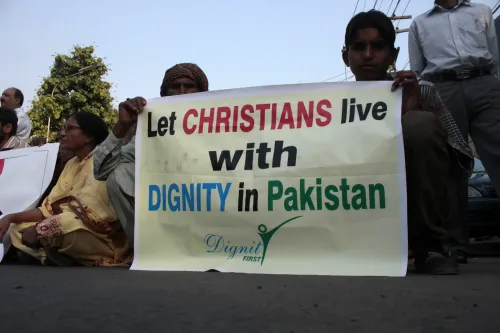
Beyond Pakistan's political centres, the report documents the suppression of rights-based movements representing ethnic minorities. Ali Wazir, a leader of the Pashtun Tahaffuz Movement (PTM) — which advocates accountability for security operations in Pakistan's northwest — has been imprisoned. Similarly, Mahrang Baloch and other activists affiliated with the Baloch Yakjehti Committee (BYC), which campaigns against enforced disappearances and for Baloch rights, have been imprisoned and silenced, according to the report.
Afghan Deportations and Forced Evictions
The report also highlights the intensification of mass deportations of Afghan refugees by Pakistani authorities. Human Rights Watch (HRW), the US-based advocacy group, reportedly documented that over 146,000 Afghans have been forcibly returned in the current year alone. Notably, these deportations coincided with US-Iran peace talks held in Islamabad, during which marginalised communities were also forcibly evicted through anti-encroachment operations targeting long-established informal settlements.
Outlook: Autocracy Without Accountability
The report concludes with a sobering assessment of the external environment. Amid a broader global shift toward autocracy, it argues that the Munir regime is unlikely to face sustained international scrutiny over its democratic and legal backsliding. Instead, it appears to be leveraging an enhanced international profile to consolidate domestic authority and bolster legitimacy. With global attention fragmented, critics warn that Pakistan's democratic space may continue to narrow without meaningful external pressure.
Point of View
Where Pakistan retains value as a security interlocutor, has effectively decoupled strategic engagement from democratic accountability. The 17-year PECA sentences handed to human rights lawyers mark a qualitative escalation: criminalising not just political opposition but legal advocacy itself. If that threshold holds without pushback, it signals a new floor for what the regime believes it can sustain. India and the broader neighbourhood should note that an internally repressive Pakistan with an enhanced international profile is not a stable outcome — it is a deferred crisis.
NationPress
30 Sept 2026
Frequently Asked Questions
What is Pakistan's 'hard state' approach under Asim Munir?
It refers to a militarised framework for internal security and political management that relies on political repression and constitutional redesign to centralise the regime's authority and restrict space for dissent. According to a report by Sri Lankan outlet News Wire, the approach has intensified significantly over the past three years under General Asim Munir.
Why is Imran Khan still in prison?
Former Prime Minister Imran Khan and his wife have been imprisoned for nearly three years as part of what the report describes as legal and extra-legal repression targeting his party, PTI. Despite this, the report notes that Khan retains widespread public popularity even from behind bars.
What are the PECA cases mentioned in the report?
The Pakistan Electronic Crimes Act (PECA) has been used to prosecute critics of the government and military on social media. In one case, human rights lawyers Imaan Mazari and Hadi Ali Chatha were sentenced to 17 years for posts condemning enforced disappearances in Balochistan. In another, a Canadian doctoral student was charged under PECA after being reported missing for at least three days.
How many Afghan refugees has Pakistan deported?
Human Rights Watch reports that over 146,000 Afghan refugees have been forcibly returned by Pakistani authorities in the current year alone. The deportations reportedly coincided with US-Iran peace talks held in Islamabad.
Which minority rights movements has Pakistan suppressed?
The report names the Pashtun Tahaffuz Movement (PTM), led by Ali Wazir, and the Baloch Yakjehti Committee (BYC), associated with Mahrang Baloch, as organisations whose leaders have been imprisoned and silenced. Both groups advocate accountability for security operations and campaign against enforced disappearances.