Is Pakistan Using Films to Promote an Anti-India Narrative and Khalistani Agenda?
Click to start listening
Synopsis
Dive into the concerning trend of Pakistani cinema as a tool for advancing anti-India sentiments and the Khalistani agenda. Discover how this cultural manipulation not only tarnishes sacred Sikh sites but also highlights the deeper issues of governance and societal attitudes in Pakistan.
Key Takeaways
- Pakistani cinema is increasingly politicized.
- Manipulation of religious symbols undermines cultural integrity.
- Filming at sacred sites raises ethical concerns.
- The trend reflects deeper societal issues in Pakistan.
- Critics emphasize the importance of respect for religious sentiments.
Islamabad, Jan 19 (NationPress) Pakistani cinema is being utilized as a means to promote an anti-India narrative while also manipulating religious symbols for political ends. Critics caution that these tactics not only undermine the sanctity of sacred sites but also politicize cultural heritage, transforming art and religion into instruments of state power, a report disclosed on Monday.
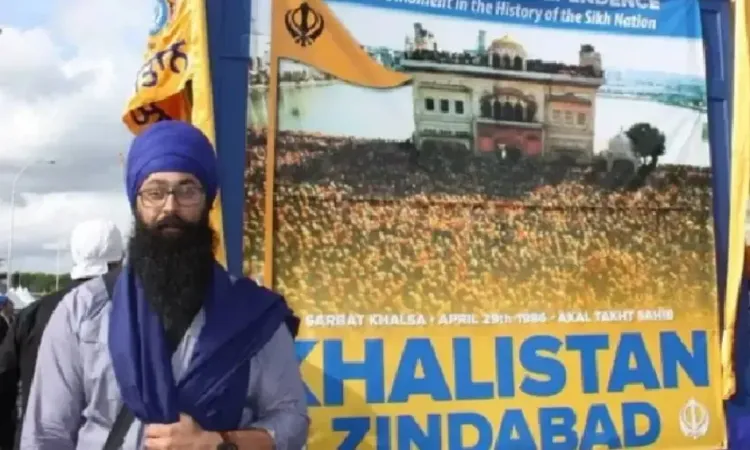
“There is a noticeable trend in Pakistan where cinema is increasingly being employed as a weapon to escalate anti-India sentiments, particularly those associated with Khalistan. Individuals facing challenges in creating films or music promoting Khalistan due to restrictions in India are capitalizing on this opportunity. They travel to Pakistan, operate freely, and consequently make their content viral on social media,” detailed a report from ‘Khalsa Vox’.
“Due to this regressive mindset among Pakistanis, a paradox exists where India and Indian Punjab garner global attention for its rapid economic advancement, institutional reforms, and social progress, while Pakistani Punjab remains ensnared in corruption, scams, and chronic misgovernance,” it further stated.
The report notes that instead of addressing its internal failures, Pakistan is increasingly leaning on an anti-India narrative, mobilizing state-supported media outlets, social media influencers, YouTubers, and filmmakers to divert focus and shape public opinion through cultural output.
“The weaponization of cinema is not a recent development. For decades, Pakistani films and television series have depicted Sikh characters—especially Sikh women—from a narrow and often controversial viewpoint. Many productions resort to tropes such as Islamization or ‘conversion romance,’ which numerous Sikh commentators find offensive and ideologically skewed,” it emphasized.
The report pointed out that the decision to film at sacred Sikh locations—particularly Nankana Sahib, the birthplace of Guru Nanak Dev Ji—has faced significant backlash.
“Sikh religious leaders have condemned this as beadbi (desecration) and underscored that gurdwaras should be preserved for spiritual practices, selfless service, and devotion to Guru Granth Sahib Ji. The exploitation of these sites for commercial filmmaking or political agendas is broadly perceived as a breach of fundamental religious tenets,” it remarked.
“For many Sikhs, this issue transcends geopolitics. It raises profound questions about complicity—how a select few, driven by financial gain, visibility, or institutional support, appear willing to jeopardize religious sanctity and community dignity,” it concluded.
Point of View
It is crucial to approach this matter with a balanced perspective. While the use of cinema for political narratives can be troubling, it also offers a glimpse into the complex socio-political dynamics at play in the region. It is essential to uphold the values of respect and integrity, particularly regarding religious sentiments.
NationPress
19/01/2026
Frequently Asked Questions
How is Pakistani cinema being used politically?
Pakistani cinema is increasingly being used to promote an anti-India narrative and the Khalistani agenda, manipulating cultural symbols for political gains.
What are the implications of filming at sacred sites?
Filming at sacred Sikh sites, like Nankana Sahib, has drawn criticism for being a violation of religious principles and is seen as desecration.
What do critics say about this trend?
Critics warn that using cinema for political messages undermines the sanctity of holy sites and politicizes cultural heritage.
Why is this issue significant?
This issue reflects deeper societal challenges in Pakistan, including governance failures and the manipulation of religious sentiments for political ends.
How do Sikhs view this controversy?
Many Sikhs see this as a serious issue that compromises their religious dignity and raises questions about complicity among those involved.