Is the Pakistani Police the Most Corrupt Government Department in the Country?
Synopsis
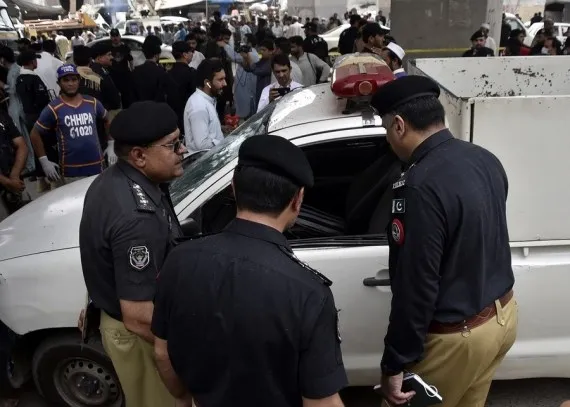
A recent report highlights that the Pakistani police are viewed as the most corrupt government body, with various factors contributing to this perception. The findings from the 2025 National Corruption Perception Survey by Transparency International reinforce serious concerns regarding police integrity and accountability.
Key Takeaways
Pakistan police ranked most corrupt in the 2025 survey.
Punjab Police Department identified as the most corrupt provincial force.
Corruption linked to low salaries and inadequate resources.
Women police officers also involved in corruption.
Public trust in law enforcement is severely undermined.
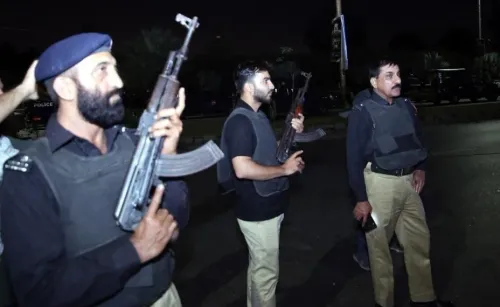
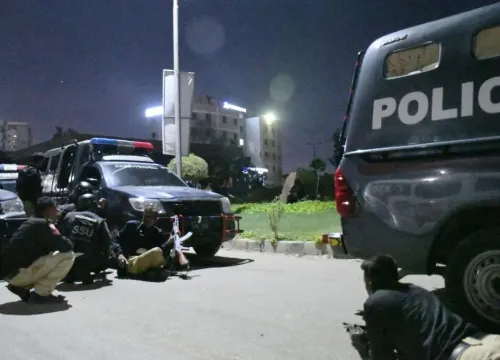
Colombo, Jan 23 (NationPress) The law enforcement agency of Pakistan is perceived by the public as the most corrupt institution, attributed to factors like outdated regulations, extensive discretionary powers, persistent corruption, political favoritism, inadequate salaries, and a lack of accountability, as highlighted in a recent report.
This report noted that the Pakistan police has once more been positioned at the forefront of the 2025 National Corruption Perception Survey published by Transparency International, further solidifying the prevalent belief that it stands as the country's most corrupt force.
According to the esteemed Sri Lankan publication, Daily Mirror, nearly one in four individuals surveyed by Transparency International labeled the Pakistani police as the most corrupt government department.
The findings revealed that 34 percent of respondents pinpointed the Punjab Police Department as the most corrupt among Pakistan's provinces.
“The Punjab Police has devolved into the most corrupt institution in Pakistan. From the grassroots to the upper echelons, the entire system is enmeshed in bribery, abuse of authority, and violence against innocent individuals. They ruin lives without any hesitation,” cited a Pakistani national, Shamas Ali, as reported by Daily Mirror.
Tariq Abbas Qureshi, the Inspector General of Police in Pakistan, indicated that rampant corruption within the police department has significantly diminished the rule of law, remaining deeply entrenched in a “kinship-based patron–client social and political culture.”
“It is evident that police corruption in Pakistan is a politicised, institutionalised, and legitimised phenomenon. Officers receive low salaries, and police operations lack proper funding. This combination fosters corruption,” Qureshi stated, adding, “Without corruption, they believe they cannot operate their police stations.”
While female officers are deployed to create a safer reporting environment for female victims, the report also pointed out that women police personnel in Pakistan have faced accusations of corruption and misconduct. In 2025, for instance, a female constable named Sakina Bibi was apprehended for reportedly soliciting 2.1 million Pakistani Rupees from a complainant to prevent a fabricated encounter killing.
The report referenced Human Rights Watch (HRW) from New York, which described the Pakistani police as “the most abusive, corrupt, and unaccountable institution of the state.”
“The non-registration of FIRs is also associated with corruption. Complainants, especially those from less privileged backgrounds, reported that police would refuse to register their FIRs unless bribes were paid,” according to HRW. “Corruption is inextricably intertwined with financial constraints. The high incidence of corruption adversely affects trust in the police,” it concluded.
Point of View
It is imperative to acknowledge the persistent issues surrounding corruption within the Pakistani police force. The findings from Transparency International's survey reflect a deep-rooted problem that requires immediate attention. The nation stands in solidarity with efforts aimed at reforming law enforcement to restore trust and accountability.
NationPress
30 Sept 2026
Frequently Asked Questions
What factors contribute to police corruption in Pakistan?
Key factors include outdated regulations, broad discretionary powers, entrenched political patronage, low salaries, and insufficient accountability mechanisms.
What does the Transparency International survey reveal?
The survey ranks the Pakistani police as the most corrupt government department, with significant public sentiment supporting this view.
Is corruption within the police force a widespread issue?
Yes, corruption is reported across various levels of the police force, affecting both male and female officers.
How does police corruption affect the public?
It undermines trust in law enforcement, discourages victims from reporting crimes, and perpetuates a cycle of abuse and misconduct.
What can be done to address police corruption?
Addressing this issue requires comprehensive reforms, including better training, increased accountability, and improved compensation for police officers.