Human Rights Commission Reports Violence in Punjab's Crime Control Department
Synopsis
A shocking report reveals systemic violence in Punjab's Crime Control Department, highlighting the urgent need for accountability and legal reforms in Pakistan's policing.
Key Takeaways
Systematic violence reported in Punjab's CCD.
Over 900 suspects killed in less than a year.
Call for independent judicial inquiry into extrajudicial killings.
Legal reforms are necessary to uphold human rights.
Extrajudicial encounters violate national and international laws.
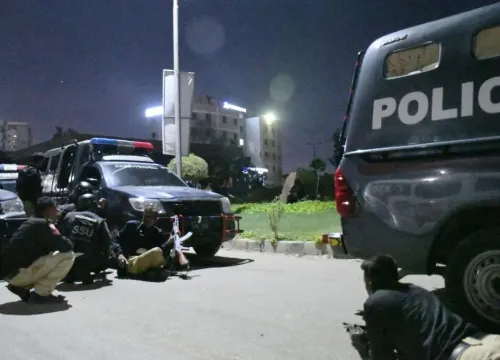
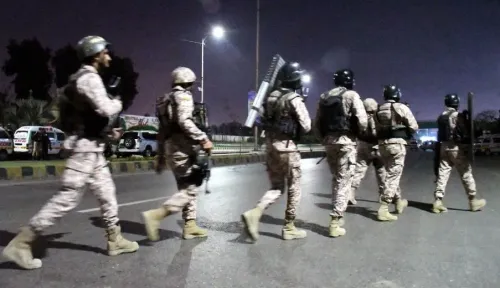
Islamabad, Feb 24 (NationPress) A new report from the Human Rights Commission of Pakistan (HRCP) reveals that the Crime Control Department (CCD) in Punjab may exhibit more violence than any other specialized units across the nation. The report asserts that the quality of policing in Pakistan will not improve if the disregard for human life remains unchecked.
In its inaugural year, the CCD recorded at least 670 encounters that resulted in the deaths of 924 suspects from April to December 2025, while only two police officers lost their lives in the same timeframe.
“Although the disproportionate figures may imply that the police force is exceptionally trained and proficient, the significant disparity suggests underlying issues. The government has failed to provide a credible counterargument to the HRCP's demand for an independent judicial inquiry,” an editorial in the prominent Pakistani daily 'The Express Tribune' noted.
On average, more than two encounters occurred daily, with a notable concentration in districts such as Lahore and Faisalabad. Official narratives claimed that suspects fired first, necessitating police 'retaliation,' resulting in fatal injuries to suspects. Civilian witnesses were reportedly absent, even in crowded areas where some encounters took place.
“Policing in Pakistan cannot enhance if the blatant disregard for human life remains unpunished. Such encounters violate both Pakistani and international laws. Unfortunately, despite years of troubling revelations, federal and provincial administrations merely offer lip service to the matter. Unfortunately, a 'Safe Punjab' cannot be built upon the remains of victims of extrajudicial killings. To evolve into a great nation, we must first embrace the rule of law, ensuring rights for even the most undeserving among us,” The Express Tribune emphasized.
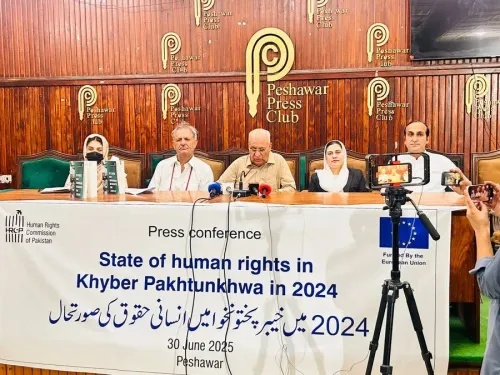
Recently, the HRCP condemned the CCD in Punjab for implementing a strategy of staged encounters leading to extrajudicial killings, which fundamentally threaten the rule of law and constitutional rights within the province. The HRCP outlined that there were at least 670 CCD-led encounters over eight months in Punjab during 2025, leading to 924 suspect deaths, with only two police fatalities.
“The significant casualty discrepancy — averaging over two fatal encounters daily — alongside the consistent operational patterns across districts, suggests an entrenched practice rather than mere isolated misconduct incidents. The fact-finding mission has thus called for an urgent high-level judicial inquiry into these fatalities,” stated the HRCP.
The organization documented a widespread atmosphere of fear among victims’ families. One family reported coercion from police officials to hastily bury their deceased and claimed they were threatened that other relatives could face harm if they pursued the case further. Such intimidation constitutes criminal behavior and represents a serious obstruction of justice.
“The methodology of police encounters as a means of crime management has a long and distressing legacy in Pakistan. Successive provincial administrations, particularly in Punjab and Sindh, have justified such actions as essential to combat crime, extremism, or systemic flaws within the criminal justice framework,” the HRCP remarked.
However, the organization highlighted that Pakistani courts, civil society entities, and human rights groups have persistently raised alarms regarding extrajudicial killings, the lack of accountability, and violations of the right to life as guaranteed under Article 9 of Pakistan's Constitution.
According to HRCP findings, “CCD operations fail to align with the UN Basic Principles on the Use of Force and Firearms by Law Enforcement Officials, which stipulate that lethal force must be absolutely necessary and proportionate, and that violators must be held accountable.”
Point of View
The report sheds light on a pressing issue that undermines public trust in law enforcement. It emphasizes that without accountability and adherence to legal standards, the aspirations for a safe and just society in Pakistan remain unfulfilled.
NationPress
5 Oct 2026
Frequently Asked Questions
What did the HRCP report reveal about the CCD?
The HRCP report indicated that Punjab's Crime Control Department might be more violent than any other specialized squad in Pakistan, with significant extrajudicial killings.
How many suspects were reported killed by the CCD?
The report documented at least 924 suspects killed during 670 encounters in the CCD's first year of operation.
What does the report suggest about the state of policing in Pakistan?
It suggests that policing cannot improve if the contempt for human life goes unpunished and calls for an independent judicial inquiry.
What has been the response from civil society regarding these findings?
Civil society organizations, including the HRCP, have condemned the CCD's practices and demanded accountability and adherence to legal standards.
Why are police encounters a concern under international law?
Police encounters are considered illegal under both Pakistani and international law if they involve extrajudicial killings without due process.