Urgent Reforms Needed in Pakistan to Avoid Economic Decline by 2031: Report

Synopsis
A new report reveals critical structural issues facing Pakistan's economy, warning that without urgent reforms, the country risks stagnation and social fragmentation by 2031. The youth's potential could turn into a destabilizing factor if job opportunities continue to dwindle.
Key Takeaways
Urgent reforms are necessary to avoid economic stagnation.
The youth demographic poses both opportunities and challenges.
High unemployment rates threaten future stability.
Investment in education is critically low.
External shocks can exacerbate economic issues.
New Delhi, March 1 (NationPress) A new report warns that by 2031, Pakistan may have to grapple with profound structural issues including limited tax revenue, energy inefficiencies, and government elite capture, or risk a fragile economy with weakened social cohesion.
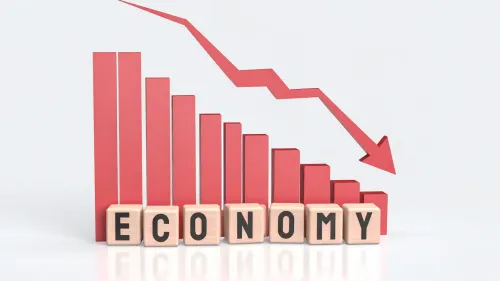
The analysis from Business Recorder indicates that insufficient reforms could result in average annual GDP growth stagnating at around 2–3 percent for the next five years, only slightly outpacing population growth.
"Stagnation can be perilous in a nation with a young demographic," the report cautions, suggesting that the next five years will be crucial to determine if the youthful population becomes a valuable asset or a source of instability.
"Continued job fragility may lead to increased emigration. While remittances could provide temporary economic relief, the loss of skilled individuals will gradually deplete domestic capabilities," the report states.
Forecasts for Pakistan between 2026 and 2031 predict that the country's fate will be shaped by debt management, inflation trends, and poverty levels. The warning signals slow growth and inflation that could significantly impact household finances.
Experts believe that while stabilization programs and support from the IMF can offer temporary relief, they cannot ensure sustainable growth. Without decisive government action, employment opportunities will likely remain limited to informal, low-productivity sectors.
However, the report suggests that growth could rebound to 4–5 percent by 2029–30, given effective tax reforms, improved revenue collection through digitization, and export-focused policies, potentially alleviating poverty to some degree.
The analysis criticizes the persistent lack of political resolve to broaden the tax base and reduce elite control, stating, "Every external shock—whether from rising oil prices, climate emergencies, or geopolitical conflicts—will push the system back toward reliance on emergency funds," it warns.
Additionally, another report highlights that Pakistan allocates only about 1.9 percent of its GDP to education, significantly lower than the recommended 4 to 6 percent globally, leaving approximately 26.2 million children outside of the educational system. The current curricula provide minimal exposure to digital skills, critical thinking, and practical learning, resulting in a workforce unprepared for technological advancements.
Surveys indicate that 64 percent of graduates struggle to find employment due to skill mismatches, with youth unemployment among graduates estimated at around 31 percent.
Point of View
This report highlights the urgent need for Pakistan to address its systemic economic issues. Without decisive reforms, the country may find itself in a precarious situation, struggling with stagnation and social unrest. It’s essential for the government to act now to safeguard the future of its youthful population and economic health.
NationPress
30 Sept 2026
Frequently Asked Questions
What are the main economic challenges facing Pakistan?
Pakistan is grappling with limited tax revenue, energy inefficiencies, and elite capture of the government, which threaten its economic stability.
What is the projected GDP growth for Pakistan in the coming years?
The report suggests that GDP growth may stagnate around 2–3 percent annually unless significant reforms are implemented.
What impact could youth unemployment have on Pakistan's future?
High youth unemployment may lead to increased emigration and a potential brain drain, which can further weaken the domestic economy.
How much of its GDP does Pakistan allocate to education?
Pakistan currently spends about 1.9 percent of its GDP on education, which is significantly below the international recommendation of 4 to 6 percent.
What reforms are necessary for Pakistan's economic recovery?
Tax reforms, digitized revenue collection, and export-oriented strategies are critical for improving growth and reducing poverty.