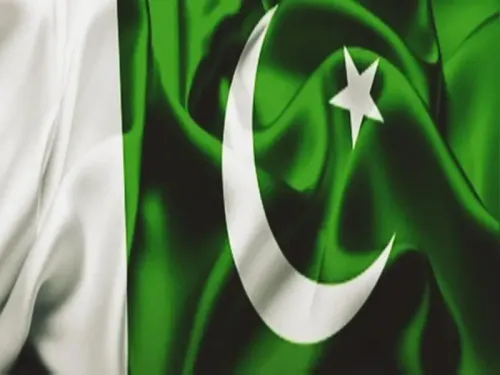
Was Pakistan's Removal from FATF Grey List Premature?
Synopsis
The recent removal of Pakistan from the FATF grey list raises serious questions regarding the nation's commitment to combatting terrorism. With groups like Lashkar-e-Taiba and Jaish-e-Mohammad thriving, experts argue that this decision was made too hastily. What does this mean for global security and Pakistan's role?
Key Takeaways
Pakistan's removal from the FATF grey list is questioned due to ongoing terror financing issues.
The resurgence of Lashkar-e-Taiba and Jaish-e-Mohammad raises concerns about compliance.
State elements may be facilitating terrorist organizations.
International credibility is at stake for Pakistan.
The FATF's February plenary could prompt renewed scrutiny.
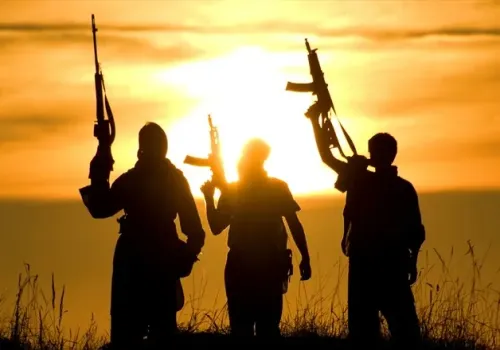
Ottawa, Feb 7 (NationPress) The decision to remove Pakistan from the grey list of the Financial Action Task Force (FATF) – identified as “jurisdictions under increased monitoring” – has been deemed “premature”. This assessment arises amidst the resurgence of domestic terrorist factions such as Lashkar-e-Taiba and Jaish-e-Mohammad, whose ongoing operational capabilities indicate a failure to comply with the global money laundering and terror financing oversight.
This situation highlights Pakistan's insufficient control over its internal terror financing networks. More concerningly, there is evidence suggesting that certain state elements are not only tolerating but may be actively facilitating the resurgence of these terrorist organizations, according to a report.
“During the Davos meeting, Pakistan committed to joining President Trump’s new ‘Board of Peace’, alongside several other countries with inconsistent records on governance and human rights. Originally aimed at overseeing the Gaza ceasefire, this initiative seems to be expanding into a larger project intended to reshape global governance, bypassing the United Nations frameworks,” a report from Canada’s Geopolitical Monitor elaborates.
“This initiative allows Islamabad to enhance its image as a responsible global actor; however, recent developments, especially in the past year, raise questions about Pakistan’s credibility in such a role. Unresolved risks related to terrorist financing still exist, necessitating greater scrutiny as the FATF’s February plenary approaches,” the report continued.
In October 2022, the FATF announced that Pakistan would no longer be classified as “under increased monitoring”.
Earlier that same year, a Pakistani court sentenced Hafiz Saeed, the founder of Lashkar-e-Taiba, to 31 years in prison.
Although he was accused of orchestrating several mass casualty attacks, including the infamous 2008 Mumbai attacks, the charges leading to Saeed’s conviction were restricted to terrorist financing.
“Saeed’s long-standing immunity in Pakistan had been a significant issue in the FATF’s scrutiny, making his 2022 conviction a perceived prerequisite for the country’s removal from the grey list,” the report indicated.
“Yet, over three years later, Pakistan appears to have reverted to previous behaviors that initially attracted FATF’s attention, with Lashkar-e-Taiba, its splinter groups, including The Resistance Front (TRF), and other notable terror organizations like Jaish-e-Mohammad continuing to operate and gather funds without hindrance,” it noted.
In light of these developments, the report concludes, “It is once again imperative that Pakistan is reconsidered for increased monitoring by the FATF, with the upcoming February plenary serving as a critical juncture for action.”
Point of View
I stand by the notion that while Pakistan seeks to present itself as a responsible global actor, the evidence of persistent terror financing networks undermines its credibility. It is crucial that the FATF reassesses Pakistan's status to ensure compliance with international standards.
NationPress
13 Oct 2026
Frequently Asked Questions
Why was Pakistan removed from the FATF grey list?
Pakistan was removed from the FATF grey list due to progress reported in combating money laundering and terrorist financing, despite ongoing concerns about the operational capacity of domestic terrorist groups.
What are Lashkar-e-Taiba and Jaish-e-Mohammad?
Lashkar-e-Taiba and Jaish-e-Mohammad are militant organizations based in Pakistan, known for conducting terrorist activities, including attacks on India.
What does being on the FATF grey list mean?
Being on the FATF grey list indicates that a country is under increased monitoring due to deficiencies in its anti-money laundering and counter-terrorist financing frameworks.
What are the implications of Pakistan's status with the FATF?
Pakistan's status with the FATF affects its international reputation, foreign investment, and relationships with other nations, particularly regarding compliance with global security standards.
What actions are being called for regarding Pakistan's FATF status?
Experts are calling for a reconsideration of Pakistan's FATF status amid concerns over the resurgence of terrorist groups and lack of compliance with global recommendations.