Pakistan's governance crisis draws US, EU scrutiny over labour and rights failures
Synopsis
Pakistan's governance breakdown is no longer just a domestic problem — the US Trade Representative has flagged Islamabad's failure to enforce forced labour prohibitions, while the EU is demanding rights and governance reforms. A Maldivian media report estimates corruption is draining $20–26 billion from Pakistan's economy annually, nearly two-and-a-half times its entire healthcare budget.
Key Takeaways
The US Trade Representative has concluded that Pakistan has failed to enforce prohibitions against forced labour .
The EU has pressed Pakistani authorities for meaningful progress on human rights , labour protections , and governance reforms .
Pakistan loses an estimated $20–26 billion (Pakistani Rs 5,600–7,280 billion ) annually to corruption — roughly 5–6.5% of GDP .
Corruption losses are nearly two-and-a-half times Pakistan's total healthcare spending of approximately $11 billion .
A Maldivian media report citing Pakistani media describes democratic institutions, constitutional safeguards, and labour protections as 'all under siege.' Pakistan's hybrid political order — civilian authority intertwined with military influence — has reportedly weakened Parliament and suppressed dissent.
Pakistan's deepening governance crisis is no longer confined to its domestic arena — it is now actively eroding the country's international standing, according to a report by Maldivian media outlet Etruth MV. The United States Trade Representative has concluded that Islamabad has failed to effectively enforce prohibitions against forced labour, while the European Union (EU) has pressed Pakistani authorities to deliver meaningful progress on human rights, labour protections, and governance reforms.
Institutions Under Siege
Pakistani media has increasingly adopted a critical lens on the country's governance trajectory, with reports describing democratic institutions, constitutional safeguards, human rights, and labour protections as 'all under siege.' The Etruth MV report draws on this domestic coverage to paint a picture of systemic institutional decay.
'Governance in Pakistan has increasingly become a footnote in the national discourse. Successive governments have announced sweeping reform agendas and ambitious schemes, yet these promises ring hollow against the lived realities of citizens,' the report stated. It added that 'good governance has never occupied the priority lists of ruling elites or political parties, leaving ordinary people to grapple with repression, economic hardship, and the absence of credible representation.'
Military Influence and Democratic Erosion
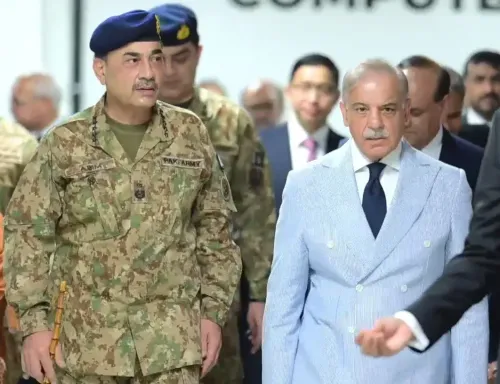
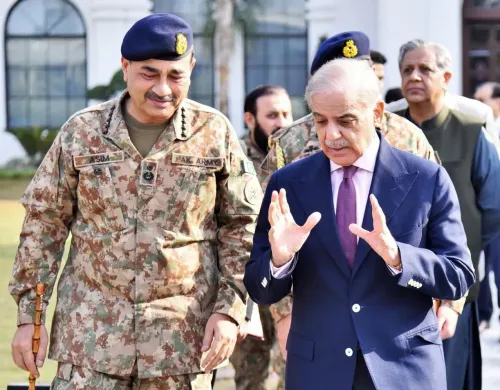
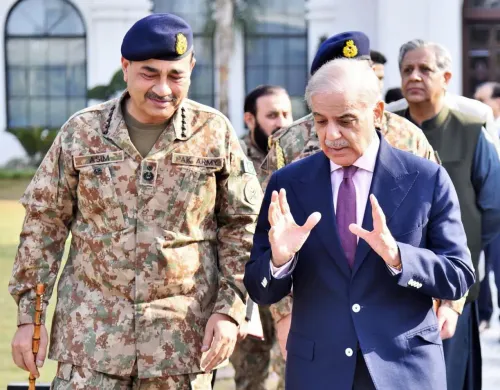
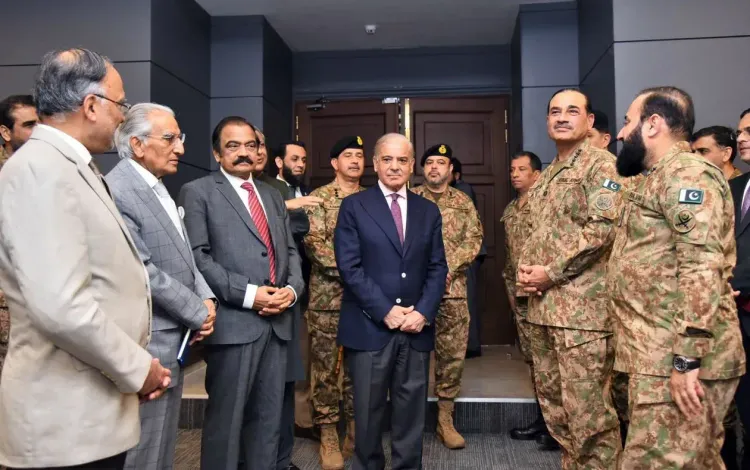
The report highlights what it describes as a hybrid political order in Pakistan — one marked by the intertwining of civilian authority and entrenched military influence. This arrangement has, according to the report, weakened Parliament, concentrated power in unaccountable hands, and suppressed political dissent. The country's working population is described as being 'at breaking point,' lacking political vehicles to channel legitimate grievances.
'Pakistan's youth, who form the majority of the population, embody heady ambitions that cannot indefinitely coexist with systemic repression and economic stagnation,' the report warned, pushing back against what it called 'diplomatic narratives projected abroad.'
The Corruption Cost: $20–26 Billion a Year
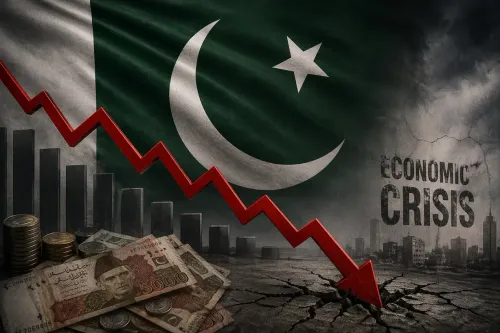
Pakistan is estimated to lose between 5 and 6.5 per cent of its GDP annually to corruption, translating into losses of approximately $20–26 billion (Pakistani Rs 5,600–7,280 billion), according to the report. To contextualise the scale: this is nearly two-and-a-half times the country's total healthcare spending of approximately $11 billion.
The report attributes this haemorrhage to structural weaknesses — unchecked bureaucratic power, political patronage shaping public policy, and judicial institutions vulnerable to corruption. These factors, it argues, erode investor confidence, diminish public trust, and force citizens to pay officials for basic services. 'At higher levels, state capture by political and economic elites ensures that public authority is wielded for private enrichment rather than societal well-being,' the report noted.
Trade Ties at Risk
The convergence of domestic dysfunction and international scrutiny is now threatening Pakistan's trade relationships with key partners. The US Trade Representative's finding on forced labour enforcement failures and the EU's push for reform signal that Islamabad's governance record is becoming a trade and diplomatic liability, not merely a domestic concern.
'Without transparency, accountability, and genuine democratic renewal, Pakistan risks further isolation abroad and deeper instability at home,' the report cautioned. This comes amid broader global attention on supply-chain labour standards, where trading blocs are increasingly conditioning market access on verifiable rights protections.
What Comes Next
Both the US and the EU have signalled that meaningful reform — not rhetorical commitment — is the threshold for sustained trade engagement. For Pakistan, whose economy remains heavily dependent on preferential trade access, the cost of inaction is rising. Analysts and civil society groups have long argued that without structural reform of governance institutions, no economic stabilisation programme can deliver durable results.
Point of View
For instance, is explicitly conditioned on rights compliance, making these warnings structurally significant. What the report underscores, and what mainstream coverage often misses, is that Pakistan's governance crisis is now a trade-policy variable, not just a human rights concern. The corruption figure — $20–26 billion annually, dwarfing the health budget — also reframes the country's perennial IMF dependency: no external bailout can compensate for a domestic resource haemorrhage of that magnitude without structural reform of the institutions enabling it.
NationPress
19 Sept 2026
Frequently Asked Questions
Why is Pakistan's governance crisis affecting its international standing?
The US Trade Representative has found that Pakistan has failed to enforce prohibitions against forced labour, and the EU has demanded progress on human rights and governance reforms. These findings signal that Islamabad's domestic governance failures are becoming a liability in its trade and diplomatic relationships with key partners.
How much does corruption cost Pakistan each year?
Pakistan is estimated to lose between $20–26 billion — or 5 to 6.5 per cent of its GDP — annually to corruption, according to the report. This is nearly two-and-a-half times the country's total healthcare spending of approximately $11 billion.
What is the 'hybrid political order' described in the report?
The term refers to Pakistan's political arrangement in which civilian governmental authority is intertwined with entrenched military influence. According to the report, this structure has weakened Parliament, concentrated power, and suppressed political dissent.
What are the EU and US demanding from Pakistan?
The EU has pressed Pakistani authorities to deliver meaningful progress on human rights, labour protections, and governance reforms. The US Trade Representative has specifically flagged Pakistan's failure to enforce forced labour prohibitions, which has implications for trade access.
Who published the report on Pakistan's governance crisis?
The findings were detailed in a report by Maldivian media outlet Etruth MV, which drew on Pakistani media coverage to assess the country's governance trajectory and its international consequences.