Is the Rich-Poor Divide in Pakistan Reaching Crisis Levels?
Synopsis
The alarming rise in income and wealth inequality in Pakistan, as highlighted by the 'World Inequality Report 2026', raises crucial questions about the socio-economic landscape of the nation. With the IMF's role under scrutiny, the need for a more equitable economic model is pressing.
Key Takeaways
42% of total income is held by the top 10%.
Only 19% of total income is received by the bottom 50%.
The richest 10% control 59% of total wealth.
Significant correlation between IMF programs and rising inequality.
Need for public sector intervention and social spending.
New Delhi, Jan 14 (NationPress) The ‘World Inequality Report 2026’ has identified Pakistan as a nation grappling with severe income and wealth inequality among its populace.
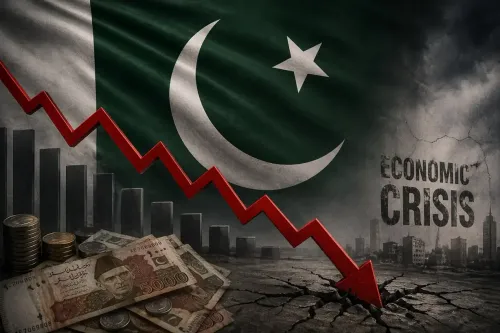
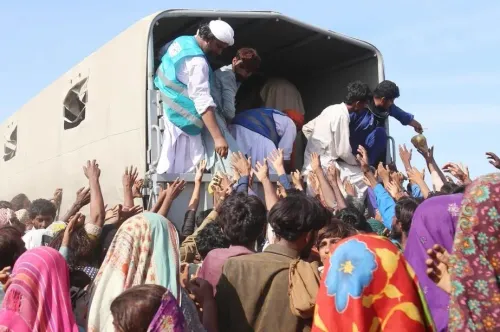
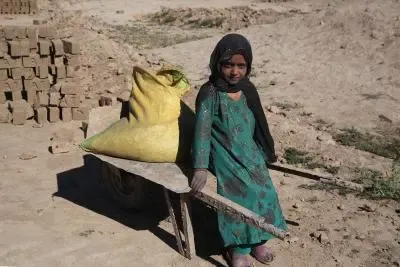
According to the report, inequality in Pakistan remains alarmingly high with minimal advancements observed over the last ten years. The top 10% of income earners account for 42% of the total income, while the bottom half of the population receives just 19%. In terms of wealth distribution, the richest 10% possess a staggering 59% of total wealth, and the top 1% alone controls 24%. Overall, income and wealth disparities are stark in Pakistan, compounded by enduring gender inequalities and negligible changes in inequality patterns.
Interestingly, while Pakistan continues to rely on IMF bailouts, local media outlets are attributing the rise in income inequality to the IMF's influence.
A report featured in Pakistan Today draws from the book “A Thousand Cuts: Social Protection in the Age of Austerity” to critique the IMF, suggesting that the conditions set by IMF programs correlate positively with rising income inequality.
However, this narrative overlooks significant factors such as widespread corruption in Pakistan, the dominance of a feudal agricultural sector, and the military's influence over business operations, which also contribute to this inequality.
The book aligns with findings from numerous earlier studies concerning labor income and inequality. The article notes that the discourse on the effects of IMF programs on income disparity has been ongoing within a growing body of literature.
Pakistan has engaged in approximately two dozen IMF programs, and given the adverse impact these programs have on income inequality, it is crucial for both the IMF and Pakistan's governing bodies—namely, the Ministry of Finance and the State Bank of Pakistan (SBP)—to reconsider their neoliberal and austerity-driven policies. Instead, advocating for a more significant public sector role in economic management and enhancing social spending, particularly in areas such as health and education, is essential, contrasting the current trend of austerity favored by IMF stipulations.
Point of View
Our stance remains clear: we advocate for equitable economic policies in Pakistan. The growing disparity in wealth and income must be addressed through comprehensive reforms, shifting away from reliance on neoliberal frameworks that perpetuate inequality. It is vital for our leaders to prioritize social equity and public welfare.
NationPress
3 Oct 2026
Frequently Asked Questions
What does the World Inequality Report 2026 say about Pakistan?
The report highlights that income and wealth inequality in Pakistan is alarmingly high, with the top 10% of earners capturing 42% of total income.
How does the IMF influence income inequality in Pakistan?
Critics argue that IMF program conditionalities correlate positively with rising income inequality, often exacerbating the situation.
What are the main causes of inequality in Pakistan?
Key factors include widespread corruption, a feudal agricultural system, and military control over businesses.
What changes are needed to address inequality in Pakistan?
There's a need for a greater public sector role in the economy and increased social spending on health and education.
What has been the impact of IMF programs on Pakistan?
Pakistan has been part of around two dozen IMF programs, which many believe have worsened income inequality.