Pakistan's legal rot: Corrupt lawyers thrive as honest ones exit the profession
Synopsis
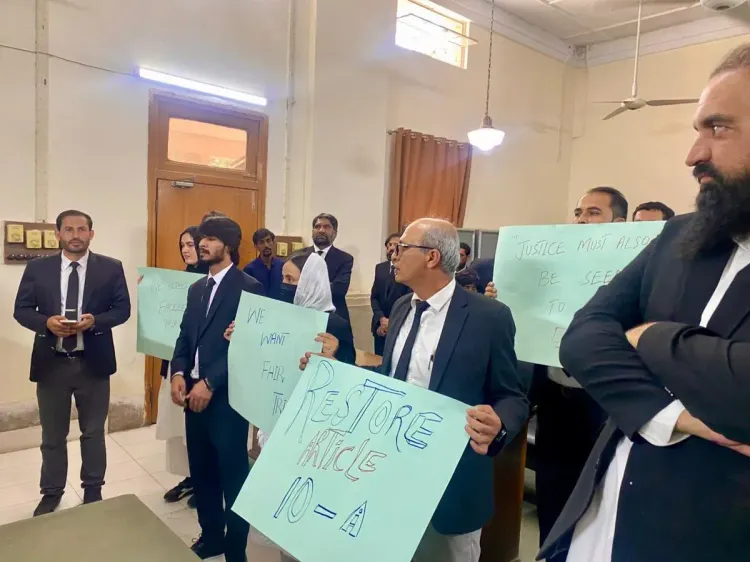
Two damning reports — one from analyst Mustafa Arif in The Friday Times, another from the International Federation for Human Rights — converge on the same conclusion: Pakistan's legal system is being hollowed out from within. Corrupt lawyers who guarantee outcomes are outcompeting honest ones, constitutional amendments have weakened the Supreme Court, and the judiciary is increasingly described as a tool of executive repression.
Key Takeaways
Analysts writing in The Friday Times report that lawyers guaranteeing illicit outcomes are commercially outcompeting ethical practitioners in Pakistan .
Author Mustafa Arif argues that honesty has become 'commercially unsustainable' in Pakistan's legal profession, forcing capable lawyers out.
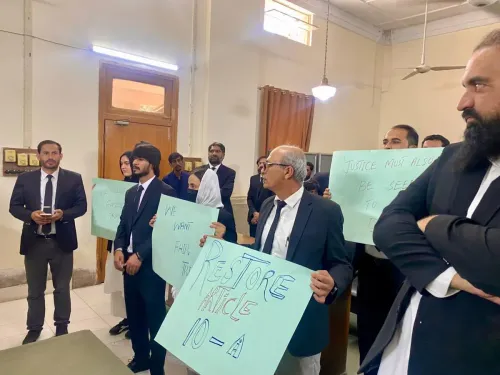
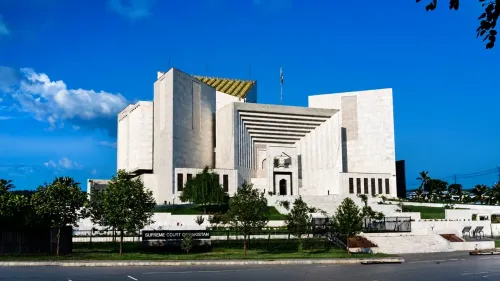
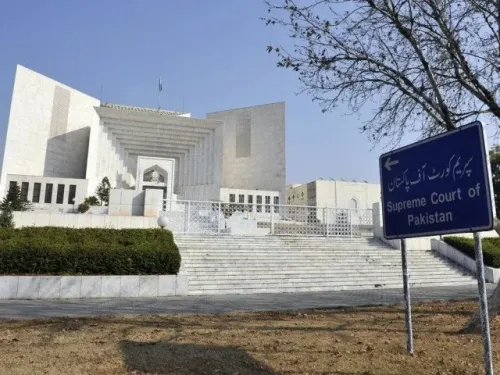
The 26th and 27th Constitutional Amendments have reportedly weakened the Supreme Court and increased executive influence over judicial appointments.
The International Federation for Human Rights (FIDH) last month declared judicial corruption in Pakistan to be at systemic scale , potentially amounting to grand corruption.
The FIDH report, based on interviews with 30 interlocutors , found that low-income communities and minorities are disproportionately harmed by the breakdown in due process.
Pakistan's judiciary is described in the FIDH report as having become 'a tool for repression and silencing of activists and dissidents.'
Pakistan's legal profession is facing a deepening integrity crisis, with lawyers who guarantee illicit outcomes reportedly outcompeting ethical practitioners — forcing many competent attorneys to either abandon their careers or struggle to survive, according to a detailed report published in The Friday Times.
Corruption Rewarded, Competence Sidelined
Writing in The Friday Times, analyst Mustafa Arif laid out a stark picture of how market incentives within Pakistan's legal ecosystem now favour corruption over capability. 'A lawyer who has mastered his field can lose out to one who has mastered nothing except securing favourable outcomes through illicit means, since the latter promises something the first won't, which is a guaranteed win,' Arif wrote.
Litigants, he argued, have adapted to this reality. Aware that a 'clean' case is a gamble, they either pay a premium for a lawyer who can guarantee the outcome, or bypass the courts entirely and settle disputes outside the formal system. The consequence, Arif noted, is that 'competence is overshadowed by connections, and integrity becomes commercially unsustainable.'
Constitutional Amendments Weaken Judicial Independence
The report further highlights how the 26th and 27th Constitutional Amendments have eroded the authority of Pakistan's Supreme Court while transferring powers to a newly created Federal Constitutional Court. Critics argue these changes have amplified executive influence over judicial appointments, with judges reportedly selected from inner circles — former chamber fellows, juniors, caste favourites, bar-political loyalists, and members of entrenched patronage networks — rather than on constitutional merit.
FIDH Flags Systemic Judicial Corruption
The findings echo a separate warning issued last month by the International Federation for Human Rights (FIDH), which concluded that judicial corruption in Pakistan has reached systemic scale and may amount to grand corruption. The FIDH's report, titled 'Under the Bench: Mapping Corruption Risks in Pakistan's Justice System', warned that the country's justice system has grown increasingly vulnerable to political influence and institutional capture.
The FIDH report noted serious human rights implications, including violations of due process and equality before the law, with low-income communities and minorities disproportionately affected. Its findings were based on interviews with 30 interlocutors — including lawyers, former and retired judges, journalists, and civil society representatives.
Judiciary as a Tool of Repression
According to the FIDH's executive summary, Pakistan's democratic institutions — including the judiciary — have faced mounting pressure and gradual capture by the executive branch over recent years. 'This has been accompanied by severe repression of fundamental freedoms, facilitated by repressive legislation and grave violations of human rights. In this context, the judiciary has become a tool for repression and silencing of activists and dissidents,' the report stated.
What This Means for Pakistan's Rule of Law
Taken together, the two reports paint a troubling picture of a legal system in structural decline. Years of unchecked corruption have, according to these assessments, eroded public trust in Pakistan's justice institutions to the point where citizens routinely opt out of formal legal processes. Whether the political will exists to reverse this trajectory remains, for now, an open question.
Point of View
The more it drives out the people best equipped to challenge it. Pakistan's constitutional amendments compounding this by reshaping the bench along patronage lines means the problem is now structural, not merely cultural. The FIDH's framing of 'institutional capture' is the right one — and institutional capture is far harder to reverse than individual misconduct. The honest lawyer exiting the profession is not just a personal tragedy; it is the justice system losing the one constituency with both the standing and the knowledge to reform it from within.
NationPress
13 Oct 2026
Frequently Asked Questions
What does the report say about Pakistan's legal profession?
The report, published in The Friday Times, says that lawyers who guarantee illicit outcomes are commercially outcompeting ethical practitioners in Pakistan. Honest lawyers who refuse to compromise their principles are either leaving the profession or struggling to sustain their practices.
How have Pakistan's constitutional amendments affected the judiciary?
The 26th and 27th Constitutional Amendments have reportedly weakened the Supreme Court's constitutional authority and transferred powers to a newly created Federal Constitutional Court. Critics say the amendments have increased executive influence over judicial appointments, with judges selected through patronage networks rather than on merit.
What did the FIDH find about Pakistan's justice system?
The International Federation for Human Rights (FIDH) concluded that judicial corruption in Pakistan is at systemic scale and may amount to grand corruption. Its report, 'Under the Bench: Mapping Corruption Risks in Pakistan's Justice System,' warned of serious human rights violations, particularly affecting low-income communities and minorities.
Who was interviewed for the FIDH report on Pakistan's judiciary?
The FIDH report's findings are based on interviews with 30 interlocutors, including lawyers, former and retired judges, journalists, and civil society representatives, four of whom were women.
Why are ordinary Pakistanis bypassing the courts?
According to the Friday Times report, litigants have lost confidence in formal legal processes because a 'clean' case is seen as a gamble. Many either pay a premium for lawyers who can guarantee outcomes through illicit means, or settle disputes quietly outside the court system altogether.