Pakistan judiciary weaponised by security state, ranks 101st on rule of law: FIDH report
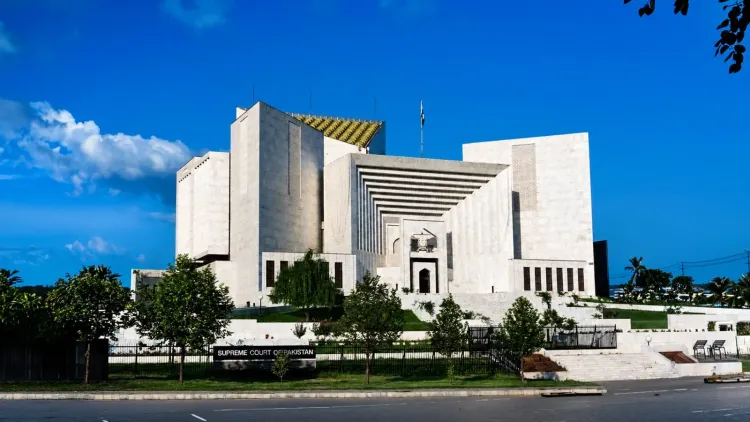
Synopsis
A damning FIDH report, cited by One World Outlook, finds Pakistan's courts have been structurally converted into an arm of the security establishment — with 2.4 million pending cases used as leverage, near-certain blasphemy convictions targeting minorities, and constitutional amendments that handed the prime minister effective control over judicial appointments.
Key Takeaways
Pakistan has approximately 2.4 million pending cases and ranks 101st of 143 nations on criminal justice in the World Justice Project's Rule of Law Index .
The 26th and 27th constitutional amendments (passed in 2024 and 2025 ) inserted parliamentarians into judicial selection and gave Prime Minister Shehbaz Sharif effective control over the new Federal Constitutional Court .
Nearly 800 people were detained on blasphemy charges in 2024 , overwhelmingly from poor and minority communities, with conviction rates of approximately 95% .
The National Accountability Bureau , FIA , and Supreme Judicial Council are described by insiders as instruments of selective punishment against military critics, not independent watchdogs.
Journalists and whistleblowers face legal exposure under defamation and cyber-crime laws for scrutinising the system, according to the FIDH report.
Pakistan's judiciary has been systematically converted into an instrument of the security establishment it was originally designed to check, according to findings cited in an analysis by One World Outlook, drawing on a report by the International Federation for Human Rights (FIDH) titled 'Under the Bench: Mapping Corruption Risks in Pakistan's Justice System'. The findings, published on 12 July, paint a damning picture of a legal system where justice has effectively become a commodity.
Scale of the Crisis
With approximately 2.4 million cases pending across Pakistani courts, the country ranks 101st out of 143 nations on criminal justice and 129th on civil justice in the World Justice Project's Rule of Law Index. Critics argue this backlog is not accidental.
'Backlog of this magnitude is not merely an inefficiency; it is a resource that can be allocated. A hearing date can be bought or buried. A First Information Report — the document that formally opens a criminal case in Pakistan — can be delayed or accelerated for a price, and evidence can be quietly reshaped along the way,' the One World Outlook article stated.
The analysis describes the outcome not as a failure of justice but as its deliberate transformation into a commodity — available to those who can pay, and effectively denied to those who cannot.
Constitutional Restructuring Strips Judicial Independence
The report does not attribute the crisis solely to systemic dysfunction. It identifies a more deliberate process: a constitutional restructuring that has progressively hollowed out whatever judicial independence Pakistan's courts once possessed.
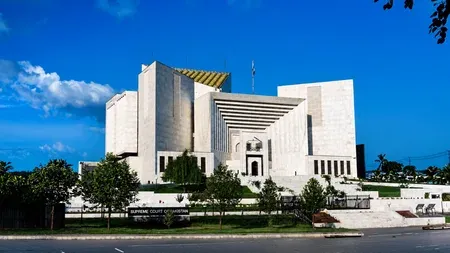
'The 26th and 27th amendments, passed in 2024 and 2025, inserted Members of Parliament into the body that selects judges, empowered a judicial council to remove judges for the conveniently vague offence of 'inefficiency', and created a new Federal Constitutional Court whose leadership is effectively chosen by the Prime Minister (Shehbaz Sharif),' the article noted, citing the FIDH findings.
This restructuring, critics argue, has formalised what was previously an informal arrangement — giving the executive and military establishment direct levers over judicial appointments and removals.
Blasphemy Cases Expose Systemic Bias
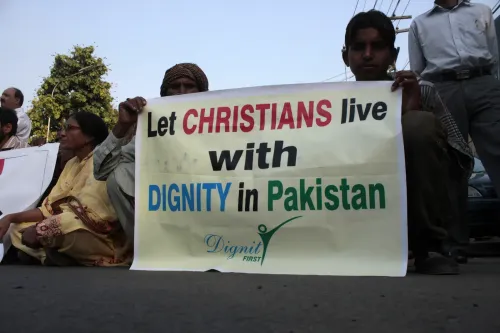
The report's findings on blasphemy cases are particularly stark. According to the analysis, nearly 800 people were detained on blasphemy charges in 2024 alone, drawn overwhelmingly from poor and minority communities. Conviction rates in such cases run at approximately 95%, reportedly driven by judges reluctant to confront extremist pressure and by evidentiary contradictions that defendants lack the money or connections to challenge.
This pattern, the report suggests, illustrates how the system disproportionately consumes the powerless while leaving the well-connected largely untouched.
Watchdog Bodies Turned Into Instruments of Selective Punishment
Institutions nominally designed as safeguards — including the National Accountability Bureau (NAB), the Federal Investigation Agency (FIA), and the Supreme Judicial Council — are described by insiders as tools of selective enforcement rather than independent oversight.
'Anti-corruption bodies that might address any of this are described by those closest to the system not as safeguards but as instruments of selective punishment, wielded against critics of the military and shelved for everyone else,' the One World Outlook article said.
Journalists and whistleblowers who attempt to document these patterns face their own legal exposure, reportedly under defamation statutes and cyber-crime laws — the same legislation that has been used against activists such as Mazari — for the act of scrutinising the system too closely.
What This Means for Pakistan's Democratic Trajectory
Taken together, the FIDH report and the One World Outlook analysis present Pakistan's judicial crisis not as a governance failure awaiting reform, but as an architecture of control operating largely as intended by those who benefit from it. This comes amid sustained international scrutiny of Pakistan's civil liberties record and growing pressure from rights organisations for structural judicial reform. How Islamabad responds — if at all — will be a significant test of its stated commitments to rule of law.
Point of View
But the 2024–25 constitutional amendments removed the pretence. Inserting parliamentarians into judicial selection while creating a new constitutional court answerable to the prime minister is not reform — it is formalised capture. What makes this moment distinct is the scale of documentation: a 95% blasphemy conviction rate and 2.4 million pending cases are not statistics that emerge from neglect alone. The harder question, which the report stops short of answering, is whether international pressure — from bodies like the FIDH — can move a system that is functioning exactly as its current architects intend.
NationPress
11 Oct 2026
Frequently Asked Questions
What does the FIDH report say about Pakistan's judiciary?
The International Federation for Human Rights (FIDH) report, titled 'Under the Bench: Mapping Corruption Risks in Pakistan's Justice System', finds that Pakistan's courts have been effectively weaponised as an extension of the security state. It documents a backlog of 2.4 million cases, near-total conviction rates in blasphemy cases, and constitutional changes that have stripped the judiciary of meaningful independence.
How did Pakistan's 26th and 27th constitutional amendments affect the courts?
The 26th and 27th amendments, passed in 2024 and 2025 respectively, inserted Members of Parliament into the body that selects judges and empowered a judicial council to remove judges on vague 'inefficiency' grounds. They also created a new Federal Constitutional Court whose leadership is effectively chosen by Prime Minister Shehbaz Sharif, according to the FIDH findings.
What is Pakistan's ranking on the World Justice Project Rule of Law Index?
Pakistan ranks 101st out of 143 nations on criminal justice and 129th on civil justice in the World Justice Project's Rule of Law Index, according to the report. The country has approximately 2.4 million cases pending in its courts.
Why are blasphemy cases highlighted in the FIDH report?
The report highlights blasphemy cases because they illustrate systemic bias most starkly: nearly 800 people were detained on such charges in 2024 alone, overwhelmingly from poor and minority communities, with conviction rates of around 95%. The high conviction rate is attributed to judges reluctant to challenge extremist pressure and defendants who lack resources to contest evidentiary flaws.
Are Pakistan's anti-corruption bodies functioning as independent watchdogs?
According to the FIDH report and the One World Outlook analysis, institutions such as the National Accountability Bureau (NAB), the Federal Investigation Agency (FIA), and the Supreme Judicial Council are described by insiders as instruments of selective punishment rather than independent oversight — used against critics of the military while being set aside for others.