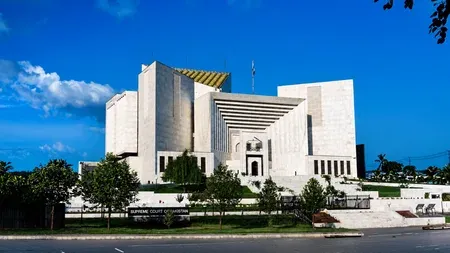
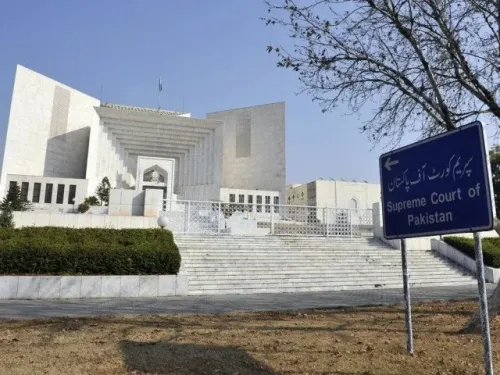
Is Pakistan's 27th Amendment a Major Setback to Judicial Independence?

Synopsis
Amnesty International has condemned Pakistan's 27th Constitutional Amendment as a significant setback to judicial independence, urging immediate action to safeguard the judiciary. With concerns raised by the UN, this amendment poses serious risks to the rule of law and accountability in Pakistan.
Key Takeaways
Amnesty International's condemnation of the 27th amendment highlights serious concerns regarding judicial independence.
The amendment provides lifetime immunity to high-ranking officials, complicating accountability.
It risks increasing political interference in the judiciary.
The UN High Commissioner has echoed concerns regarding the implications for human rights and the rule of law.
Immediate action is needed to protect the integrity of the judiciary in Pakistan.
Islamabad, Jan 6 (NationPress) Urging an immediate reassessment, the human rights organization Amnesty International has described the 27th Constitutional Amendment in Pakistan as a significant setback and a direct and ongoing assault on judicial independence.
They also called on Pakistani authorities to implement all necessary measures to safeguard the impartiality, independence, and safety of judges, ensuring they can perform their judicial duties free from any inappropriate or undue interference.
According to a statement from the Amnesty International South Asia Regional Office on X, "The 27th amendment to the Constitution, enacted in November 2025, signifies a major setback and is part of a direct and ongoing assault on judicial independence, the right to a fair trial, and the rule of law in Pakistan. This amendment breaches international human rights law, particularly by undermining the independence of the judiciary and providing lifetime immunity to officials, thereby shielding them from accountability."
Amnesty has requested an urgent reassessment of the constitutional amendment and urged Pakistani authorities to take immediate action to protect the impartiality, independence, and safety of judges, ensuring they can carry out their judicial responsibilities without any unwarranted interference. They emphasized that Pakistani authorities must uphold their international human rights commitments, guarantee access to justice and effective remedies, and respect the separation of powers and the rule of law.
Previously, the UN High Commissioner for Human Rights, Volker Turk, expressed serious concerns regarding Pakistan's recent constitutional amendments, warning that they contradict the separation of powers that is essential for the rule of law and the protection of human rights in the nation.
In a statement issued on November 28, 2025, Turk noted that the latest constitutional amendment, similar to the 26th Amendment, was adopted without extensive consultation with the legal community and the citizens of Pakistan. The changes approved on November 13 grant a new Federal Constitutional Court (FCC) authority over constitutional matters, replacing the previous powers held by the Supreme Court, now relegated to handling civil and criminal cases.
Turk warned, "These changes collectively risk subjecting the judiciary to political interference and executive control. Neither the executive nor the legislature should have the authority to control or direct the judiciary, which must be insulated from any form of political influence in its decision-making."
He added, "A fundamental aspect of judicial independence is the tribunal's protection from political interference by the government. History shows that when judges lack independence, they struggle to apply the law impartially and uphold human rights amid political pressures."
The amendment also grants lifelong immunity to the President, Field Marshal, Marshal of the Air Force, and Admiral of the Fleet from facing criminal charges and arrest, according to the statement.
Turk remarked, "Broad immunity provisions like these erode accountability, a cornerstone of the human rights framework and democratic oversight of the armed forces under the rule of law."
He expressed concern that these amendments could have far-reaching implications for the principles of democracy and the rule of law cherished by the people of Pakistan.
Point of View
It is our duty to uphold the principles of justice and accountability. The concerns raised by both Amnesty International and the UN High Commissioner for Human Rights regarding the 27th amendment are alarming. It is essential that we advocate for the independence of our judiciary to ensure the rule of law is maintained and the rights of all citizens are protected.
NationPress
30 Sept 2026
Frequently Asked Questions
What is the 27th Constitutional Amendment?
The 27th Constitutional Amendment, passed in November 2025, is a legal change in Pakistan that has been criticized for undermining judicial independence and the right to a fair trial.
Why is Amnesty International concerned about this amendment?
Amnesty International views the amendment as a significant regression and an attack on judicial independence, which could compromise the rule of law and accountability in Pakistan.
What are the implications of the amendment on the judiciary?
The amendment risks subjecting the judiciary to political interference, potentially undermining its ability to function independently and uphold human rights.
How does this amendment violate international human rights law?
The amendment grants lifetime immunity to certain officials, which undermines accountability and violates principles of international human rights law.
What actions does Amnesty International recommend?
Amnesty International calls for an urgent review of the amendment and urges immediate measures to protect judicial independence and the safety of judges.