What Did Dr. Mandaviya Discuss at the Sports Governance Conclave in Ahmedabad?
Synopsis
In a significant address at the Sports Governance Conclave, Dr. Mansukh Mandaviya highlighted the Central Government's commitment to reforming Indian sports. Key initiatives include governance reforms and athlete welfare packages aimed at achieving a Top-10 finish in the Olympic medal tally.
Key Takeaways
Government's commitment to sports reform is evident.
Focus on governance reforms and athlete welfare.
Call for professional management within sports federations.
Importance of transparency and accountability in selection processes.
Aiming for a Top-10 Olympic finish is a national goal.
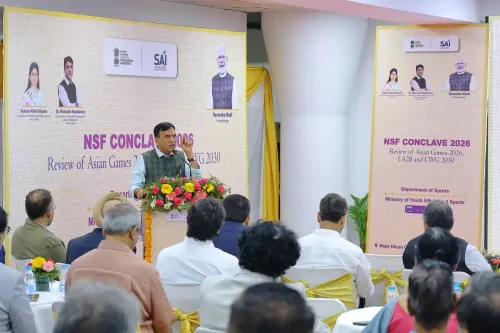
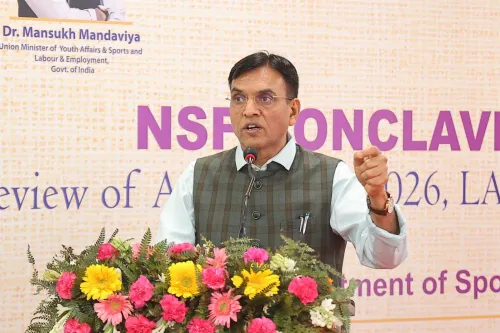
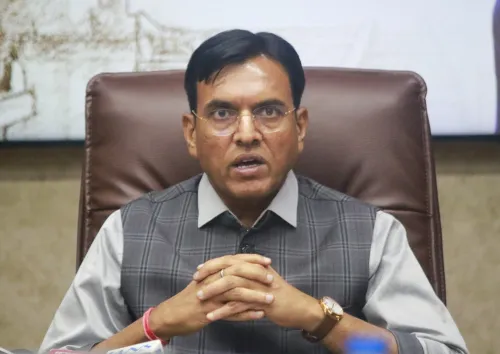
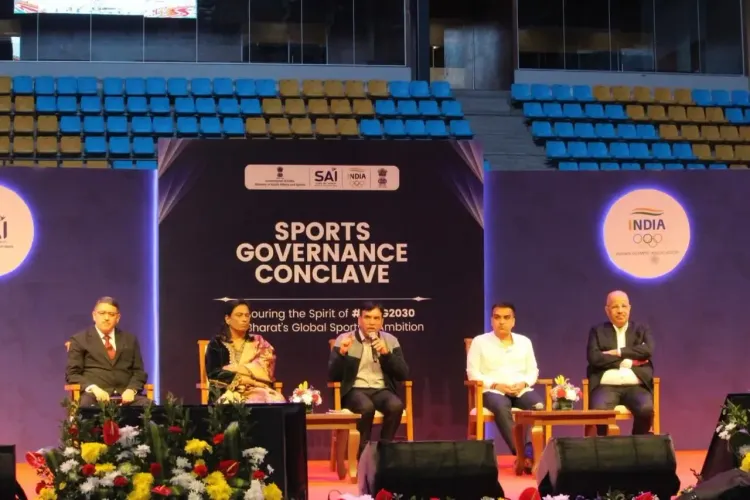
Ahmedabad, Jan 9 (NationPress) The Union Minister for Youth Affairs & Sports, Dr. Mansukh Mandaviya, emphasized on Friday that in the past 18 months, the Central Government has established a robust institutional framework that showcases its determination to transform Indian sports.
Dr. Mandaviya was speaking at the Sports Governance Conclave, which was hosted by the Government of India in collaboration with the Government of Gujarat and the Indian Olympic Association (IOA), held at the Veer Savarkar Sports Complex in Ahmedabad. This significant event saw participation from representatives of National Sports Federations (NSFs), State Olympic Associations, and members of the IOA Executive.
During his address, the Minister outlined the Government's definitive and unwavering priorities for the sports ecosystem in India, focusing on governance reforms, competitive exposure, systematic talent identification and development from grassroots to elite levels, enhancing the coaching infrastructure, and promoting private sector involvement in sports facilities, academies, and leagues.
“Once a decision is made, the Government has shown both the political will and clarity of purpose in executing it,” he stated, referring to significant initiatives like the National Sports Governance Act (NSGA), Khelo Bharat Niti, reforms in ANSF norms, and the enhancement of coach recruitment processes.
Making the Government's stance unequivocally clear, the Minister declared that ongoing challenges within sports federations—including internal politics, corruption, unfair selection processes, injustices towards athletes, governance conflicts, and financial discrepancies—must be resolved. “For us, the athlete and the country's reputation are of utmost importance,” he noted, adding that while the Government acknowledges the autonomy of federations, the same level of commitment to integrity, transparency, and athlete-centered governance is expected from all sporting organizations.
He highlighted that the effective execution of the NSGA would rely on the federations themselves, ensuring fair and timely elections, financial transparency, the establishment of athlete commissions, ethics commissions, and adherence to set governance standards.
Calling for a professional and future-focused methodology, the Minister urged each federation to devise a clear roadmap for the next 1, 3, 5, and 10 years. He emphasized that sports organizations need to be managed professionally, with competent CEOs, financial specialists, marketing professionals, international-level coaches, and specialized operational teams.
Dr. Mandaviya also revealed that the Government would soon unveil pivotal policy initiatives, including transparent and standardized selection trials, the “One Corporate, One Sport” model, and improved athlete welfare packages.
Highlighting the considerable public investment already made in sports science, nutrition, injury management, and high-performance support, he urged federations to match the Government's ambition and pace.
Reaffirming India's long-term sporting vision, the Minister stated that securing a Top-10 position in the Olympic medal standings is a non-negotiable national objective, underscoring the crucial role of National Sports Federations and State Olympic Associations in achieving this goal.
“Performance must show consistent improvement in every significant international competition, starting with the Asian Games 2026. The Commonwealth Games 2030 should be a landmark success for India, both as hosts and as a sporting powerhouse,” he stressed.
Describing the current phase as the 'golden period of Indian Sports', Dr. Mandaviya concluded with a powerful message of accountability: “History will remember what we accomplish now, and it will not forgive what we fail to achieve.”
Point of View
It is imperative to note the significance of Dr. Mandaviya's address. His emphasis on governance reforms and athlete welfare not only reflects the government's commitment to enhancing the sports ecosystem but also signals a proactive approach towards achieving international competitiveness. The focus on professional management within federations is a step in the right direction.
NationPress
24 Sept 2026
Frequently Asked Questions
What is the main focus of Dr. Mandaviya's address?
Dr. Mandaviya's address centered around the government's commitment to reforming Indian sports, highlighting governance reforms and athlete welfare.
What initiatives were mentioned in the speech?
Key initiatives include the National Sports Governance Act, Khelo Bharat Niti, and the introduction of standardized selection trials.
What does the government expect from sports federations?
The government expects federations to demonstrate integrity, transparency, and athlete-centric governance and to prepare clear roadmaps for future development.