NSF Conclave 2026: Mandaviya demands fair trials, anti-doping overhaul
Synopsis
At the NSF Conclave 2026, Sports Minister Mandaviya issued a sweeping set of directives — camera-recorded selection trials, a full-chain anti-doping crackdown targeting suppliers and facilitators, not just athletes, and a push to end India's reliance on foreign coaches. With the Asian Games 2026, LA Olympics 2028, and Commonwealth Games 2030 all on the horizon, the conclave marks a deliberate attempt to institutionalise accountability before the country's busiest international sports cycle in a decade.
Key Takeaways
Mansukh Mandaviya chaired the NSF Conclave 2026 in New Delhi on 7 August 2026 .
Minister directed that selection trials be recorded on camera in the presence of observers to ensure full transparency.
Government is working on amendments to anti-doping laws to target the entire supply chain — manufacturers, suppliers, facilitators, and users.
NSFs reviewed their preparedness for Asian Games 2026 , Los Angeles Olympics 2028 , and Commonwealth Games 2030 .
Mandaviya called for a national repository of Indian coaches to reduce overdependence on foreign coaching staff.
All NSFs must comply with the National Sports Governance Act, 2025 as a condition of continued government support.
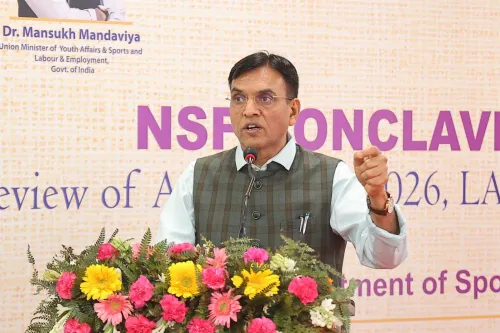
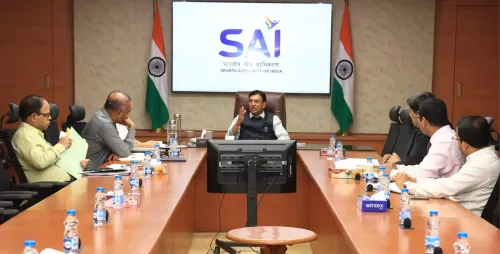
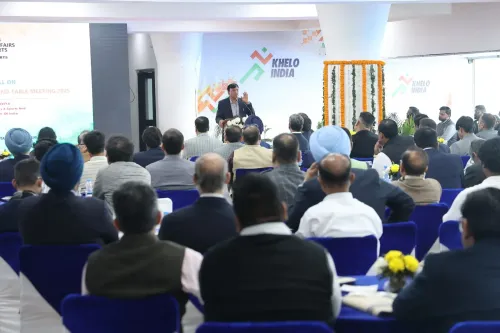
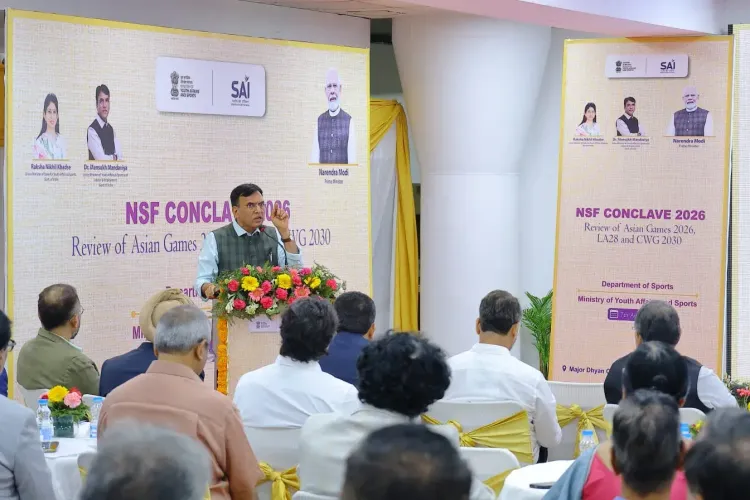
Union Minister of Youth Affairs and Sports Dr. Mansukh Mandaviya on 7 August 2026 chaired the National Sports Federation (NSF) Conclave 2026 in New Delhi, bringing together Minister of State Raksha Khadse, senior Ministry officials, the Sports Authority of India (SAI), and representatives of all National Sports Federations (NSFs). The conclave centred on governance reform, athlete welfare, and India's competitive readiness for three major upcoming events.
Key Agenda: Governance and Compliance
Detailed presentations were made on the compliance status of NSFs under the National Sports Governance Act, 2025, best practices in sports-body administration, and federation-level preparedness for the Asian Games 2026, the Los Angeles Olympics 2028, and the Commonwealth Games 2030. The review signals a tightening of accountability standards across Indian sports bodies ahead of a packed international calendar.
Athlete Welfare at the Centre
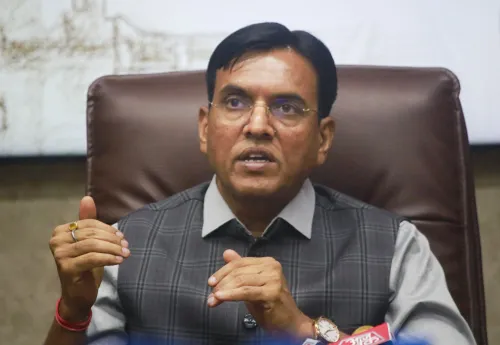
Dr. Mandaviya made athlete protection the defining theme of his address. 'It is our responsibility to ensure that no athlete is ever subjected to injustice. Injustice can take many forms, and wherever such a situation arises,' he said, calling on every stakeholder in the sporting ecosystem to treat athlete welfare as the foremost priority.
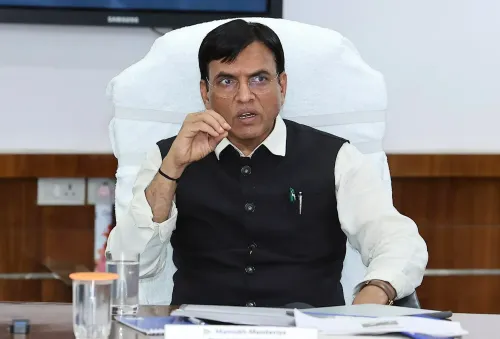
On selection transparency, the Minister was unequivocal: 'Open selection trials should be recorded on camera in the presence of observers. There should be absolutely no compromise on transparency in the selection process.' The directive, if implemented uniformly, would mark a significant procedural shift for federations where selection disputes have historically been a flashpoint.
Anti-Doping: Targeting the Full Chain
Mandaviya called for a comprehensive overhaul of India's anti-doping framework, stressing that the current system needs structural reinforcement. 'We must collectively tackle the menace of doping. It is not enough to act only against athletes. The entire chain — from manufacturers and suppliers to facilitators and users — must be identified and dealt with through a transparent and robust mechanism. Only then can we effectively eradicate doping from sports,' he said.
The government, he added, is actively working on legislative amendments to make the anti-doping ecosystem more effective. This comes amid growing scrutiny of India's doping record in international competition.
Building an Indigenous Coaching Ecosystem
The Minister also flagged India's overdependence on foreign coaches as a structural weakness. 'We need to build a repository of quality Indian coaches. Along with training athletes, we must invest equally in training our coaches by providing them the best opportunities and international exposure. A well-trained coach will ultimately create world-class athletes for the country,' Dr. Mandaviya said.
Invoking Prime Minister Narendra Modi's vision, he urged every NSF to build a stronger domestic league culture to ensure athletes have competitive opportunities year-round — not just in the lead-up to major tournaments.
What Comes Next
The Ministry reaffirmed its commitment to working alongside NSFs to tighten governance standards, enforce compliance with the National Sports Governance Act, 2025, and sharpen India's preparation pipeline for 2026, 2028, and 2030. With the Asian Games less than a year away, the conclave's directives on selection transparency and anti-doping are expected to be operationalised at the federation level in the months ahead.
Point of View
And a directive alone does not guarantee enforcement without an independent observer mechanism. The anti-doping shift from punishing athletes to targeting the supply chain is substantively correct but will require prosecutorial capacity that India's sports adjudication system currently lacks. Notably, the conclave arrives as India faces its most demanding international sports calendar in a decade; the gap between governance rhetoric and on-ground federation behaviour has historically widened, not narrowed, under deadline pressure. Whether the National Sports Governance Act, 2025 has real teeth — including the power to de-recognise non-compliant federations — will determine if this conclave is a turning point or another well-intentioned annual review.
NationPress
22 Sept 2026
Frequently Asked Questions
What was the NSF Conclave 2026 about?
The NSF Conclave 2026, chaired by Sports Minister Dr. Mansukh Mandaviya on 7 August in New Delhi, focused on strengthening sports governance, enforcing compliance with the National Sports Governance Act, 2025, and reviewing India's readiness for the Asian Games 2026, Los Angeles Olympics 2028, and Commonwealth Games 2030. It brought together NSF representatives, SAI officials, and Ministry leadership.
What did Mandaviya say about selection trial transparency?
Mandaviya directed that all open selection trials must be recorded on camera in the presence of independent observers, with no compromise on transparency. The directive targets long-standing concerns over opaque and disputed selection processes in Indian sports federations.
How does the government plan to tackle doping in Indian sports?
The Ministry is working on amendments to strengthen the anti-doping legal framework, with a focus on targeting the entire doping supply chain — manufacturers, suppliers, facilitators, and users — rather than penalising athletes alone. Mandaviya described this as the only way to effectively eradicate doping from Indian sport.
Why is India building an indigenous coaching ecosystem?
Mandaviya flagged overdependence on foreign coaches as a structural weakness and called for a national repository of trained Indian coaches. The government intends to invest in providing Indian coaches with high-quality training and international exposure so they can develop world-class athletes domestically.
Which upcoming events shaped the conclave's agenda?
The conclave's preparedness review was anchored around three events: the Asian Games 2026, the Los Angeles Olympics 2028, and the Commonwealth Games 2030. These represent India's most demanding international sports cycle in recent memory, making governance and athlete welfare reforms especially time-sensitive.