Mandaviya pushes NSFs for deeper talent pipeline at Asian Games review
Synopsis
India finished fourth at the 2026 Aichi-Nagoya Asian Games — and that was the warning shot. Sports Minister Mandaviya's pointed question — 'How long will Mirabai Chanu alone keep winning medals?' — framed a push for systemic talent reform, with a top-three Doha 2030 target and a record-breaking home Commonwealth Games as the twin milestones now driving policy.
Key Takeaways
Sports Minister Mansukh Mandaviya chaired a review of India's fourth-place finish at the 2026 Aichi-Nagoya Asian Games on 15 October 2026 in New Delhi.
Mandaviya called for producing '10 more Mirabai Chanus' , urging NSFs to widen the talent pool across all disciplines.
Sports Secretary Hari Ranjan Rao set a target of a top-three finish at the 2030 Doha Asian Games and a record-setting performance at the 2030 Commonwealth Games , which India will host.
A revised ANSF guidelines booklet was launched; TOPS CEO Col.
Johal presented an Olympics roadmap for Los Angeles 2028 .
MoS Raksha Khadse urged NSFs to ensure state and district-level federations are functional, linking talent identification to training infrastructure.
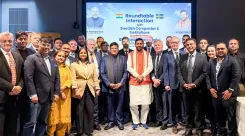
Representatives from athletics, shooting, boxing, archery, squash, and wushu attended the conclave.
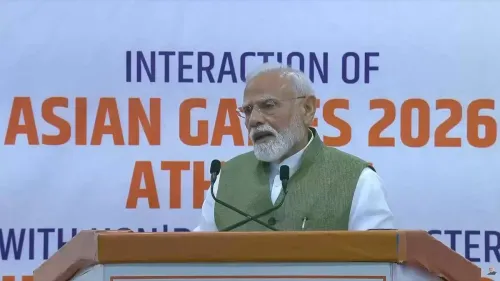
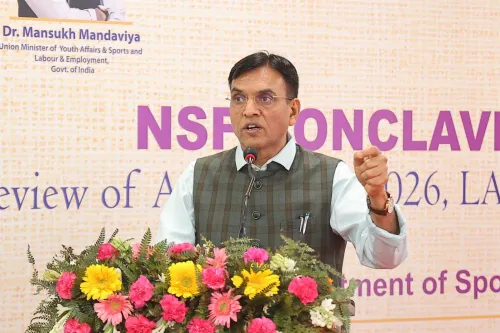
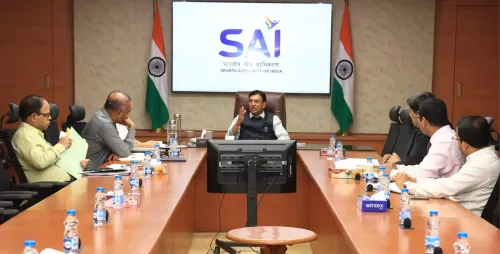
Union Sports Minister Mansukh Mandaviya on Thursday, 15 October 2026 called on National Sports Federations (NSFs) to overhaul talent identification and athlete development programmes, warning that India cannot sustain its medal-winning trajectory at major international competitions by relying on a handful of champions. The remarks came during a review meeting in New Delhi that assessed India's fourth-place finish at the 2026 Aichi-Nagoya Asian Games.
Mandaviya's Core Message to Federations
Addressing federation representatives, Mandaviya made pointed use of a high-profile example to underscore systemic gaps. 'How long will Mirabai Chanu alone keep winning medals for us? We need to produce 10 more Mirabai Chanus. Every federation must take this responsibility seriously. We have to identify talent, provide the right training and create an environment in which athletes can progress to the highest level,' he said.
The minister stressed that sports psychology, sports science, and mental conditioning must become standard pillars of athlete preparation — not optional add-ons. He urged federations to organise more competitions, improve preparation structures, and conduct an honest audit of both performance shortfalls and administrative weaknesses.
Targets Set for 2030 and Los Angeles 2028
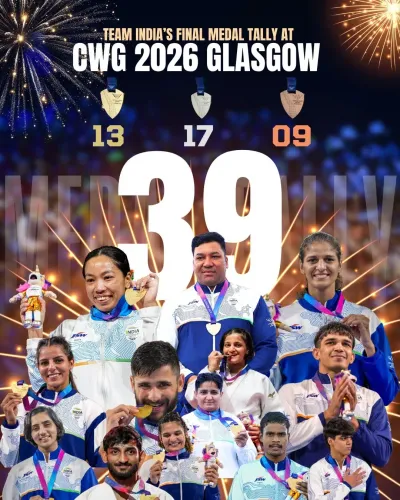
Sports Secretary Hari Ranjan Rao set an ambitious benchmark: a top-three finish at the 2030 Asian Games in Doha. He also urged every NSF to treat the 2030 Commonwealth Games — to be hosted by India — as a national priority, calling for the country to surpass its own record from the 2010 Commonwealth Games.
'We have to strive to finish third at the Asian Games in Doha. For the 2030 Commonwealth Games, we must break our own record from the 2010 Commonwealth Games and finish among the top three. Since we are hosting the Games, every NSF must take the competition seriously and prepare accordingly. We must treat this as a challenge and work towards it from now,' Rao said.
Rao also framed the sporting ecosystem through a structural lens, comparing it to a four-wheel vehicle that moves forward only when athletes, coaches, NSFs, and the Ministry of Youth Affairs and Sports — together with the Sports Authority of India (SAI) — operate in sync.
Khelo India and ANSF Guidelines
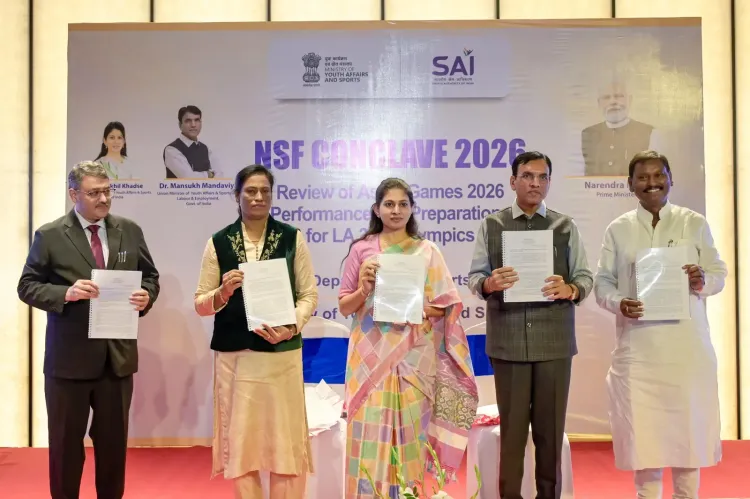
Joint Secretary (Khelo India) Vineel Krishna outlined measures to strengthen coordination between the Khelo India scheme and individual federations. TOPS CEO Col. N.S. Johal presented a detailed review of India's Asian Games performance and outlined the roadmap toward the 2028 Los Angeles Olympics. A revised guidelines booklet for Assistance to National Sports Federations (ANSF) was also officially launched at the meeting.
MoS Khadse on State-Level Structures
Minister of State for Youth Affairs and Sports Raksha Khadse called for NSFs to align their programmes with the Khelo India Mission and ensure that state and district-level bodies were fully operational. She stressed that talent identification without corresponding training infrastructure amounted to an incomplete process.
'Every NSF must ensure that state and district-level federations are also in place and functioning effectively. This work has to be undertaken wholeheartedly, alongside talent identification. Identifying talent is only one part of the process; athletes must also receive the correct training and support to reach their potential,' Khadse said. She added: 'Only through a collective effort can we strengthen athlete preparation, create a better pathway for talent and increase India's medal tally.'
The conclave was attended by representatives from federations governing athletics, shooting, boxing, archery, squash, and wushu, among others. With the 2028 Los Angeles Olympics less than two years away and India hosting the Commonwealth Games in 2030, the pressure to convert this review into structural reform will define the Ministry's credibility over the next four years.
Point of View
But the structural problem it names is real: India's medal counts at Asian Games have been driven by a thin cohort of elite athletes rather than depth across disciplines. The fourth-place finish in Aichi-Nagoya, while creditable, masks how fragile that cohort is — one injury cycle away from a significant drop. The ambitious top-three target for Doha 2030 and a home Commonwealth Games record require not just better identification but a credible pipeline from Khelo India grassroots to TOPS elite — something the coordination gaps between NSFs, SAI, and the Ministry have historically undermined. The revised ANSF guidelines are a step, but guidelines without enforcement teeth have a poor track record in Indian sport administration.
NationPress
15 Oct 2026
Frequently Asked Questions
What was reviewed at Sports Minister Mandaviya's meeting on 15 October 2026?
The meeting reviewed India's fourth-place finish at the 2026 Aichi-Nagoya Asian Games and assessed preparations for the 2028 Los Angeles Olympics, the 2030 Commonwealth Games, and the 2030 Doha Asian Games. Representatives from several major National Sports Federations attended the conclave in New Delhi.
What is India's target for the 2030 Asian Games in Doha?
Sports Secretary Hari Ranjan Rao set a target of a top-three finish for India at the 2030 Asian Games in Doha. He also called on NSFs to treat the 2030 Commonwealth Games — which India will host — as a national priority and aim to surpass the country's record from the 2010 Commonwealth Games.
Why did Mandaviya refer to Mirabai Chanu at the review meeting?
Mandaviya used Mirabai Chanu as a symbol of India's over-reliance on a small number of elite athletes to deliver medals at international competitions. He called for federations to develop 10 more athletes of her calibre, stressing that a broader and deeper talent pool is essential for sustained medal-winning success.
What is the Assistance to National Sports Federations (ANSF) scheme?
The ANSF scheme provides government financial support to National Sports Federations to help them develop athletes and improve administration. A revised ANSF guidelines booklet was launched at the 15 October 2026 review meeting to improve coordination between federations and the Ministry.
How does the Khelo India scheme connect to NSF preparations?
Joint Secretary (Khelo India) Vineel Krishna outlined measures to improve coordination between the Khelo India scheme and NSFs at the meeting. MoS Raksha Khadse also urged federations to align their programmes with the Khelo India Mission and ensure state and district-level bodies are functional, so that grassroots talent can be identified and properly supported.