CM Nayab Saini Courts Swedish Industry in Stockholm Roundtable
Synopsis
Haryana Chief Minister Nayab Saini participated in a Stockholm roundtable on October 15, pitching Swedish industrialists on investing in Haryana and inviting them to the Haryana Global Investors Summit 2027, citing a shared India-Sweden goal of doubling bilateral trade within five years.
Key Takeaways
Haryana CM Nayab Saini attended a roundtable with Swedish industrialists in Stockholm on October 15, 2026 .
Saini invited Swedish companies to invest in Haryana under the dual banner of 'Make in India' and 'Made with Sweden' .
The CM referenced PM Modi's May 2026 visit to Sweden , which the CMO says elevated ties to a strategic partnership.
India and Sweden have set a shared goal of doubling trade, investment, and economic exchanges within five years .
Swedish firms were specifically invited to participate in the Haryana Global Investors Summit 2027 .
Haryana's existing automotive, IT, and manufacturing corridors were positioned as the primary investment destinations for Swedish industry.
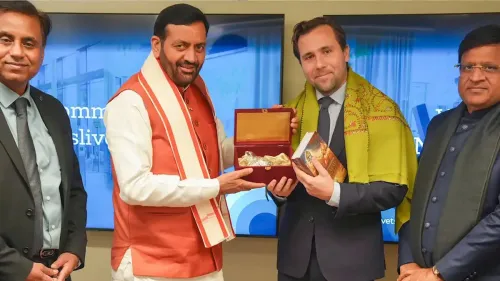
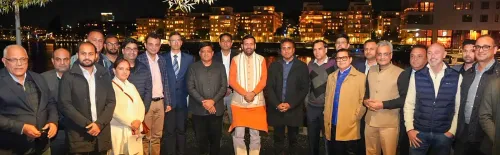
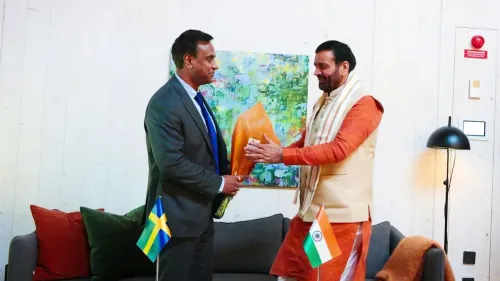
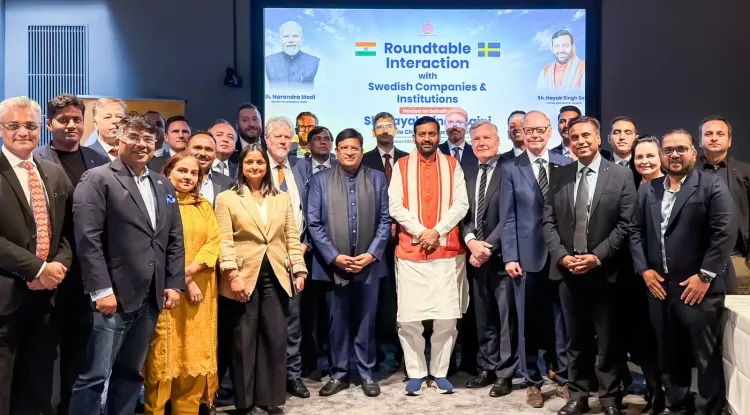
In a Stockholm boardroom on Thursday, October 15, Haryana Chief Minister Nayab Saini made a direct pitch to Swedish industrialists — inviting them to plant capital in one of India's most industrially dense states and deepen the emerging 'Make in India, Made with Sweden' partnership.
The pitch from Stockholm
Saini's roundtable engagement in Sweden was framed around a bilateral momentum that, according to the Chief Minister's Office, received fresh impetus from Prime Minister Narendra Modi's visit to Sweden in May 2026 — a trip the CMO says elevated the two countries' relationship to a rannītik sānjhedārī ('strategic partnership'). The stated ambition: double bilateral trade, investment, and economic exchanges within five years.
For Swedish companies, Saini's message was specific. Haryana — home to automobile manufacturing corridors around Gurgaon and Manesar, a thriving IT belt, and emerging green-tech clusters — is positioning itself as the natural Indian landing pad for Swedish engineering, automotive, and clean-technology firms. The CM's case rested on alignment: Sweden's industrial DNA fits Haryana's existing supply-chain architecture.
Haryana Global Investors Summit 2027: the anchor event
The centrepiece ask at the roundtable was an invitation to the Haryana Global Investors Summit 2027 — the state's marquee FDI-attraction event, which Saini positioned as the formal moment for Swedish firms to convert expressions of interest into investment commitments. Getting major Swedish names onto the summit's delegate list would itself signal traction on the bilateral doubling target.
This is a well-worn playbook in Indian economic diplomacy: central-government strategic visits open doors in European capitals, and state chief ministers follow in close sequence to harvest the goodwill into concrete, state-level FDI flows. Haryana is among the more aggressive practitioners of this approach, given the state's geography — it wraps around New Delhi — and its concentration of multinational supply chains.
Make in India's European frontline
The Make in India initiative, launched in September 2014, has progressively shifted from a broad brand exercise to a targeted manufacturing-incentive framework, with Indian states competing fiercely to capture the FDI flows it generates. Saini's coinage — 'Made with Sweden' alongside 'Make in India' — is a deliberate signal to Swedish boardrooms: this is not a one-way production migration, but a co-manufacturing relationship where Swedish technology and Indian scale reinforce each other.
The metric to watch is simple. When the Haryana Global Investors Summit 2027 convenes, the number of Swedish companies in the room — and the investment letters of intent they carry — will reveal whether Stockholm's roundtable was a warm handshake or the start of something structural.
Point of View
Turning bilateral summits into FDI pipelines for specific industrial corridors. For Haryana, the Sweden engagement fits a deliberate pattern of targeting high-value European manufacturing partners who can supply technology for the state's automotive and green-tech base. The 'Made with Sweden' framing — rather than a plain 'invest in India' appeal — signals political sophistication; it positions the relationship as co-production, not outsourcing, which is a stronger sell in Nordic boardrooms. The real test will come at the Haryana Global Investors Summit 2027, where conversion rates will separate diplomatic optics from durable economic commitments.
NationPress
15 Oct 2026
Frequently Asked Questions
Why did Haryana CM Nayab Saini visit Sweden?
CM Nayab Saini visited Sweden to participate in a roundtable discussion with Swedish industrialists on October 15, 2026, pitching Haryana as an investment destination and inviting Swedish companies to the Haryana Global Investors Summit 2027.
What is the Haryana Global Investors Summit 2027?
The Haryana Global Investors Summit 2027 is the state government's flagship FDI-attraction event, where CM Saini has invited Swedish and other international companies to formalise investment commitments in Haryana.
What is the 'Made with Sweden' initiative?
'Made with Sweden' is a co-manufacturing concept put forward by CM Saini alongside India's 'Make in India' programme, framing India-Sweden industrial collaboration as a mutual partnership rather than a one-way investment flow.
What is India and Sweden's bilateral trade target?
According to the Chief Minister's Office, India and Sweden share a goal of doubling bilateral trade, investment, and economic exchanges over the next five years, a target cited by CM Saini at the Stockholm roundtable.
Which sectors in Haryana are being promoted for Swedish investment?
Haryana's automotive manufacturing corridors around Gurgaon and Manesar, its IT sector, and emerging green-technology clusters align with Sweden's strengths in engineering, clean technology, and automotive industries, making them the primary focus for bilateral investment.