Is Pakistan's Minorities Rights Bill Just a Symbolic Gesture Amid Violence?
Synopsis
Women and girls from minority communities in Pakistan face severe human rights abuses, including abductions and forced marriages. Despite the recent passage of the National Commission for Minorities' Rights Bill, critics argue that it fails to tackle systemic discrimination and violence against these communities.
Key Takeaways
Women and girls from minority communities are facing severe abuses in Pakistan .
Approximately 1,000 girls are abducted annually.
The National Commission for Minorities' Rights Bill has been criticized for being largely symbolic.
Deep-rooted structural inequalities continue to impact minorities.
Minorities have significantly declined in population over decades.
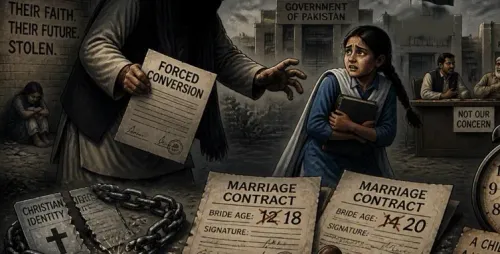
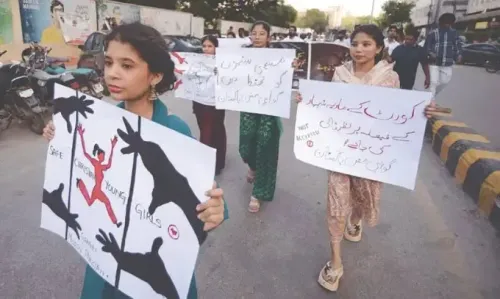
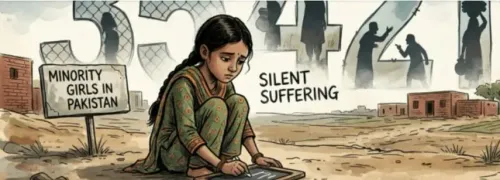
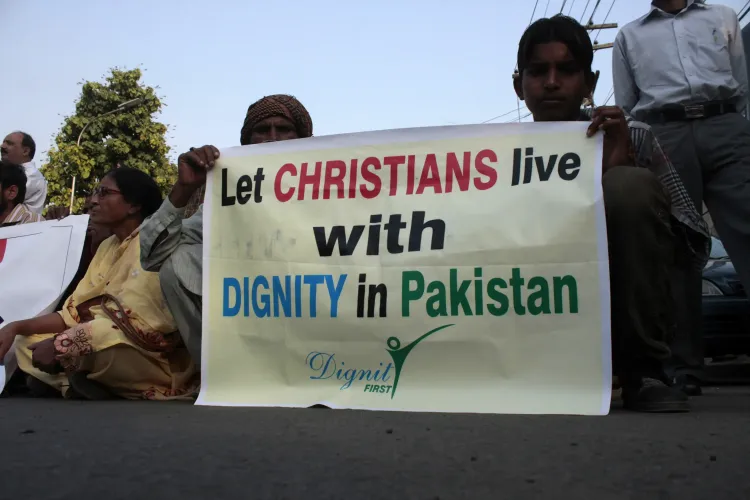
Colombo, Dec 11 (NationPress) Women and girls belonging to minority communities in Pakistan are facing an alarming crisis characterized by abductions that lead to forced marriages and coercion. Notably, the Christian and Hindu populations are enduring a profoundly rooted form of structural violence, as highlighted in a recent report.
According to findings from civil society, including submissions to United Nations (UN) bodies, analysis by the Human Rights Commission of Pakistan (HRCP), and documentation by the Aurat Foundation in Islamabad, the Sri Lanka Guardian report stated that nearly 1,000 Hindu and Christian girls fall victim to abduction, forced conversion, and marriage every year in Pakistan, particularly in Sindh and southern Punjab.
It also noted that law enforcement often refuses to register kidnapping reports, while lower courts accept statements from minors under duress, and clerics approve conversions without any oversight.
“The adoption of Pakistan’s National Commission for Minorities’ Rights Bill on December 3, 2025, by a joint parliamentary session, marks another instance of the state signaling reform while ensuring that no real changes happen in the legal and ideological frameworks that support systemic discrimination. Passed with 160 votes in favor against 79 opposed, the bill was stripped of its most significant provisions – suo motu powers and an overriding-effect clause – prior to its approval, rendering the new body largely symbolic,” the report stated.
According to the report, the Pakistani Law Minister Azam Nazeer Tarar presented the Bill as a long-overdue mechanism to institutionalize minority issues, but parliamentary discussions before its passage ensured it neither confronts nor can confront the “deeply embedded framework of Islamization that has influenced Pakistan’s governance for decades.”
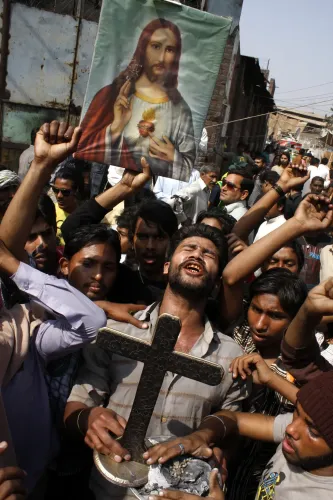
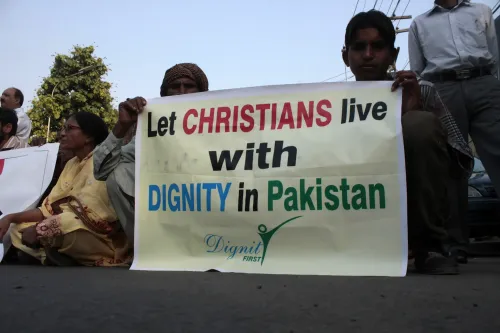
It further highlighted that the newly established Commission enters a landscape marked by entrenched structural inequalities, intermittent incidents of mob violence, and a constitutional framework that continues to define citizenship and rights from a majority perspective.
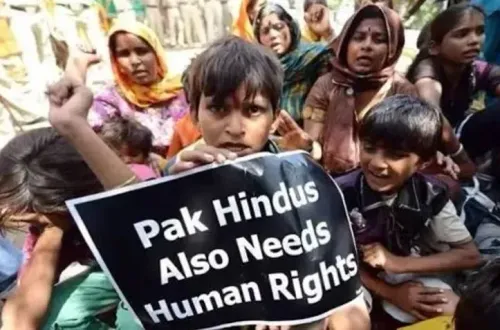
“Since independence, Pakistan has seen a continuous tightening of minority rights. Demographically, minorities made up approximately 23% of the population in the 1951 census (including East Pakistan), but now account for about 3-4%. Hindus and Christians each represent just under 2% of the population, while Sikhs, Parsis, Bahais, and Kalash communities comprise mere fractions of a percentage point,” the report noted.
“This dramatic decline reflects decades of insecurity, biased legislation, and routine societal violence that have led to ongoing out-migration, especially among Hindus and Christians,” it concluded.
The report underscored that, in essence, the newly established National Commission for Minorities’ Rights in Pakistan acts as a symbolic, politically motivated intervention that preserves the status quo of institutionalized discrimination.
“While it provides minority communities with an official platform to voice grievances and document abuses, it lacks the necessary authority to disrupt the systemic patterns of persecution,” it emphasized.
Point of View
I firmly believe that while legislative measures may appear progressive, they often fail to address the underlying issues of systemic discrimination in Pakistan. The recent bill, despite its passage, does not challenge the ingrained framework of marginalization faced by minority communities. It is crucial that we continue to advocate for genuine reform that empowers these groups rather than merely offering them a platform without real authority.
NationPress
20 Sept 2026
Frequently Asked Questions
What is the National Commission for Minorities' Rights Bill?
The National Commission for Minorities' Rights Bill is a legislative measure aimed at addressing the concerns of minority communities in Pakistan, although it has been criticized for lacking substantive power.
How many girls are abducted in Pakistan each year?
Approximately 1,000 Hindu and Christian girls are reported to be abducted and forced into conversion and marriage every year in Pakistan.
What challenges do minorities face in Pakistan?
Minority communities in Pakistan face numerous challenges, including systemic discrimination, violence, and legal barriers that prevent them from seeking justice.
Why is the bill considered symbolic?
The bill is deemed symbolic as it was stripped of crucial provisions that would empower the new commission to effect real change.
What is the demographic status of minorities in Pakistan?
Minorities constituted around 23% of the population in 1951 but now make up approximately 3-4%, with Hindus and Christians each representing under 2%.