Why Did Foreign Investors Experience a Major Sell-Off of South Korean Stocks in November?
Click to start listening
Synopsis
In a surprising turn of events, foreign investors made headlines by recording their second-largest sell-off of South Korean stocks in November. With concerns over the AI sector bubble looming, investors are taking steps to secure their profits. This article delves into the details of this financial shift and its implications for the market.
Key Takeaways
- Foreign investors sold $9.13 billion in South Korean stocks in November.
- The KOSPI index dropped 16 percent amid AI sector concerns.
- Record net purchases of $11.81 billion in bonds were noted.
- Daily fluctuations in the won-dollar exchange rate averaged 5.3 won.
- Samsung Electronics and SK Hynix saw gains despite the sell-off.
Seoul, Dec 12 (NationPress) In November, foreign investors experienced their second-largest monthly sell-off of South Korean stocks, as they opted to realize profits, according to data released by the central bank on Friday.
Offshore investors divested a net $9.13 billion in local equities last month, following a net purchase of $3.02 billion in the previous month, as reported by the Bank of Korea (BOK), according to Yonhap news agency.
The November sell-off stands as the most significant since the record divestment of $9.33 billion in April of this year.
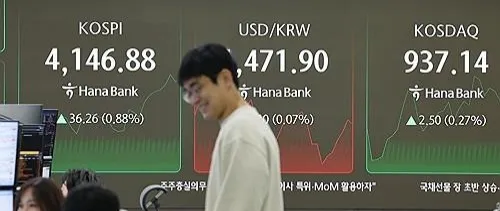
The KOSPI index, the country's benchmark, fell by nearly 16 percent in November following a bullish trend since April, fueled by concerns of a bubble in the artificial intelligence (AI) sector, leading many investors to cash in their profits.
The KOSPI has more than doubled this year, propelled by a robust rally in chipmakers and other major market players.
In contrast, foreign investors purchased a record net of $11.81 billion in bonds last month, according to the data.
The fluctuations in the won-dollar exchange rate also decreased, averaging 5.3 won in November, compared to 5.6 won in the previous month.
On a positive note, South Korean stocks saw gains late Friday morning, following an earnings report from Wall Street-listed Broadcom, which alleviated concerns surrounding the AI bubble.
The benchmark Korea Composite Stock Price Index (KOSPI) rose by 46.19 points, or 1.12 percent, reaching 4,156.81 as of 11:20 a.m.
Leading company Samsung Electronics increased by 1.16 percent, while SK Hynix gained 1.68 percent.
Financial stocks also saw an uptick, with KB Financial rising by 0.56 percent and Shinhan Financial Group climbing 1.04 percent.
However, Samsung Fire & Marine Insurance plummeted by 21.83 percent, following a sudden 28.31 percent increase the previous day without any clear explanation.
The local currency was trading at 1,472.2 won against the dollar at 11:20 a.m., representing a slight increase of 0.8 won from the prior session.
Point of View
I recognize the importance of monitoring foreign investment trends. The recent sell-off reflects broader market concerns, particularly regarding AI valuation. While fluctuations may alarm some investors, it also highlights the necessity for strategic profit-taking in a volatile environment. Our commitment remains to provide insightful and accurate analyses of such critical developments.
NationPress
12/12/2025
Frequently Asked Questions
What was the total amount sold by foreign investors in November?
Foreign investors sold a net $9.13 billion worth of South Korean stocks in November.
How did the KOSPI index perform in November?
The KOSPI index fell by nearly 16 percent in November.
What were the bond purchases by foreign investors last month?
Foreign investors purchased a record net of $11.81 billion in bonds last month.
What caused the sell-off in stocks?
The sell-off was primarily driven by concerns over a potential bubble in the artificial intelligence sector.
How did financial stocks perform during this period?
Financial stocks, including KB Financial and Shinhan Financial Group, traded higher during the sell-off.