Peru Enforces State of Emergency in 283 Districts Due to Severe Rainfall
Synopsis
Peru has declared a state of emergency in 283 districts to combat severe risks from intense rainfall. The government is mobilizing resources to ensure public safety and provide humanitarian aid to affected communities.
Key Takeaways
Peru has declared a state of emergency in 283 districts.
The emergency will last for 60 days and covers 20 regions.
Authorities are mobilizing resources for disaster response.
At least 41 people have died due to the heavy rains this season.
5,500 homes have been damaged, leading to mass evacuations.
Lima, March 13 (NationPress) - In an effort to counter severe risks and manage the repercussions of heavy rainfall on public safety, Peru has enacted a state of emergency across 283 districts, as reported by the official gazette El Peruano.
According to a series of decrees released in the gazette on Thursday, this emergency protocol will remain in force for a duration of 60 days throughout 20 regions of Peru, which include Lima, Amazonas, Ancash, Cusco, and Arequipa.
During this emergency phase, regional and local authorities, in collaboration with the National Institute of Civil Defence and various government ministries, will execute immediate and essential measures for disaster response and rehabilitation of the impacted areas.
Ministers are being deployed to various affected locations to oversee relief measures directly, mobilizing health brigades that offer first aid, psychological assistance, and humanitarian support to those affected.
The Peruvian Armed Forces have also sent specialized personnel to aid in rehabilitation and logistics, coordinating efforts with the National Police, as reported by Xinhua news agency.
Previously, on March 3, the Ministry of Health indicated that at least 41 lives have been lost and one individual is still unaccounted for due to the ongoing rainy season in Peru since the start of the year.
An official statement noted that 56 individuals sustained injuries, with 48 having been discharged from medical facilities while seven remain hospitalized.
On February 25, the Peruvian government had already declared a 60-day state of emergency in several regions due to the imminent threats from intense rainfall.
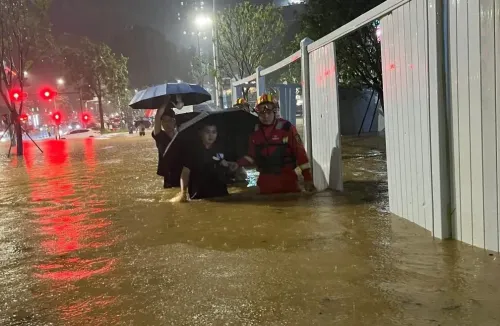
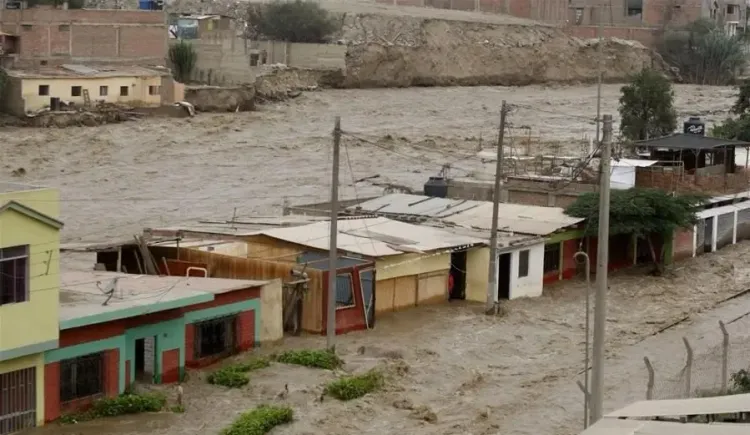
These torrential rains have led to widespread destruction throughout southern Peru, affecting roughly 5,500 homes and compelling numerous residents to evacuate.
Heavy rainfall in Peru is largely influenced by the El Nino-Southern Oscillation (ENSO), which raises coastal water temperatures, increases atmospheric moisture, and triggers heavy seasonal rainfall. This phenomenon is often exacerbated by warm, moist air from the Amazon Basin colliding with the Andes mountains and the recent effects of climate change.
Point of View
I see the declaration of a state of emergency in Peru as a crucial response to an escalating humanitarian crisis. The government's proactive measures aim to protect citizens and rehabilitate affected areas effectively. It is vital for all stakeholders to remain vigilant and supportive during this challenging time.
NationPress
29 Sept 2026
Frequently Asked Questions
What caused the state of emergency in Peru?
The state of emergency was declared due to severe risks posed by intense rainfall affecting public safety across 283 districts.
How long will the state of emergency last?
The state of emergency will remain in effect for 60 days.
Which regions in Peru are affected by the emergency?
The emergency affects 20 regions, including Lima, Amazonas, Ancash, Cusco, and Arequipa.
What measures are being taken during the emergency?
Regional and local authorities are coordinating with the National Institute of Civil Defence to implement disaster response measures and provide humanitarian aid.
What is the impact of the heavy rainfall in Peru?
The torrential rains have resulted in significant damage to homes, with approximately 5,500 households affected and many residents forced to evacuate.