Has PIA's privatization imposed a heavy moral and fiscal burden on taxpayers?
Click to start listening
Synopsis
The privatization of Pakistan International Airlines (PIA) in 2025 appears to have stemmed its financial losses, yet it raises significant moral and fiscal concerns for taxpayers. A detailed analysis reveals the complexities and hidden costs involved in the sale. Discover the implications of this controversial deal.
Key Takeaways
- PIA's privatization has halted financial losses.
- The deal comes with significant costs to taxpayers.
- Only a fraction of the bid amount benefits the government.
- The government has assumed massive liabilities.
- Interest obligations could burden taxpayers further.
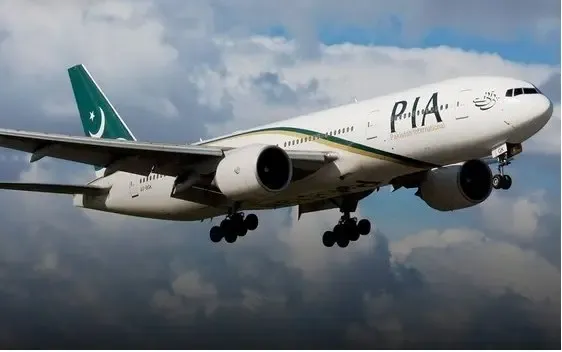
New Delhi, Jan 19 (NationPress) The privatization of Pakistan International Airlines (PIA) in 2025 has put an end to the airline's ongoing financial losses, but it has come at a significant moral and fiscal expense, according to a report. This development has heavily impacted taxpayers.
As reported by The Express Tribune, the official statement declaring that the “Arif Habib-led consortium secured a 75 percent share in PIA with a bid of PKR 135 billion” is described as misleading and deceptive.
Dr. Mohammad Zubair Khan, a former Minister of Commerce in Pakistan and a former IMF official, asserts that the deal is arranged in such a way that “most of the total bid amount of Rs 135 billion does not actually benefit the seller (government)”.
The Government of Pakistan (GOP) will only receive Rs 10.125 billion, which represents the actual sale price, while the remaining Rs 124.875 billion is earmarked for the airline post-sale. Furthermore, the buyer is obligated to inject an additional Rs 80 billion into their asset rather than the seller,” he contends.
He further highlights that when factoring in the Rs 654 billion in liabilities the government assumed to render the airline “marketable,” the state has effectively spent around Rs 644 billion to divest from the airline.
“This is divestment at a loss aimed at halting the bleeding of future subsidies,” he notes.
The article mentions that the “Revolving Door” roles of officials have raised concerns regarding this imbalanced agreement.
“By transforming commercial debt into a government-backed bond with a fixed interest rate of 12 percent, the government has ensured bank profits regardless of PIA's performance. Even if the Roosevelt Hotel (held within the HoldCo) sells for its $1 billion valuation, it will barely offset the interest obligations, leaving the principal burden entirely on the taxpayer,” adds the article.
According to the author, if the Roosevelt achieves the $1 billion target after redevelopment, there will still be a PKR 250 billion shortfall to settle the debt.
“And if the Roosevelt redevelopment takes the typical 8 years, the government will incur an additional PKR 256 billion in new interest costs at the exorbitant 12 percent rate before any 'wealth' is generated, effectively depleting the asset in the interim,” the report states.
Point of View
I firmly believe that the privatization of PIA must be scrutinized. While halting financial losses is crucial, the implications for taxpayers cannot be overlooked. This transaction raises serious questions about transparency and the long-term health of our national assets.
NationPress
19/01/2026
Frequently Asked Questions
What is the total bid amount for PIA?
The total bid amount for PIA was PKR 135 billion.
How much will the government actually receive from the sale?
The government will receive Rs 10.125 billion as the actual sale price.
What are the liabilities assumed by the government?
The government has assumed Rs 654 billion in liabilities to make PIA sellable.
Why is the privatization considered a loss?
The privatization is viewed as a loss because the government has effectively paid around Rs 644 billion to divest from the airline.
What is the interest rate on the government-backed bond?
The interest rate on the government-backed bond is fixed at 12 percent.