Political Turmoil in Washington Over Iran Military Actions
Synopsis
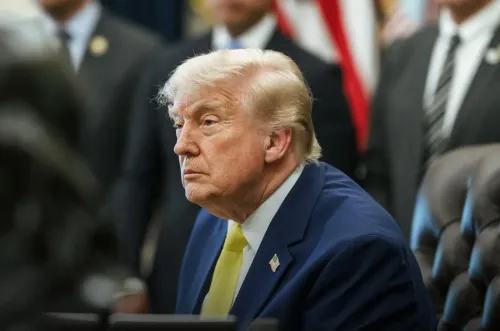
A fierce political clash is heating up in Washington as President Trump’s military operations in Iran draw criticism from Democrats and support from Republicans. The debate centers on whether the President acted lawfully and constitutionally in launching these strikes without Congressional approval.
Key Takeaways
Political Divide: A significant split exists between Republicans and Democrats over military actions in Iran.
Legality Concerns: Many Democrats claim Trump acted without Congressional approval.
Support for Operations: Republicans defend the military actions as necessary for national security.
Historical Context: The War Powers Resolution aims to limit presidential military authority.
Future Implications: Ongoing debates may reshape US foreign policy and governance dynamics.
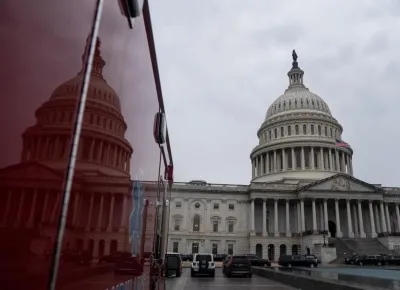
Washington, March 3 (NationPress) A heated political struggle has unfolded in Washington regarding President Donald Trump’s military operations in Iran. Senior Republicans assert that the actions are legitimate and essential, while leading Democrats claim the President has instigated a conflict without the necessary Congressional consent.
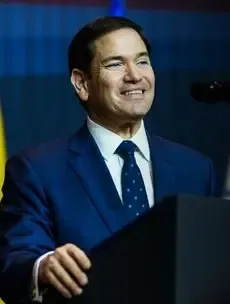
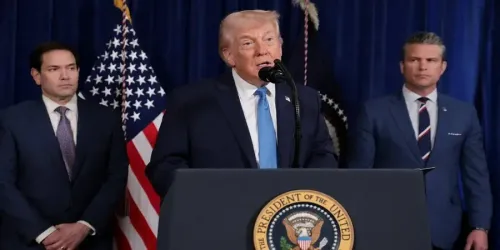
Secretary of State Marco Rubio dismissed allegations that the administration failed to adequately inform lawmakers.
“Why notify Congress?” Rubio queried reporters at the US Congress.
“We can't inform all 535 members of Congress. They can vote as they wish. There’s NO law requiring us to do that.”
Rubio stated the administration had briefed the so-called Gang of Eight and adhered to legal protocols.
“We did notify the Gang of 8... NO LAW mandates the president! No presidential administration has ever regarded the War Powers Act as constitutional! Nevertheless, we complied with the 48-hour notification requirement.”
He continued: “I have conducted more Gang of 8 briefings than I did in Biden's four years! I was part of the Gang of 8. We followed the law and will CONTINUE to do so.”
Republican representatives rallied in support of the President. Congressman Tom Cole remarked, “This is a pivotal moment for those who chant ‘Death to America.’ President Trump is right to label the initiative to dismantle Iran’s nuclear program and empower its citizens to claim their freedom as ‘a noble mission.’”
Congressman Blake Moore characterized the operation as “a significant strike against the globe's foremost state sponsor of terrorism,” asserting that President Trump “took decisive measures to curb the Ayatollah’s influence under the 2001 Authorization for Use of Military Force sanctioned by Congress.”
Congressman Patronis described the operation as “peace through strength” and urged Senate Democrats to ensure full funding for the Department of Homeland Security amid rising tensions.
However, Senate Democratic Leader Chuck Schumer sharply criticized the actions from the Senate floor.
“Today, we mourn the loss of four US servicemembers who were killed in action this weekend,” Schumer stated.
He accused the President of proceeding “without a strategy, an end goal, or authorization from Congress, and without a full debate in front of the American people.”
“This is a war of choice, not necessity,” Schumer emphasized. “Congress must intervene to curb Donald Trump’s aggressiveness.”
Senator Maria Cantwell echoed concerns about constitutional authority. “The President should not have initiated a large-scale offensive against Iran without Congressional consent,” she asserted, adding that “Congress must demand the President seek our Constitutionally required approval if he plans to engage in a prolonged conflict.”
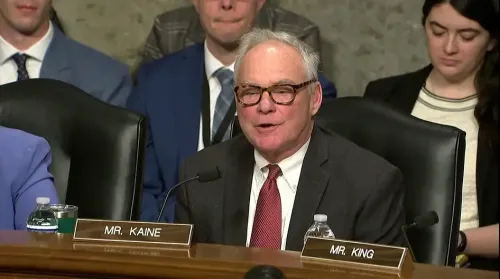
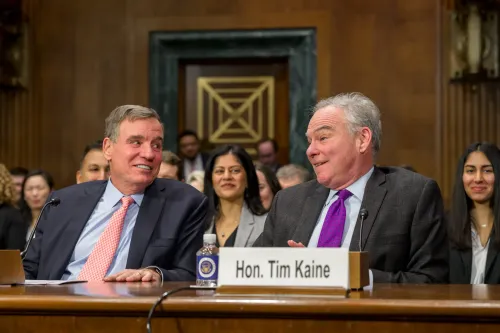
The Senate is anticipated to vote this week on a bipartisan War Powers Resolution spearheaded by Senators Tim Kaine, Schiff, and Rand Paul. This measure would compel the President to withdraw US forces from hostilities against Iran unless explicitly authorized by Congress.
These strikes, labeled by administration officials as part of “Operation Epic Fury,” reportedly resulted in the deaths of Iran’s Supreme Leader and several high-ranking officials. This operation represents one of the most significant military actions involving Iran in decades.
The War Powers Resolution of 1973 was enacted post-Vietnam War to restrict a president’s ability to deploy US forces into extended conflicts without Congressional approval. Nevertheless, successive administrations from both political parties have contested its constitutionality.
Point of View
The current political landscape reflects a stark divide over the legitimacy of military action without Congressional oversight. The implications of this conflict will shape not only US foreign policy but also the dynamics of governance and accountability in our democracy.
NationPress
20 Oct 2026
Frequently Asked Questions
What triggered the political battle over Iran military actions?
The political battle was triggered by President Trump's military campaign in Iran, which has led to accusations from Democrats that he acted without Congressional approval.
What is the War Powers Resolution?
The War Powers Resolution is a federal law enacted in 1973 to limit the President's ability to engage US forces in prolonged military conflict without Congressional consent.
What are the key arguments from Republicans supporting the President?
Republicans argue that the military action is lawful, necessary for national security, and compliant with existing legal frameworks, specifically the 2001 Authorization for Use of Military Force.
How are Democrats responding to the military actions?
Democrats are criticizing the actions as unconstitutional, asserting that the President has initiated a war of choice without the required authorization from Congress.
What is the potential impact of this conflict on US foreign policy?
The conflict could significantly impact US foreign policy, particularly in relation to Iran, and set a precedent for the balance of power between the executive and legislative branches.