How Does Expanding Partnerships in the CIS Serve Its People’s Interests?
Synopsis
Russian President Vladimir Putin emphasizes the importance of strengthened partnerships within the CIS, asserting that they align with the core interests of member nations. This article explores his recent statements during an informal summit, highlighting the shared goals of socioeconomic development and global governance.
Key Takeaways
Strengthening partnerships in the CIS is essential for regional stability.
Putin emphasizes shared interests among member nations.
The importance of addressing socioeconomic challenges collectively.
A commitment to a fair world order centered around the United Nations .
Upcoming celebrations for the new year are marked by wishes for peace and prosperity.
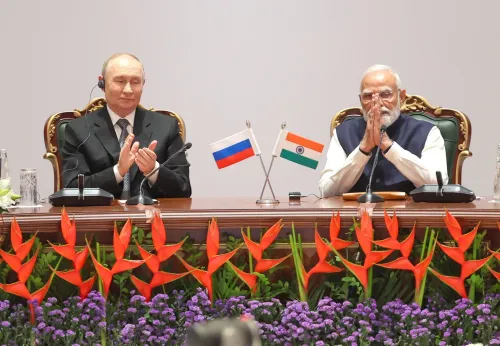
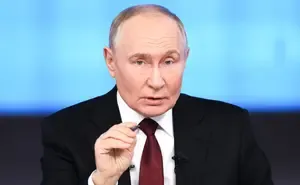
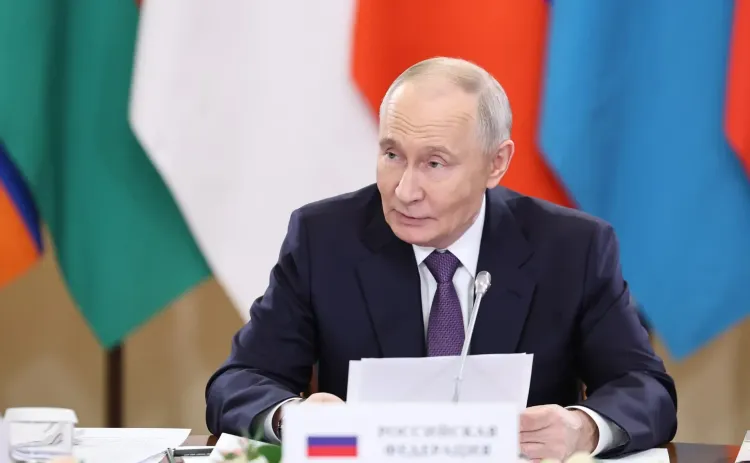
Moscow, Dec 22 (NationPress) Russian President Vladimir Putin has voiced his belief that enhancing collaborations across various sectors within the Commonwealth of Independent States (CIS) aligns with the essential interests of the citizens of its member nations, as reported by local media on Monday.
During an informal CIS summit, Putin stated, "I firmly believe that broadening ties within the CIS across numerous fields aligns with the core interests of our peoples," as per the leading Russian news agency, Tass.
He emphasized the importance of collective efforts to tackle challenges related to socioeconomic growth, reinforce stability, and ensure mutual security.
Putin highlighted that the CIS member states share a common perspective on global governance, advocating for the establishment of a just world order centered around the United Nations.
He remarked, "It is crucial that Commonwealth countries maintain similar or uniform approaches towards the pressing global and regional challenges we face today."
The Russian leader also noted, "All CIS nations unanimously support the development of a just world order based on universally accepted principles of international law, with the United Nations playing a central coordinating role."
Putin extended his best wishes to the leaders and citizens of the CIS for the upcoming new year, hoping for their health, happiness, peace, prosperity, and overall well-being.
The Commonwealth of Independent States was founded in 1991 to foster ongoing collaboration in trade and military policies, as well as to recognize borders of the former USSR states, excluding the Baltic nations. The organization lacks a formal political structure. Its members include Russia, Ukraine, Moldova, Georgia, Armenia, Azerbaijan, Belarus, Kazakhstan, Uzbekistan, Kyrgyzstan, Turkmenistan, and Tajikistan.
Point of View
It is evident that President Putin's emphasis on collaboration within the CIS reflects a strategic approach to regional stability and cooperation. The focus on shared interests and international law underscores a commitment to fostering a unified front among member states, which ultimately aligns with the broader goals of promoting peace and prosperity in the region.
NationPress
1 Oct 2026
Frequently Asked Questions
What is the Commonwealth of Independent States?
The Commonwealth of Independent States (CIS) is a regional organization formed in 1991 to promote cooperation in trade, military policy, and border recognition among former Soviet republics, excluding Baltic states.
Who are the members of CIS?
The CIS comprises Russia , Ukraine , Moldova , Georgia , Armenia , Azerbaijan , Belarus , Kazakhstan , Uzbekistan , Kyrgyzstan , Turkmenistan , and Tajikistan .
What was Putin's message at the informal CIS summit?
At the informal summit, Putin stressed the importance of expanding partnerships within the CIS, asserting that it serves the fundamental interests of the people of the member countries.
What is the goal of the CIS according to Putin?
Putin indicated that the goal is to address socioeconomic challenges, enhance stability, and establish a fair world order under the guidance of the United Nations .
What does Putin wish for the CIS nations in the new year?
He wished for good health, happiness, peace, well-being, and prosperity for the leaders and citizens of the CIS as they approach the new year.