Quad cyber officials meet in Singapore to bolster Indo-Pacific defences
Synopsis
The Quad's four nations sent their top cyber diplomats to Singapore on 13 October, pledging coordinated defences against regional cyber threats under the updated Free and Open Indo-Pacific framework. With ministerial-level groundwork laid in Manila in July and Sherpa-level talks in New Delhi just last month, the bloc is moving from political statements to technical action — and the choice of Singapore as venue signals a deliberate outreach beyond the Quad's own borders.
Key Takeaways
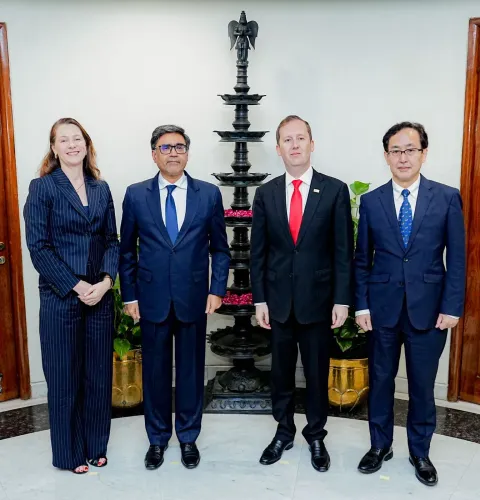
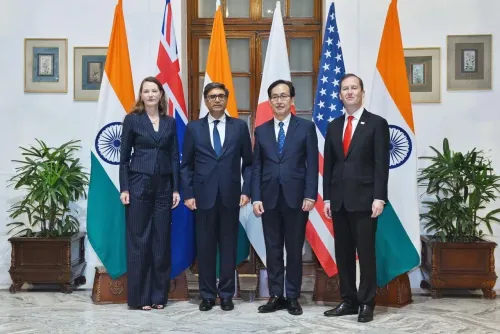
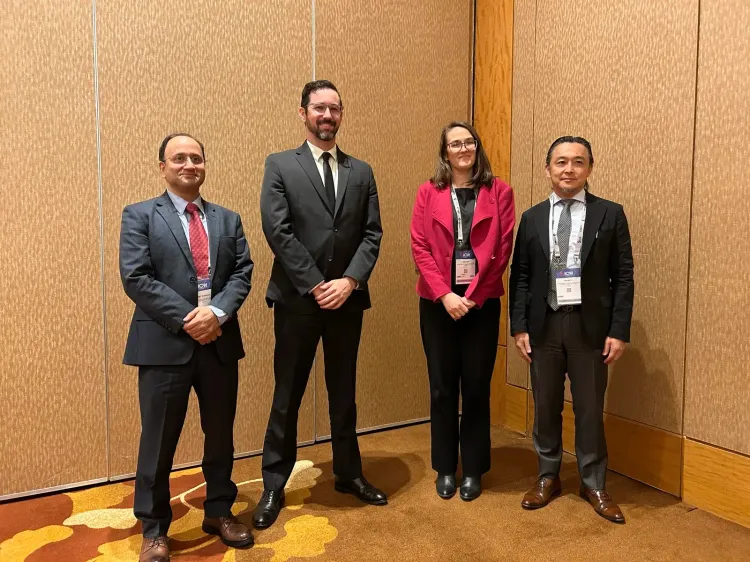
Senior cyber officials from India , Japan , Australia , and the US met at the Quad Cyber Senior Officials' Meeting in Singapore on 13 October 2026 .
The four parties pledged to 'defend against and deter cyber threats' and confirmed 'continued close cooperation in the cyber domain,' according to Japan's Ministry of Foreign Affairs .
The meeting follows a Quad Sherpas' meeting in New Delhi last month, hosted by Foreign Secretary Vikram Misri , which covered maritime security, critical technologies, and economic security.
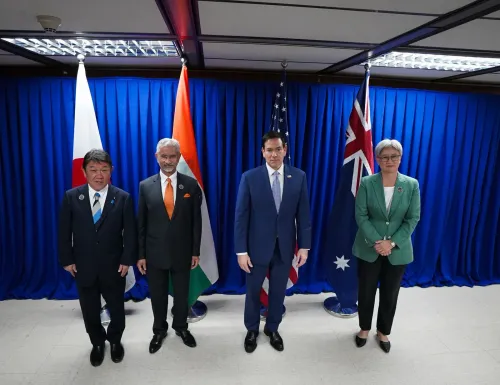
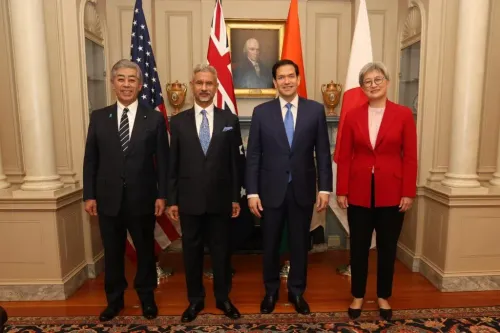
Jaishankar , Penny Wong , Toshimitsu Motegi , and Marco Rubio met in Manila for the Quad Foreign Ministers' Meeting, setting the political framework for Tuesday's technical talks.
The Quad's updated Free and Open Indo-Pacific (FOIP) framework underpins all ongoing cooperation across cyber, maritime, and economic security tracks.
Senior officials from the Quad grouping — India, Japan, Australia, and the United States — convened in Singapore on Tuesday, 13 October 2026 to strengthen collective cyber capabilities and reaffirm their commitment to a Free and Open Indo-Pacific (FOIP). The meeting underscored the bloc's determination to defend against and deter cyber threats in a region facing rapidly evolving digital risks.
Who Attended and What Was Decided
The Quad Cyber Senior Officials' Meeting brought together Takaba Yo, Ambassador in charge of Cyber Policy at Japan's Ministry of Foreign Affairs; Tori Lamb, Assistant Secretary for Cyber Affairs and Critical Technology at Australia's Department of Foreign Affairs and Trade (DFAT); the Joint Secretary for Cyber Diplomacy, e-Governance and Information Technology at India's Ministry of External Affairs (MEA); and Joshua Young, Senior Bureau Official for the Bureau of Emerging Threats at the US Department of State.
In a statement released by Japan's Ministry of Foreign Affairs, the four parties confirmed they 'reaffirmed their shared emphasis on enhancing regional resilience and capacity to determine their own paths under the updated Free and Open Indo-Pacific and exchanged views on cooperation to strengthen cyber capabilities in the region and to defend against and deter cyber threats.' The statement added that 'the four parties confirmed that they will continue close cooperation in the cyber domain.'
Broader Quad Momentum
This meeting is part of an accelerating pattern of Quad engagement in 2026. Just last month, senior officials reviewed cooperation on maritime security, critical technologies, and economic security at the Quad Sherpas' meeting hosted by Foreign Secretary Vikram Misri in New Delhi. That session was attended by US Ambassador to India Sergio Gor, Australia's deputy foreign ministry official Elly Lawson, and Japan's Senior Deputy Foreign Minister Hiroyuki Namazu.
The State Department noted that the Sherpas 'reaffirmed the importance of focussing on concrete, action-oriented initiatives,' covering maritime and transnational security, economic prosperity and security, critical and emerging technologies, and humanitarian assistance and emergency response.
Ministerial-Level Alignment From Manila
The Singapore cyber talks build on ministerial-level consensus established in July, when External Affairs Minister S. Jaishankar, Australian Foreign Minister Penny Wong, Japanese Foreign Minister Toshimitsu Motegi, and US Secretary of State Marco Rubio met in Manila for the Quad Foreign Ministers' Meeting. The ministers jointly reaffirmed support for ASEAN's unity and centrality in the Indo-Pacific and underscored the Quad's resolve for the region's prosperity. That joint statement set the political framework within which Tuesday's technical cyber discussions took place.
Why Cyber Cooperation Matters Now
The Indo-Pacific has emerged as a primary theatre for state-sponsored cyber operations, with critical infrastructure, financial systems, and government networks across the region facing persistent threats, according to multiple cybersecurity assessments. The Quad's focus on cyber resilience reflects a broader recognition that geopolitical competition has increasingly moved into the digital domain. Notably, this is the Quad's first dedicated senior-level cyber meeting to be held in Singapore, signalling an intent to engage ASEAN-adjacent partners directly.
The four nations are expected to continue close coordination, with further working-group engagements anticipated in the coming months as the Quad's updated FOIP framework takes shape.
Point of View
Which is where real operational coordination happens. The choice of Singapore, rather than a Quad capital, is deliberate: it gestures toward ASEAN without formally expanding the grouping. What remains untested is whether these senior-official pledges translate into interoperable incident-response frameworks or remain aspirational language. The Quad's credibility on cyber will ultimately be measured not by how many meetings it holds, but by whether its members respond in concert the next time a major state-sponsored attack targets Indo-Pacific infrastructure.
NationPress
13 Oct 2026
Frequently Asked Questions
What was discussed at the Quad Cyber Senior Officials' Meeting in Singapore?
The four Quad nations — India, Japan, Australia, and the US — met on 13 October 2026 in Singapore to exchange views on strengthening cyber capabilities in the Indo-Pacific region and to coordinate defences against cyber threats. The parties confirmed they will continue close cooperation in the cyber domain under the updated Free and Open Indo-Pacific (FOIP) framework.
Who represented each country at the Quad cyber meeting?
Japan was represented by Ambassador Takaba Yo; Australia by Assistant Secretary Tori Lamb; the US by Joshua Young of the Bureau of Emerging Threats at the State Department; and India by the Joint Secretary for Cyber Diplomacy, e-Governance and Information Technology at the Ministry of External Affairs.
How does this meeting fit into the broader Quad agenda in 2026?
It follows a Quad Sherpas' meeting hosted by Foreign Secretary Vikram Misri in New Delhi last month, which covered maritime security, critical technologies, and economic security. Before that, the Quad Foreign Ministers met in Manila in July, where EAM Jaishankar, Penny Wong, Toshimitsu Motegi, and Marco Rubio reaffirmed commitments to a free and open Indo-Pacific.
What is the Free and Open Indo-Pacific (FOIP) framework?
FOIP is a strategic vision shared by the Quad nations — India, Japan, Australia, and the US — centred on preserving an open, rules-based order in the Indo-Pacific. The updated framework, referenced at Tuesday's meeting, guides cooperation across cyber, maritime, economic, and technology domains.
Why is Singapore significant as the venue for the Quad cyber meeting?
Singapore sits at the heart of Southeast Asia and adjacent to ASEAN, whose unity and centrality the Quad has repeatedly affirmed. Holding the cyber meeting in Singapore, rather than a Quad member capital, signals an intent to engage the broader region and reinforces the bloc's stated commitment to ASEAN-centred Indo-Pacific architecture.