Ramaswamy Vows to Restore Jobs in Ohio's Rust Belt
Synopsis
Entrepreneur Vivek Ramaswamy, responding to a pointed question from radio host Hugh Hewitt, pledged to restore high-paying manufacturing jobs to Trumbull County, Ohio, and said the recovery would be visibly underway within a year — a direct pitch to one of the Rust Belt's most symbolically loaded communities.
Key Takeaways
Ramaswamy's stated top priority for Trumbull County is restoring high-paying jobs lost over decades of industrial decline.
The pledge was made in response to a direct question from conservative radio host Hugh Hewitt about tangible local benefits.
Trumbull County in northeastern Ohio was a steel and auto-parts hub whose manufacturing base collapsed sharply after 2000 .
Ramaswamy's economic approach centres on deregulation and domestic energy expansion rather than direct federal subsidies.
His association with the DOGE advisory effort frames the promise within a spending-restraint-plus-private-sector-growth model.
The self-imposed timeline — 'by this time next year' — sets a measurable near-term benchmark for voters and analysts to track.
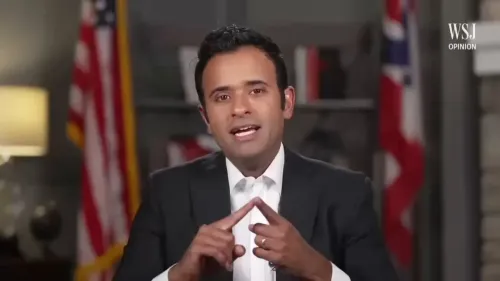
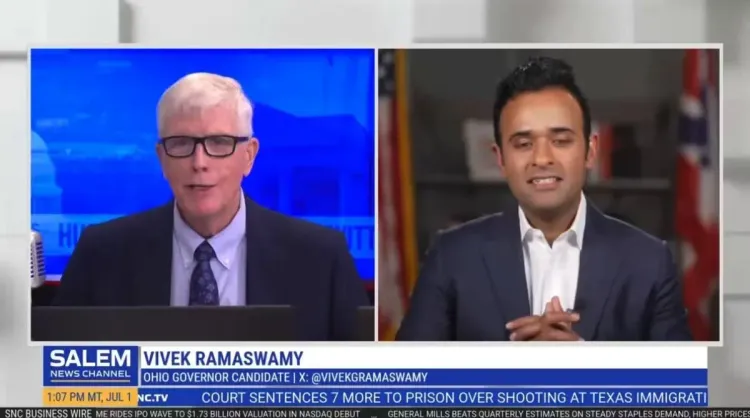
Entrepreneur Vivek Ramaswamy pledged on Wednesday, 2 July 2026 to bring back high-paying manufacturing jobs to Trumbull County, Ohio, saying the revival would already be underway 'by this time next year,' in remarks shared on X following an interview with conservative radio host Hugh Hewitt.
Context
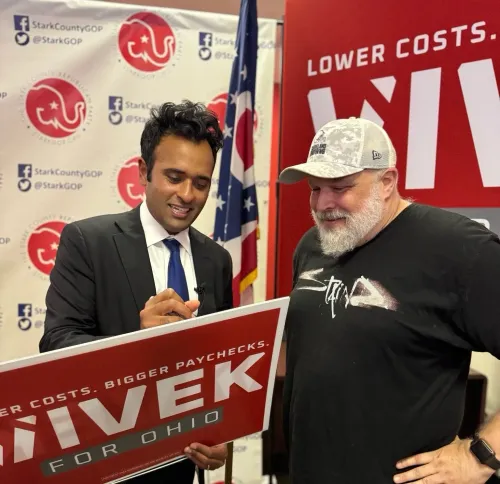
Ramaswamy posted that when Hewitt asked him bluntly 'what's in it for Trumbull County if I win,' his number-one answer was restoring the high-paying jobs the region has lost over decades. The statement frames a direct electoral pitch to one of Ohio's most symbolically significant Rust Belt communities.
Trumbull County, located in northeastern Ohio, was once a hub of steel and auto-parts manufacturing. Its industrial base eroded sharply after 2000, accelerated by China's entry into the World Trade Organization and the 2008-09 recession, leaving behind a workforce that has cycled through lower-wage replacement employment.
Policy Backdrop
Ramaswamy's economic pitch is rooted in a platform that has consistently called for deregulation, expanded domestic energy production, and permitting reform as levers to encourage private-sector reshoring of manufacturing. During his 2024 Republican presidential campaign, he positioned these measures as faster and more durable than direct federal subsidies.
The broader Republican approach to Rust Belt revival — pursued across multiple administrations through tariffs, tax incentives, and regulatory rollback — has produced uneven results in legacy industrial counties like Trumbull. Ramaswamy's association with the Department of Government Efficiency (DOGE) advisory effort situates his promise within a framework that pairs spending restraint with private-sector job creation rather than government-led industrial policy.
Stakeholders and Impact
Manufacturing workers and their families in Trumbull County and surrounding northeastern Ohio communities are the primary audience for the pledge. The county has served as a bellwether for working-class voter sentiment in presidential and statewide contests, making it a high-value target for any candidate seeking to consolidate the Republican coalition in Ohio.
Broader stakeholders include domestic steel and auto-supply-chain employers, energy producers whose output costs affect manufacturing competitiveness, and federal and state policymakers weighing deregulation timelines. Any concrete regulatory or investment proposals tied to the pledge would have implications well beyond a single county.
What's Next
Ramaswamy's assertion that job recovery would 'already be happening by this time next year' sets a self-imposed near-term benchmark. Observers will watch for specific economic or regulatory proposals tied to Ohio manufacturing districts, as well as outcomes of 2026 state and federal contests that will determine whether the political conditions exist to act on such commitments. The Rust Belt's response to competing job-creation pitches is likely to remain a defining variable in Ohio politics through the election cycle.
Point of View
But it carries a harder edge than typical campaign rhetoric: a named county, a named interviewer, and a named deadline compress the promise into something verifiable. The DOGE association adds a distinct flavour — the argument is not that government will build factories, but that removing friction will let the private sector do so. Whether that distinction resonates with workers who have heard deregulation promises before is the central political question. The one-year timeline, if it goes unmet, becomes an opposition talking point; if it is partially met, it becomes a powerful closing argument.
NationPress
30 Sept 2026
Frequently Asked Questions
What did Vivek Ramaswamy promise for Trumbull County?
Ramaswamy pledged to restore high-paying manufacturing jobs to Trumbull County, Ohio, and said the process would already be underway within a year.
Who is Hugh Hewitt and why did he interview Ramaswamy?
Hugh Hewitt is a prominent conservative radio host who regularly questions Republican figures on policy and electoral strategy; he asked Ramaswamy directly what voters in Trumbull County would gain if Ramaswamy wins.
Why is Trumbull County significant in US politics?
Trumbull County in northeastern Ohio is a former steel and auto-parts manufacturing hub that lost much of its industrial base after 2000, making it a symbol of Rust Belt decline and a bellwether for working-class voter sentiment.
What is Ramaswamy's economic plan for manufacturing revival?
Ramaswamy has advocated deregulation, expanded domestic energy production, and permitting reform as tools to encourage private-sector reshoring of manufacturing, rather than direct government subsidies.
What is DOGE and how does it relate to Ramaswamy's jobs pledge?
DOGE — the Department of Government Efficiency — was a federal advisory effort co-led by Ramaswamy; his jobs pitch is framed within that philosophy of pairing government spending restraint with conditions that allow private-sector employment to grow.