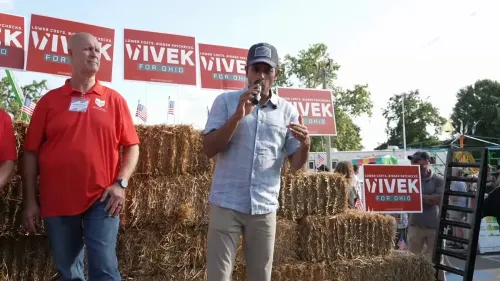
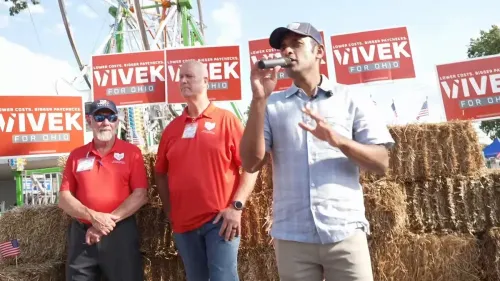
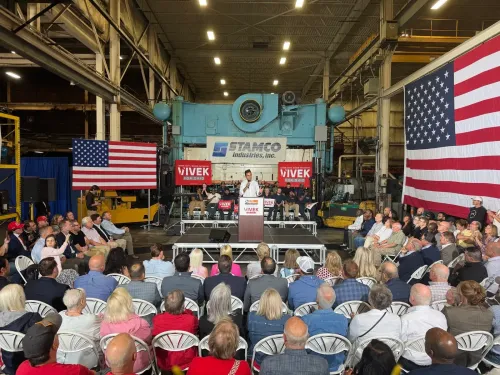
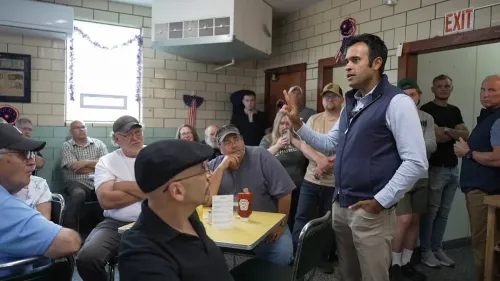
Ramaswamy Bets on Energy, Job Training for Ohio Manufacturing Revival
Synopsis
Entrepreneur Vivek Ramaswamy has identified energy abundance and workforce training as the twin pillars of a planned Ohio manufacturing revival, pledging action from January. The statement signals a possible shift from his national DOGE role toward state-level industrial policy engagement.
Key Takeaways
Vivek Ramaswamy posted on June 25, 2026 identifying energy abundance and workforce training as the two keys to an Ohio manufacturing boom.
He set January as the target start date for implementing both priorities, though specific policy instruments were not detailed.
Ohio is a historic Rust Belt manufacturing hub in autos, steel, and machinery, and has faced decades of industrial decline.
Ramaswamy's approach echoes Republican supply-side industrial policy: deregulating energy and investing in vocational training rather than direct federal subsidies.
The post signals a possible pivot from his national-level DOGE advisory role to state-specific economic strategy in Ohio.
Stakeholders including Ohio manufacturers and the Rust Belt workforce stand to be most directly affected by any concrete follow-through.
Entrepreneur Vivek Ramaswamy, founder and executive chairman of Strive Asset Management and former co-lead of the US Department of Government Efficiency (DOGE), on Wednesday, June 25, 2026, outlined a two-point agenda he says will trigger a manufacturing resurgence in Ohio, centred on energy abundance and workforce training, with implementation targeted to begin in January.
Context
Ramaswamy posted on X that 'two keys to unlocking a new manufacturing boom in Ohio' are 'energy abundance' and 'workforce training,' adding: 'We'll nail both starting in January.' The statement is notable for its specificity about a January start date and its focus on a single state — Ohio — rather than a national agenda, signalling a possible pivot toward state-level political or policy engagement.
Ohio has historically been a cornerstone of American industrial output, anchoring production in autos, steel, and heavy machinery. The state sits at the heart of the so-called Rust Belt, a region that has seen decades of manufacturing decline driven by automation, offshoring, and energy cost pressures.
Policy Backdrop
Ramaswamy's twin priorities — energy deregulation and vocational skills development — align closely with longstanding Republican industrial policy themes. The approach prioritises expanding domestic fossil fuel and nuclear energy output to lower production costs, while channelling investment into trade and vocational programmes as an alternative to broad federal subsidies.
During his tenure as co-lead of DOGE alongside Elon Musk, Ramaswamy advocated cutting federal regulatory burdens and redirecting spending. His post implicitly continues that philosophy, framing manufacturing revival as a function of supply-side inputs — cheap energy and skilled labour — rather than demand-side stimulus or direct government grants. The Trump 2017 Tax Cuts and Jobs Act had earlier attempted to encourage domestic capital investment and repatriation of manufacturing through tax incentives, a lineage Ramaswamy's framing echoes.
State-level energy permitting reforms and federal workforce funding reallocations tied to DOGE recommendations have been flagged as areas to watch in ongoing 2025 budget cycles, making Ramaswamy's January timeline particularly pointed.
Stakeholders and Impact
Ohio manufacturers and the broader Rust Belt workforce stand to be most directly affected by any concrete policy moves that follow this signal. For factory workers and small industrial firms, energy costs represent one of the largest variable inputs; a meaningful reduction through deregulation or expanded domestic production could improve competitiveness against imports.
Workforce training proposals, if translated into funded programmes, would address a persistent skills gap that Ohio employers have cited as a barrier to expansion. Community colleges and technical institutes across the state have long lobbied for sustained federal and state investment in apprenticeship and vocational pipelines.
What's Next
Ramaswamy has not detailed the specific policy instruments or formal roles through which he intends to pursue these goals in Ohio. Observers will watch for announcements around state-level energy permitting legislation, potential gubernatorial or legislative partnerships, and any formal workforce funding proposals tied to the January timeline he has cited.
If Ramaswamy moves from advocacy to active policy architecture in Ohio, it would mark a significant shift from his national-level DOGE role to state-specific industrial strategy — a model that, if successful, could be replicated across other Rust Belt states still searching for a post-industrial economic identity.
Point of View
Whether legislative, executive, or advisory. The twin pillars of energy and workforce training are classically Republican supply-side levers, but their application at the state level rather than the federal level marks a tactical evolution from his DOGE chapter. For the Rust Belt, the framing matters: it places the burden of revival on regulatory reform and human capital rather than on federal industrial subsidies, which sets up a clear ideological contrast with competing Democratic approaches. Whether the January commitment translates into measurable policy or remains aspirational rhetoric will be the definitive test of this signal.
NationPress
23 Sept 2026
Frequently Asked Questions
What is Vivek Ramaswamy's plan for Ohio manufacturing?
Ramaswamy has outlined two priorities: energy abundance and workforce training, which he says will drive a new manufacturing boom in Ohio starting in January.
What is Vivek Ramaswamy's current role?
Ramaswamy is the founder and executive chairman of Strive Asset Management. He previously co-led the US Department of Government Efficiency (DOGE) alongside Elon Musk and was a 2024 Republican presidential candidate.
Why is Ohio important for US manufacturing?
Ohio is a core Rust Belt state with a longstanding industrial base in autos, steel, and machinery, making it a bellwether for broader American manufacturing health.
What does energy abundance mean in the context of US manufacturing policy?
In Republican policy circles, energy abundance typically refers to expanding domestic fossil fuel and nuclear energy production through deregulation, which is intended to lower energy costs for manufacturers.
What is the significance of the January timeline Ramaswamy mentioned?
Ramaswamy did not specify the exact policy mechanism, but a January start date suggests he may be anticipating a formal state-level role or coordinated legislative push in Ohio around that time.