How Will EVs Propel India’s Manufacturing Sector Forward?
Synopsis
The Indian government's focus on electric mobility is set to revamp the manufacturing sector, promoting sustainability and innovation. Minister Kumaraswamy highlights key initiatives and investments aimed at reducing emissions and enhancing domestic production, paving the way for a greener future.
Key Takeaways
Government initiatives are pivotal in advancing electric mobility.
FAME-II has significantly boosted EV adoption.
Investment in infrastructure is critical for sustainable growth.
Electrification can reduce pollution from commercial vehicles.
MSMEs are key players in fostering innovation .
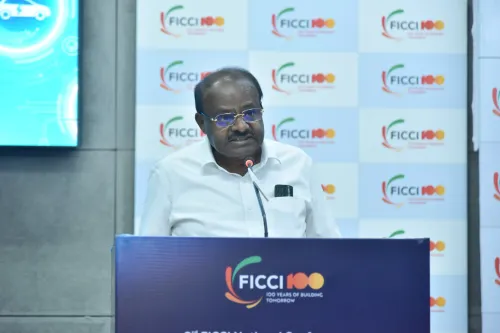
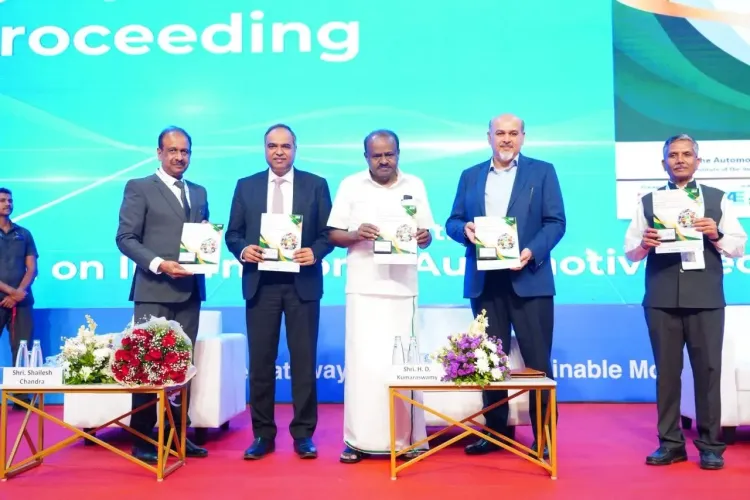
Pune, Jan 27 (NationPress) The Minister for Heavy Industries, H. D. Kumaraswamy, articulated on Tuesday that the Government's commitment to Make in India and Aatmanirbhar Bharat is bolstering advanced manufacturing sectors that will shape India's future trajectory, with electric mobility serving as a central element in this evolution.
“This initiative diminishes reliance on imported fossil fuels, mitigates emissions, and fosters new prospects for the Indian industry, innovators, and our vibrant young workforce,” the Minister remarked during his speech at the Symposium on International Automotive Technology (SIAT) 2026 in Pune.
Expounding on the Government’s policy measures, the Minister underscored that the Ministry of Heavy Industries has undertaken significant actions to expedite the shift to electric vehicles.
The FAME-II initiative, with an investment of Rs 11,500 crore, has facilitated the adoption of over 16.71 lakh electric vehicles and enabled the establishment of more than 9,000 public charging stations nationwide.
He further noted that the PM E-DRIVE scheme, backed by ₹10,900 crore, has catalyzed EV adoption through demand incentives and expanded charging infrastructure, resulting in the sale of over 20 lakh electric vehicles under the program. The Production Linked Incentive (PLI) Auto scheme, with a budget of ₹25,938 crore, is enhancing domestic value addition and boosting global competitiveness.
Kumaraswamy also mentioned the PLI-ACC scheme stating, “We aspire to develop 50 GWh of Advanced Chemistry Cell battery manufacturing capacity in India, fortifying long-term energy security and resilience.”
He highlighted the recently sanctioned Rare Earth Permanent Magnet (REPM) scheme, which has a budget of Rs 7,280 crore, aimed at promoting indigenous manufacturing of essential components for electric vehicles, wind turbines, defense systems, and electronics.
Addressing environmental issues, the Minister emphasized that the electrification of commercial vehicles warrants special attention, as they account for over 40 percent of pollution related to transport.
He disclosed that Rs 2,000 crore has been allocated under the PM E-DRIVE scheme to establish over 70,000 charging stations across the nation to enhance EV adoption in this sector.
Presenting industry performance statistics, Kumaraswamy stated, “Vehicle production surged from 28.4 million units in FY 2023-24 to 31 million units in FY 2024-25, while exports escalated from 4.5 million units to 5.36 million units within the same timeframe. These statistics showcase the success of Government initiatives in fostering a clean, competitive, and sustainable automotive sector.”
During his visit to the symposium, the Union Minister explored various exhibition stalls, engaged with industry stakeholders, startups, and researchers, and examined emerging technologies aimed at improving passenger safety and mobility efficiency.
He toured the ARAI Pavilion and the Technology Pavilion, where groundbreaking innovations in vehicle testing, safety systems, electrification, and connected mobility were displayed.
Kumaraswamy also inaugurated three new facilities at the ARAI’s Mobility Research Centre (MRC) in Takwe, near Pune, developed to enhance safety, security, and advanced research capabilities.
He expressed optimism that these facilities would further improve India’s testing and certification infrastructure.
Praising the increasing involvement of MSMEs and startups at SIAT, the Minister noted that ARAI’s outreach programs have been instrumental in fostering innovation and entrepreneurship in the automotive sector.
Point of View
It is our duty to shed light on the government's proactive measures in promoting electric vehicles and self-reliance. The initiatives highlighted by Minister Kumaraswamy showcase a commitment to sustainability and innovation, vital for India's growth in the manufacturing sector. It is essential that we support and monitor these initiatives to ensure they meet their intended goals.
NationPress
22 Sept 2026
Frequently Asked Questions
What is the significance of electric mobility in India's manufacturing sector?
Electric mobility is crucial as it reduces dependence on fossil fuels, lowers emissions, and creates job opportunities in manufacturing and technology.
What government schemes are supporting EV adoption in India?
Key schemes include FAME-II and PM E-DRIVE, which provide financial incentives and support the establishment of charging infrastructure.
How many electric vehicles have been adopted under the FAME-II scheme?
Over 16.71 lakh electric vehicles have been adopted under the FAME-II scheme.
What are the environmental benefits of electrifying commercial vehicles?
Electrifying commercial vehicles can significantly reduce transport-related pollution, addressing over 40% of emissions in this sector.
What role do MSMEs play in the automotive sector?
MSMEs contribute to innovation and entrepreneurship, essential for the growth and competitiveness of the automotive sector.