Ramaswamy Visits Memorial Tournament, Slams 2020 Spectator Ban
Synopsis
Vivek Ramaswamy attended the Memorial Tournament in Dublin, Ohio, praising its $35M+ annual economic contribution and $60M in charity giving, while sharply criticising Ohio's 2020 spectator ban and vowing to keep the official responsible out of future power.
Key Takeaways
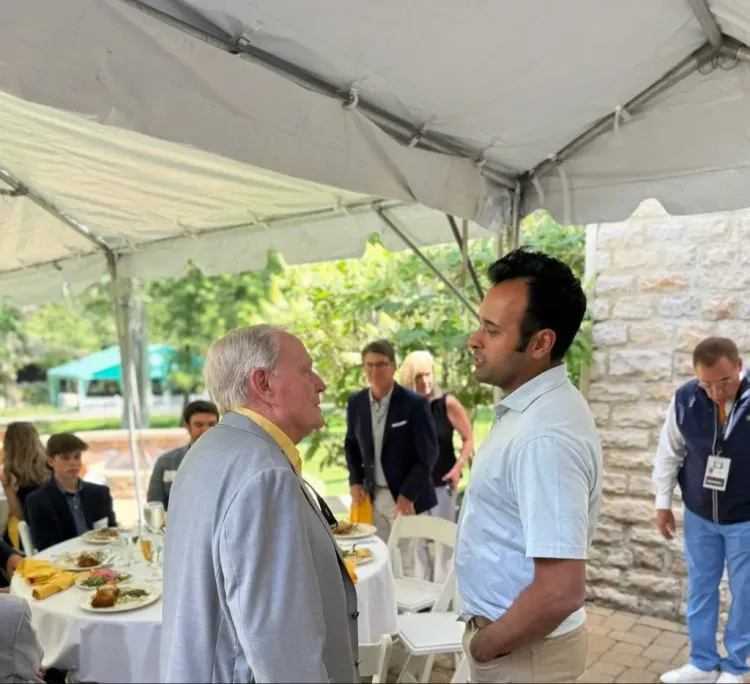
Ramaswamy visited the Memorial Tournament at Muirfield Village Golf Club in Dublin, Ohio on June 4, 2026 .
He cited the tournament's $35 million-plus annual economic impact and $60 million in cumulative charitable contributions.
He criticised the 2020 spectator ban, calling it unjustified for an outdoor event.
The post targets former Ohio Department of Health director Amy Acton , widely known as 'Dr.
Lockdown.' Ramaswamy pledged political action to ensure the official is 'never in power again.' The remarks continue a broader Republican pattern of challenging the economic and policy legacy of 2020 pandemic restrictions.
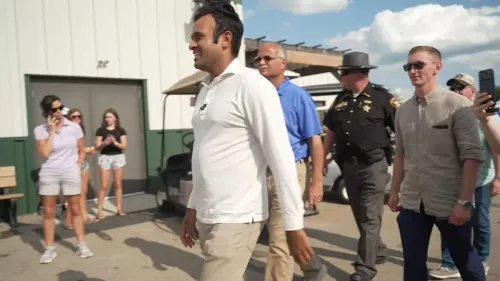
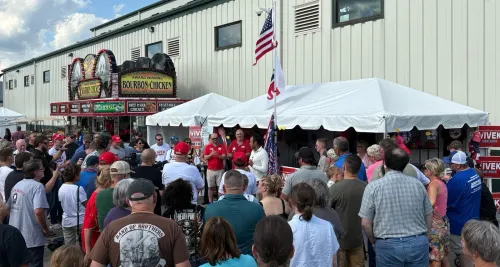
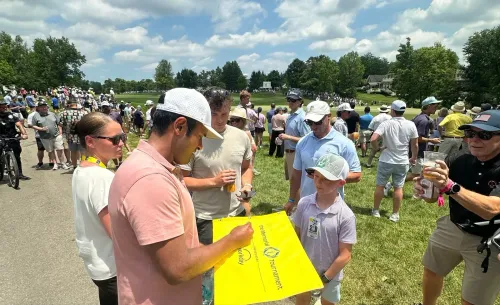
Entrepreneur and former DOGE co-lead Vivek Ramaswamy visited the Memorial Tournament in Dublin, Ohio, on Thursday, June 4, 2026, using the occasion to highlight the event's economic value to the state and to renew criticism of Ohio's 2020 pandemic-era spectator restrictions.
Context
Ramaswamy posted that the Memorial Tournament generates '$35 million-plus in economic activity every year' and has contributed '$60 million over time to local charities.' He described the event as 'incredibly fun to watch' and said he attended in person. The annual PGA Tour stop is held at Muirfield Village Golf Club in Dublin, Ohio, and was founded by golf legend Jack Nicklaus with a strong emphasis on charitable giving.
The post also took direct aim at a public-health official Ramaswamy called 'Dr. Lockdown,' stating she 'pushed for a spectator ban in 2020 despite the fact that it was an outdoor event.' He added: 'We'll make sure she's never in power again.'
Policy Backdrop
The individual referred to as 'Dr. Lockdown' is widely understood to be Amy Acton, the former Ohio Department of Health director who was the public face of Ohio's early COVID-19 response under Governor Mike DeWine. In March 2020, Ohio issued executive orders restricting mass gatherings and barring spectators from public events as part of the initial pandemic containment effort.
The 2020 edition of the Memorial Tournament proceeded without spectators, a decision that drew criticism from event organisers and local business groups who argued that outdoor golf posed minimal transmission risk. Ramaswamy's post frames the restriction as an example of overreach by public-health authorities, emphasising the outdoor nature of the event as a key distinction.
Stakeholders and Impact
The Memorial Tournament is a significant driver of economic activity for the Dublin and broader Columbus metropolitan area, with local hospitality businesses, hotels, and retailers among the primary beneficiaries of the annual event. Local charities have also relied on the tournament's philanthropic model, which has distributed tens of millions of dollars over its history.
PGA Tour spectators, Ohio small-business owners, and charitable organisations that depend on tournament-linked fundraising are the constituencies Ramaswamy's post most directly addresses. His remarks signal that the economic cost of the 2020 spectator ban remains a live political issue in Ohio, particularly as the state's Republican figures continue to relitigate pandemic-era policy decisions.
What's Next
Ramaswamy's explicit warning — that he will work to ensure the referenced official is 'never in power again' — suggests the issue may feature in future Ohio or national Republican political messaging. His continued public presence at high-profile Ohio events, combined with sharp criticism of past Democratic-aligned public-health figures, points to an ongoing effort to shape the political narrative around pandemic governance ahead of future electoral cycles.
Point of View
Using a beloved Ohio institution as a backdrop to relitigate pandemic-era governance. By pairing hard economic figures with a personal attack on a specific public-health official, he frames the 2020 restrictions not as a public-health necessity but as a policy failure with measurable costs. The explicit vow to keep 'Dr. Lockdown' out of future power signals that pandemic-restriction accountability will remain a Republican electoral weapon in Ohio well into the next cycle. This fits a broader national pattern of conservative figures converting COVID-era grievances into durable political capital.
NationPress
26 Oct 2026
Frequently Asked Questions
What is the Memorial Tournament and why is it important to Ohio?
The Memorial Tournament is an annual PGA Tour event held at Muirfield Village Golf Club in Dublin, Ohio, founded by Jack Nicklaus. It generates over $35 million in economic activity each year and has contributed $60 million to local charities over time, making it a major economic and philanthropic asset for the state.
Why did the Memorial Tournament ban spectators in 2020?
Ohio issued executive orders in March 2020 restricting mass gatherings as part of its early COVID-19 response under Governor Mike DeWine, leading to the 2020 edition of the tournament being held without spectators.
Who is 'Dr. Lockdown' that Ramaswamy mentioned?
'Dr. Lockdown' is widely understood to refer to Amy Acton, the former Ohio Department of Health director who was the public face of Ohio's COVID-19 restrictions in 2020.
What did Vivek Ramaswamy say about the 2020 spectator ban?
Ramaswamy argued the ban was unjustified because the Memorial Tournament is an outdoor event, and he vowed to ensure the official who pushed for it is 'never in power again.'
What is Vivek Ramaswamy's current role?
Vivek Ramaswamy is the founder and executive chairman of Strive Asset Management. He previously served as co-lead of the DOGE advisory effort and ran for the Republican presidential nomination in 2024.