Vivek Ramaswamy Invokes Jesse Owens on 90th Anniversary of Berlin Gold
Synopsis
On the 90th anniversary of Jesse Owens' four gold medals at the 1936 Berlin Olympics, Vivek Ramaswamy posted a tribute arguing that Owens' triumph over Nazi racial ideology proves the American Dream is real and that citizens should be judged by character, not race or ethnicity.
Key Takeaways
Jesse Owens won four gold medals at the 1936 Berlin Olympics , directly contradicting Nazi claims of Aryan racial supremacy.
Owens' family migrated from Alabama to Ohio as part of the Great Migration, seeking economic opportunity — the backstory Ramaswamy centres in his tribute.
Vivek Ramaswamy posted the tribute on August 6, 2026 , marking the 90th anniversary of Owens' historic performance.
Ramaswamy argued that America is 'at its best' when citizens are measured by 'character and courage rather than race or ethnicity.' The message is consistent with Ramaswamy's longstanding critique of race-conscious frameworks, a core theme of his 2024 Republican presidential campaign .
Ramaswamy currently serves as founder and executive chairman of Strive Asset Management and was a former co-lead of the DOGE advisory effort.
Ninety years after an Ohioan named Jesse Owens walked into the heart of Nazi Germany and won four Olympic gold medals, entrepreneur Vivek Ramaswamy marked the anniversary with a pointed message about race, merit, and the American Dream — posting on X on August 6, 2026.
What Owens Did in Berlin in 1936
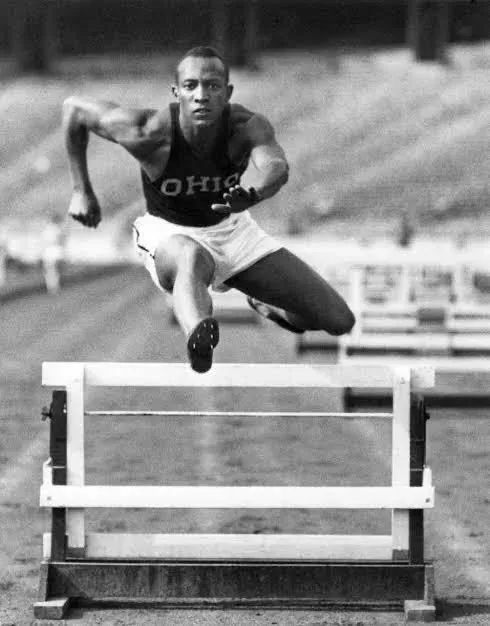
The 1936 Berlin Olympics were designed by Adolf Hitler's regime as a global stage for Nazi racial ideology — a showcase of so-called Aryan supremacy. Jesse Owens, the son of an Alabama sharecropper whose family had migrated to Ohio in search of opportunity, demolished that narrative in nine days. He took gold in the 100m, 200m, long jump, and 4x100m relay — four medals, four direct refutations of the regime's central claim.
Owens' parents had made the journey from Alabama to Ohio as part of the broader Great Migration, seeking economic mobility and safety. That backstory is precisely what Ramaswamy centres in his post: 'His parents had moved to Ohio from Alabama to seek opportunity and live the American Dream.'
Ramaswamy's Argument: Character Over Category
Ramaswamy's tribute is not simply commemorative — it carries a clear ideological freight. 'We're at our best when we measure every citizen by their character and courage rather than race or ethnicity,' he wrote, invoking Owens as living proof that a colour-blind standard of excellence is both possible and historically vindicated.
The framing is consistent with a theme Ramaswamy has pressed throughout his public career, including his 2024 Republican presidential campaign: that race-conscious frameworks in hiring, education, and public life are at odds with the American founding ideal, and that individual achievement — not group identity — is the proper unit of civic measurement. Owens, in this telling, is not just a sporting legend but a philosophical case study.
Why the Anniversary Lands Now
The 90-year milestone gives the post historical gravity that a routine tribute would lack. Ramaswamy's choice of Owens also sidesteps the partisan flashpoints of contemporary policy debates — it is difficult to argue against the man who humiliated Hitler's propaganda machine. That strategic grounding in an unimpeachable historical moment is part of what makes the messaging durable across electoral cycles.
As a former co-lead of the US Department of Government Efficiency (DOGE) advisory effort and the founder of Strive Asset Management, Ramaswamy continues to command a national platform well beyond his presidential run — and he is using it, on this anniversary, to anchor a debate about the future in the facts of 1936.
Jesse Owens won those medals without a quota, without a mandate, and against the most hostile ideological backdrop imaginable. That, Ramaswamy argues, is the point — and the promise.
Point of View
He insulates the message from easy dismissal. The post continues a pattern — visible across his presidential campaign and his work at Strive — of using individual achievement stories to argue against structural or group-identity frameworks. For Indian observers, the resonance is real: the tension between merit-based advancement and identity-group preferences mirrors debates in India over reservations and affirmative action. Ramaswamy's platform, though rooted in US politics, speaks to a global argument about how democracies should balance equality of opportunity with recognition of historical disadvantage.
NationPress
20 Sept 2026
Frequently Asked Questions
Who was Jesse Owens and what did he achieve at the 1936 Olympics?
Jesse Owens was an African American track and field athlete from Ohio who won four gold medals at the 1936 Berlin Olympics — in the 100m, 200m, long jump, and 4x100m relay — directly undermining Nazi Germany's racial propaganda.
Why did Vivek Ramaswamy post about Jesse Owens in 2026?
August 2026 marks the 90th anniversary of Owens' victories in Berlin. Ramaswamy used the milestone to argue that Owens' triumph proves the American Dream is real and that citizens should be judged by character rather than race.
What is Vivek Ramaswamy's political and professional background?
Vivek Ramaswamy is the founder and executive chairman of Strive Asset Management , a former co-lead of the US Department of Government Efficiency (DOGE) advisory effort, and a candidate in the 2024 Republican presidential primary .
What was the significance of the 1936 Berlin Olympics?
The 1936 Berlin Olympics were used by Adolf Hitler's Nazi regime as a propaganda showcase for Aryan racial ideology. Jesse Owens' four gold medals in front of that regime became one of sport's most powerful symbolic moments.
What is Ramaswamy's broader stance on race and identity politics?
Ramaswamy has consistently argued against race-conscious frameworks in American public life, favouring what he describes as a colour-blind standard that evaluates individuals by merit, character, and results — a theme central to his presidential campaign and his investment philosophy at Strive.