Ramaswamy Hands Mic to 11-Year-Old Civics Advocate at Town Hall
Synopsis
At a town hall on June 19, 2026, Vivek Ramaswamy handed the microphone to an 11-year-old student named Anderson who advocates for reviving civic education in US schools. The moment highlights a national debate over declining civics instruction that has persisted since the No Child Left Behind era.
Key Takeaways
Entrepreneur Vivek Ramaswamy gave the microphone to an 11-year-old attendee named Anderson at a town hall on June 19, 2026 .
Anderson is described as an advocate for reviving civic education in American schools.
The No Child Left Behind Act of 2002 is widely credited with reducing civics instructional time by prioritising math and reading testing.
NAEP assessments have documented declining youth knowledge of US government and history since the 1990s.
States such as Florida have introduced mandatory civic literacy requirements for high school graduation as a counter-measure.
Ramaswamy has consistently called for renewed emphasis on American founding principles and civic literacy throughout his public career.
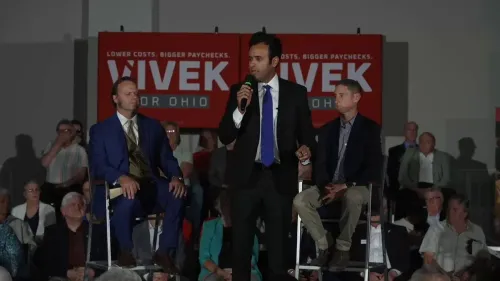
Entrepreneur Vivek Ramaswamy, founder of Strive Asset Management and former co-lead of the Department of Government Efficiency (DOGE) advisory effort, handed the microphone to an 11-year-old attendee who raised a question about reviving civic education in American schools at a town hall on Thursday, June 19, 2026.
Context
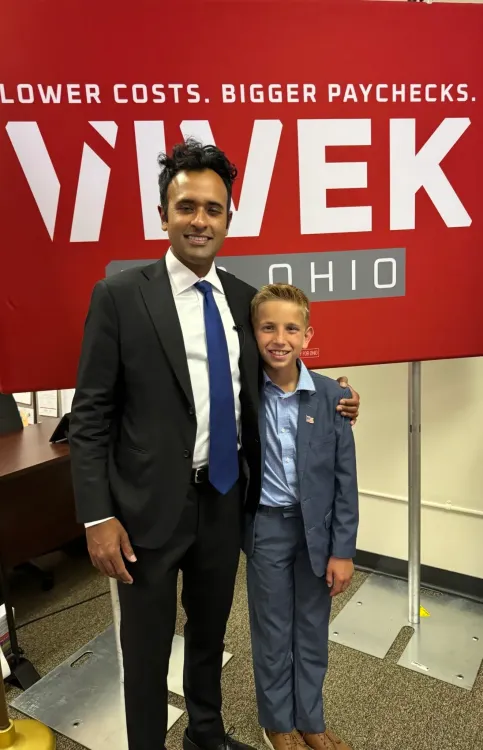
Ramaswamy shared the moment on X, writing that the child — identified only as Anderson — is 'an advocate for reviving civic education in our schools.' The post, accompanied by two images from the event, drew attention for spotlighting youth-driven concern over a subject that has steadily lost classroom time across the United States over the past two decades.
Ramaswamy expressed pride in Anderson's initiative, saying the young student's engagement exemplified the kind of civic participation he has long championed in his public platform.
Policy Backdrop
The decline of civics instruction in US schools has been a documented trend since the early 2000s. The No Child Left Behind Act of 2002 prioritised standardised testing in math and reading, which led many school districts to reduce instructional time allocated to civics and social studies.
A counter-movement gained ground in the 2010s, with states such as Florida introducing mandatory civic literacy requirements tied to high school graduation. National Assessment of Educational Progress (NAEP) data has consistently shown declining youth knowledge of US government and history, fuelling bipartisan concern about the state of civic preparedness among younger generations.
Ramaswamy has made education reform a recurring theme in his public appearances, criticising curricula he views as ideologically driven and calling for a renewed emphasis on American founding principles and basic civic literacy.
Stakeholders and Impact
The episode resonates with a broad coalition of parents, educators, and policymakers who have raised alarms about students graduating without a functional understanding of how their government works. Youth advocates and student-led civic initiatives have increasingly found platforms at political town halls, school board meetings, and state legislative hearings.
For Ramaswamy, whose national profile was built in part on his 2024 Republican presidential campaign and his role in the DOGE advisory effort, the town hall moment reinforces his positioning as a voice for grassroots, citizen-first governance reform.
What's Next
Several state legislatures are currently considering bills that would mandate civics curriculum standards or expand standardised testing in the subject. At the federal level, any reauthorisation of education funding legislation could become a vehicle for national civics standards — a debate that moments like this one are likely to inform.
Whether Anderson's question and Ramaswamy's amplification of it translates into legislative momentum remains to be seen, but the exchange underscores a growing public appetite for making civic education a priority in American classrooms once again.
Point of View
The town hall moment positions him as a grassroots education reformer rather than a purely fiscal hawk. The civics-decline narrative is well-documented and politically safe, giving him a platform that transcends his usual base. If he pursues this thread consistently, it could become a meaningful plank in any future electoral or policy campaign.
NationPress
19 Sept 2026
Frequently Asked Questions
Who is Vivek Ramaswamy?
Vivek Ramaswamy is an American entrepreneur, founder of Strive Asset Management, former co-lead of the DOGE advisory effort, and a 2024 Republican presidential candidate known for his focus on government efficiency and education reform.
What did Ramaswamy do at the town hall on June 19 2026?
Ramaswamy handed the microphone to an 11-year-old attendee named Anderson who raised a question about reviving civic education in US schools, and praised the child's advocacy publicly on X.
Why has civic education declined in US schools?
The No Child Left Behind Act of 2002 prioritised standardised testing in math and reading, leading many school districts to cut instructional time for civics and social studies over the following two decades.
What is DOGE and what was Ramaswamy's role?
The Department of Government Efficiency (DOGE) was an advisory initiative aimed at reducing federal bureaucracy; Ramaswamy served as its co-lead alongside Elon Musk before departing to pursue other endeavours.
What states have moved to restore civics education?
Florida is among the states that introduced mandatory civic literacy requirements tied to high school graduation during the 2010s, part of a broader state-level counter-movement to the post-No Child Left Behind decline in civics instruction.