Ramaswamy Outlines Plan to Cut Electric Bills as Ohio Governor Hopeful
Synopsis
Vivek Ramaswamy, responding to a Fulton County voter, says he would cut Ohio electric bills as governor by supplying the grid with more energy through executive orders and legislation — a supply-side bet on abundance over price controls.
Key Takeaways
Entrepreneur Vivek Ramaswamy outlined his energy affordability plan after a Fulton County voter asked what a governor could specifically do to lower electric bills.
His two-pillar answer: supply the grid with more energy and use both executive orders and legislation to get there.
The dual-track approach allows for fast unilateral action via executive orders while building a durable statutory framework through legislation.
Ramaswamy's framing positions high electricity costs as a supply-side problem , not a pricing or regulatory one.
The post was accompanied by a video , suggesting a fuller explanation of specific policy steps was shared beyond the text.
A question from a voter in Fulton County about soaring electric bills has given entrepreneur Vivek Ramaswamy — founder and executive chairman of Strive Asset Management and former co-lead of the US Department of Government Efficiency (DOGE) — a sharp, policy-forward moment to lay out exactly what he would do as Governor of Ohio. His answer: flood the grid with more energy, and use every lever of executive and legislative power to get there.
What Ramaswamy told the Fulton County voter
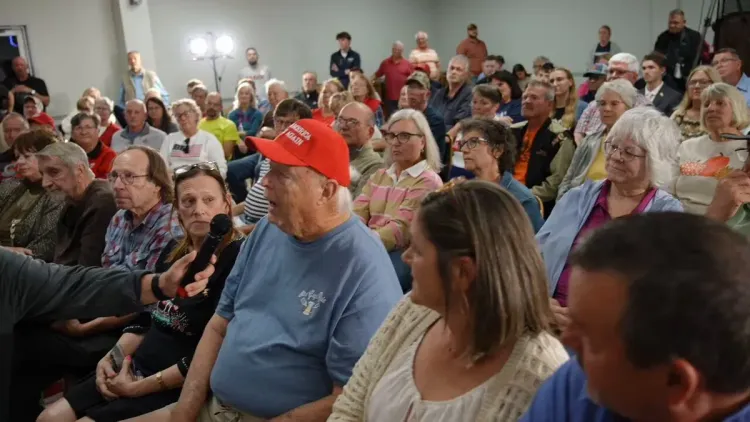
Posting on October 11, 2026, Ramaswamy recounted the exchange directly: a constituent wanted to know what, concretely, a governor could do to bring electricity costs down. His reply cut to two pillars — 'supply the grid with more energy' and pursue 'specific steps both by EO and legislation to get there.' No hedging, no committee-speak. The answer was deliberately structural: high electricity bills, in his framing, are a supply problem first, and the fix lives in the governor's office.
The executive-order-plus-legislation two-track strategy
The dual-track approach — executive orders alongside legislation — signals Ramaswamy intends to move fast on what a governor can do unilaterally while simultaneously building a durable statutory framework. Executive orders can direct state agencies, accelerate permitting for new generation capacity, or cut regulatory friction overnight. Legislation locks those gains in and goes further, potentially reshaping the state's energy procurement rules or utility oversight. Together they represent the full toolkit a state executive can deploy without waiting on Washington.
Why Ohio's energy costs make this a live political issue
Ohio sits in the heart of a region where industrial energy demand and household bills have both climbed in recent years, making electricity affordability a kitchen-table issue well beyond Fulton County. A supply-side answer — building or unlocking more generation rather than capping prices — is a distinct philosophical bet: that abundance, not regulation, is the faster path to relief. For Ramaswamy, whose national profile was built on a critique of institutional inefficiency, it is also a consistent ideological thread: the price is high because the supply side is constrained, and the state is the most direct lever to unconstrain it.
Whether that bet plays out depends on the specifics — which energy sources, which permitting reforms, which legislative partners — details the video accompanying the post is expected to flesh out. But the political message landed clean: a voter asked a plain question, and Ramaswamy gave a plain, structural answer. In a cycle where energy costs are a top voter concern, that exchange from Fulton County may travel well beyond it.
Point of View
And it fits neatly into the broader Republican pivot toward energy abundance as an economic remedy. By grounding the policy pitch in a constituent exchange in Fulton County — a largely rural, working-class corner of northwest Ohio — he signals a retail-politics sensibility uncommon for a candidate whose national profile skews technocratic. The EO-plus-legislation dual track also previews an executive style: move fast on what you control, then institutionalise it. For Indian investors and multinationals with Ohio energy exposure, the direction of travel — more supply, lighter permitting friction — is worth watching as the governor's race shapes up.
NationPress
11 Oct 2026
Frequently Asked Questions
What is Vivek Ramaswamy's plan to lower electric bills in Ohio?
Ramaswamy says he would bring down electric bills by supplying the grid with more energy, using both executive orders for fast action and legislation for lasting structural change.
Is Vivek Ramaswamy running for Governor of Ohio?
As of October 2026, Ramaswamy is actively campaigning for the governorship of Ohio, engaging voters directly on issues like energy affordability.
What can an Ohio governor do to lower electricity costs?
A governor can issue executive orders to streamline energy permitting, direct state agencies to prioritise generation capacity, and work with the legislature to reform utility procurement rules — all of which Ramaswamy says he intends to pursue.
What is the difference between an executive order and legislation for energy policy?
An executive order lets the governor act immediately through state agencies without legislative approval, while legislation creates durable law that binds future administrations and enables broader structural reforms.
Where is Fulton County, Ohio?
Fulton County is a largely rural county in northwest Ohio, bordering Michigan and Indiana, known for agriculture and manufacturing.