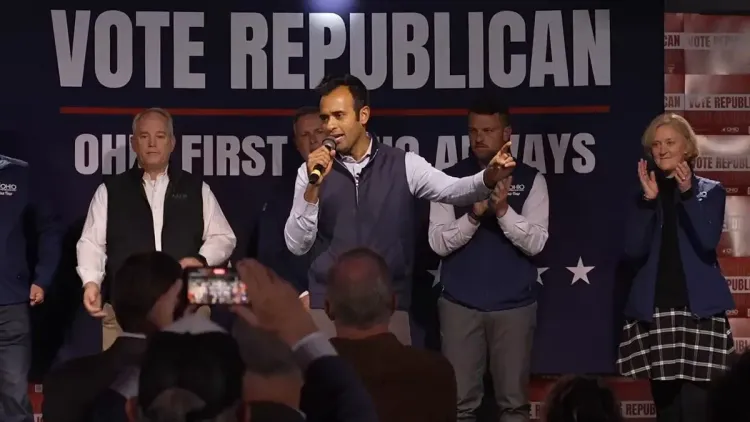
Ramaswamy rallies Cleveland on Election Eve with tax, crime pledge
Synopsis
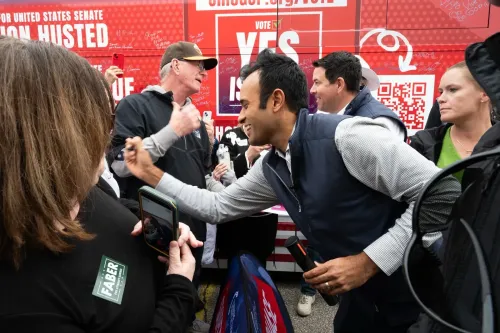
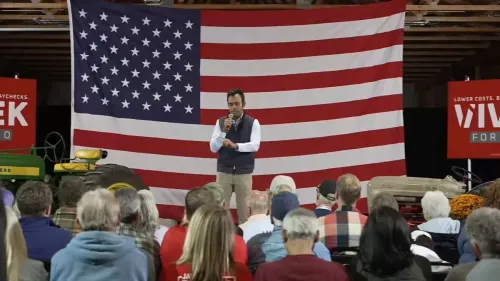
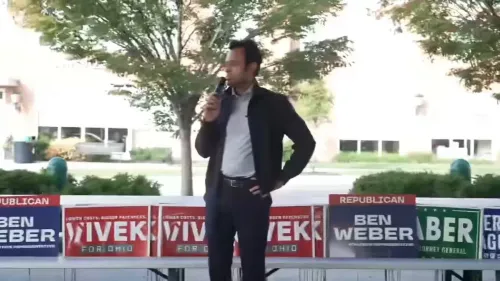
Vivek Ramaswamy addressed an Election Eve crowd in Cleveland, Ohio, pledging to slash property taxes and electric bills while crushing crime — pitching the agenda explicitly at voters across party lines ahead of November 2026 balloting.
Key Takeaways
Ramaswamy held an Election Eve rally in Cleveland, Ohio on November 2-3, 2026 .
He promised to slash property taxes and electric bills for all voters regardless of party.
A pledge to crush crime was paired with fiscal-relief messaging in a Democratic-leaning city.
The non-partisan framing targets Ohio's independent and cross-pressured voter bloc.
Ramaswamy's economic pitch draws from his 2024 presidential campaign and DOGE cost-cutting work.
Ohio election results will test whether the cross-party appeal translates to votes.
On the eve of the November 2026 elections, entrepreneur Vivek Ramaswamy took the stage in Cleveland, Ohio, delivering a pointed three-promise pitch — slashed property taxes, lower electric bills, and crushed crime — and pointedly directing it at voters of every party stripe.
The three-point promise that landed in Cleveland
Ramaswamy's message was stripped to the bone: 'We're going to slash your property taxes, slash your electric bills, and crush crime regardless of your party or who you vote for.' That last clause is the tell. Framing bread-and-butter economic relief as non-partisan is a deliberate play for Ohio's significant bloc of independent and cross-pressured voters — the kind who backed Barack Obama in 2012 and then flipped to Donald Trump in 2016. Cleveland, the state's largest city and a Democratic stronghold, is an unusual venue for this message. Choosing it sends a signal.
Property taxes and electric bills: the Midwest's live-wire issues
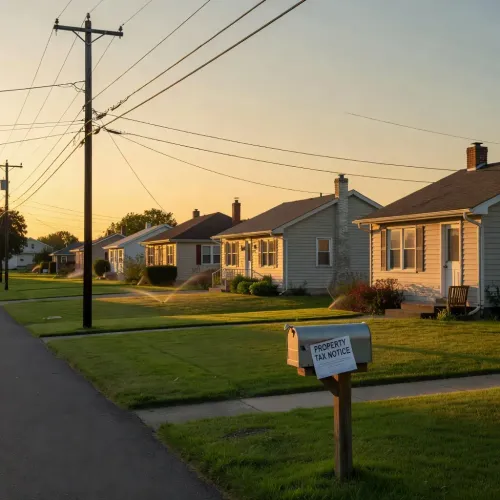
Ohio homeowners have faced rising property-tax assessments driven by post-pandemic real-estate revaluations, squeezing middle-class budgets in cities and suburbs alike. On energy costs, Ohio's industrial economy makes electricity rates a kitchen-table concern for both households and small manufacturers. The Republican policy lineage Ramaswamy draws from — broad deregulation, expanded domestic energy production, and state-level tax relief — has been tested in several Midwest state legislatures since 2022, with mixed results that will define the credibility of the pledge going forward.
Law-and-order as the third rail
The crime plank is equally calculated. Cleveland has battled persistently elevated violent-crime rates, and 'crush crime' rhetoric resonates beyond registered Republicans in a city where public-safety frustration cuts across neighbourhood and demographic lines. Pairing fiscal relief with law-and-order in a single breath is a formula Ramaswamy has refined since his 2024 presidential run and his subsequent work co-leading the Department of Government Efficiency (DOGE) advisory effort under the Trump administration — where cost-cutting credibility became central to his public identity.
With Ohio election results set to come in on November 3, 2026, the question is whether a message engineered to travel across party lines can actually convert in one of the Midwest's most closely watched battleground states.
Point of View
Giving the pitch material substance beyond sloganeering. Positioning himself as indifferent to the voter's party label is a page from the Trump 2016 playbook, updated with DOGE-era fiscal credibility. How Ohio's results land will signal whether this cross-party economic populism has legs in industrial-state midterms.
NationPress
3 Nov 2026
Frequently Asked Questions
What did Vivek Ramaswamy promise at the Cleveland rally?
Ramaswamy pledged to slash property taxes, reduce electric bills, and crush crime, framing all three commitments as benefits for voters regardless of their party affiliation.
Why did Ramaswamy campaign in Cleveland, a Democratic city?
Cleveland is Ohio's largest city and a Democratic stronghold; campaigning there signals an effort to peel off independent and cross-pressured voters rather than only mobilise the Republican base.
What is Vivek Ramaswamy's connection to DOGE?
Ramaswamy co-led the Department of Government Efficiency advisory effort under the Trump administration after his 2024 Republican presidential campaign, building a public identity around fiscal discipline and cost-cutting.
What are the key issues for Ohio voters in the 2026 elections?
Rising property-tax assessments driven by post-pandemic real-estate revaluations, elevated electricity costs for households and manufacturers, and persistent urban crime rates are among the top concerns for Ohio voters heading into the November 2026 elections.
When are the Ohio election results expected?
Voting takes place on November 3, 2026 , with results expected to emerge on election night, making the Cleveland rally one of the final campaign pushes before ballots are counted.