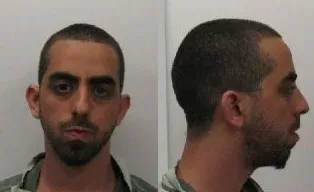
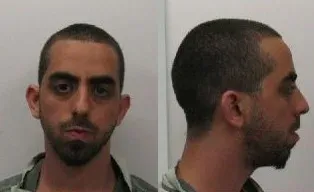
Salman Rushdie attacker Hadi Matar faces federal terrorism trial in Buffalo
Synopsis
Hadi Matar — already serving 25 years for attempting to murder Salman Rushdie — is now in a federal courtroom facing transnational terrorism charges that could put him away for life. The prosecution's core argument: the 2022 stabbing wasn't a lone act of rage, but an attempt to fulfil Ayatollah Khomeini's decades-old fatwa. Rushdie himself is expected to testify.
Key Takeaways
Hadi Matar went on trial on transnational terrorism charges in federal court in Buffalo, New York on Wednesday .
Prosecutors allege Matar attacked Salman Rushdie to fulfil the fatwa issued by the late Ayatollah Khomeini against the author.
Matar was previously convicted in New York State court of attempted murder and sentenced to 25 years in prison .
A federal terrorism conviction could see Matar face life in prison under a separate set of laws.
The attack at the Chautauqua Institution in 2022 blinded Rushdie in his right eye ; he is expected to testify at the trial.
Matar's defence argues he acted alone out of personal religious outrage, not as part of a conspiracy.
Hadi Matar, the man who stabbed author Salman Rushdie on stage in 2022, went on trial on transnational terrorism charges in a federal court in Buffalo, New York, on Wednesday. The prosecution alleges Matar carried out the attack to fulfil an Iranian religious edict — a fatwa — calling for Rushdie's death, making this the first federal terrorism prosecution arising from the assault.
What the Prosecution Alleges
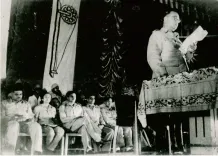
Assistant federal prosecutor Timothy Lynch told the court in Buffalo that Matar attacked Rushdie to 'fulfil the fatwa' — the decree issued by the late Ayatollah Khomeini demanding the killing of the Booker Prize-winning author on the grounds that his novel The Satanic Verses was considered blasphemous by Islamic clerics. The fatwa, issued decades ago, had forced Rushdie into years of hiding under British government protection.
Matar's Prior Conviction and the Federal Case
Matar, a US citizen of Lebanese descent, was convicted last year in a New York State court of attempted murder and sentenced to 25 years in prison. He now faces a separate set of federal terrorism charges. Under the US legal system, state and federal laws operate independently, allowing prosecution under both local and federal statutes for a single incident. If convicted on the federal terrorism count, Matar could face life in prison.
The Defence's Position
Matar has denied the conspiracy charges. His lawyer, Nathaniel Barone, argued that his client acted alone and, as a deeply religious person, was 'enraged' against Rushdie — framing the act as personal rather than part of a coordinated plot. The distinction between individual grievance and organised terrorism is expected to be central to the trial's outcome.
The Attack and Its Aftermath
The stabbing took place on stage at the Chautauqua Institution, a literary and arts centre approximately 600 kilometres from New York City, where Rushdie had been scheduled to speak — ironically — about the protection of writers. The assault left Rushdie blind in his right eye; he now lives in the US wearing an eyepatch. He has since written a memoir, Knife: Meditations After an Attempted Murder, documenting the attack and its aftermath, and is expected to testify at the federal trial.
What Comes Next
The federal trial, held in Buffalo near the Canadian border, is being closely watched as a test of US transnational terrorism statutes in cases involving religiously motivated violence. Rushdie's anticipated testimony is likely to be a pivotal moment in proceedings. A verdict could set a significant precedent for how American courts prosecute attacks linked to foreign religious edicts.
Point of View
But for how the US signals it will treat fatwa-motivated violence on its soil. The case also resurfaces an uncomfortable question: decades after Khomeini's edict forced Rushdie underground, the fatwa's lethal reach has proven disturbingly durable. Whether American courts can deliver a verdict that closes that chapter — or merely adds another chapter to it — remains to be seen.
NationPress
21 Oct 2026
Frequently Asked Questions
What charges does Hadi Matar face in the federal trial?
Hadi Matar faces transnational terrorism charges in a federal court in Buffalo, New York. These are separate from his prior New York State conviction for attempted murder, and a federal terrorism conviction could result in a life sentence.
Why is Matar being tried again if he was already convicted?
In the US, state and federal laws are independent, allowing prosecution under both sets of statutes for a single incident. Matar was convicted in state court for attempted murder and sentenced to 25 years; the federal case targets the alleged terrorist motivation behind the attack.
What is the fatwa linked to the Salman Rushdie attack?
The fatwa was a religious edict issued by the late Ayatollah Khomeini calling for the killing of Salman Rushdie, whose novel The Satanic Verses was deemed blasphemous by Islamic clerics. It forced Rushdie into years of hiding under British government protection.
What injuries did Salman Rushdie sustain in the 2022 attack?
The stabbing at the Chautauqua Institution in 2022 left Rushdie blind in his right eye. He now lives in the US wearing an eyepatch and has written a memoir, Knife: Meditations After an Attempted Murder, about the attack.
Is Salman Rushdie expected to testify at the trial?
Yes, Rushdie is expected to testify at the federal trial in Buffalo. His testimony is anticipated to be a significant moment in the proceedings against Matar.