Russia strikes Ukrainian military targets in massive overnight attack
Synopsis
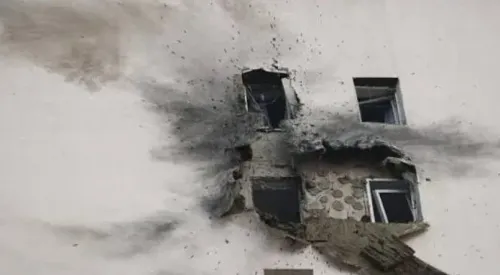
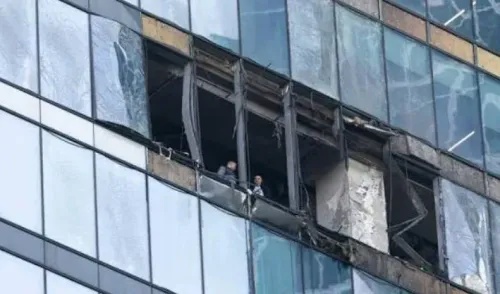
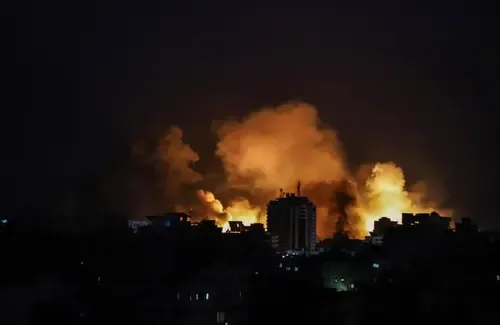
Russia launched what Kyiv's own mayor called 'the largest attack ever' overnight, with strikes spanning 153 districts across five Ukrainian regions. Moscow framed it as a retaliatory operation against military targets — but the scale, and the targeting of fuel and energy facilities, signals a significant escalation in the aerial campaign.
Key Takeaways
Russian Armed Forces struck military industry and energy targets across Ukraine on Thursday, 3 July using long-range precision weapons and drones.
Strikes reportedly hit 153 districts , including military airfield infrastructure in Dnipropetrovsk , Poltava , Cherkasy , Chernihiv , and Kyiv regions.
Russia claims its air defences shot down 11 aerial bombs and 631 Ukrainian aircraft in the past 24 hours — figures not independently verified.
Kremlin spokesperson Dmitry Peskov said strikes targeted 'exclusively military or near-military targets'; General Gerasimov briefed President Putin on results Thursday morning.
Kyiv Mayor Vitali Klitschko was quoted calling it 'the largest attack ever,' a characterisation cited by Russian officials in their own statements.
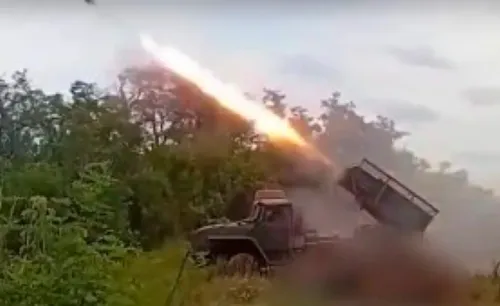
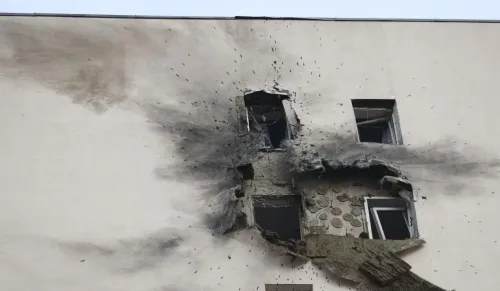
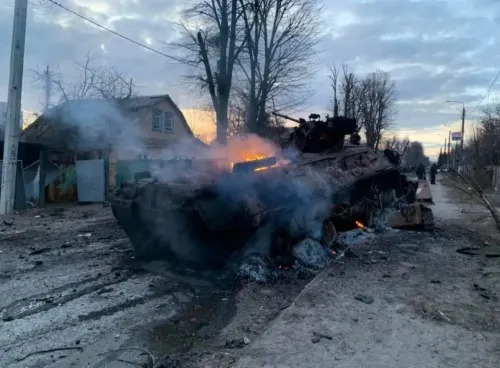
The Russian Armed Forces on Thursday, 3 July carried out a large-scale strike on military industry enterprises and fuel and energy facilities across Ukraine, deploying long-range precision weapons from air, land, and sea alongside strike drones, the Russian Defence Ministry said. The assault, described by Russian officials as a retaliatory operation, targeted sites in multiple regions including Dnipropetrovsk, Poltava, Cherkasy, Chernihiv, and Kyiv, according to local media reports.
Scale of the Strike
According to the Russian Defence Ministry, Russian forces struck launch sites for Ukrainian long-range drones and temporary deployment sites for Ukrainian Armed Forces units and foreign mercenaries across 153 districts in the preceding 24 hours. The ministry stated that operational-tactical aviation, strike unmanned aerial vehicles, missile forces, and artillery were all deployed in the operation.
Russia's air defence systems reportedly shot down 11 aerial bombs and 631 Ukrainian Armed Forces aircraft in the same 24-hour period, according to Russia's state-owned Tass news agency. These figures have not been independently verified.
What Russian Officials Said
Russian Foreign Ministry spokesperson Maria Zakharova claimed the overnight targets had been used by what she called 'the Kyiv regime to kill civilians.' Citing remarks attributed to Kyiv Mayor Vitali Klitschko — 'It was a terrible night for Kyiv. The largest attack ever' — Zakharova wrote on her Telegram channel: 'not against peaceful Kyiv, but against the military-strategic targets used by the Kyiv regime to kill civilians.'
Kremlin spokesperson Dmitry Peskov said the strikes targeted 'exclusively military or near-military targets.' He added that Chief of the General Staff Valery Gerasimov briefed President Vladimir Putin on Thursday morning on the results of what Moscow characterised as a massive retaliatory strike against targets in Kyiv and other populated areas.
Regions Targeted
Military airfield infrastructure was reportedly struck in the Dnipropetrovsk, Poltava, Cherkasy, Chernihiv, and Kyiv regions, local media reported. Fuel and energy facilities were also among the reported targets, a pattern consistent with previous large-scale Russian strikes aimed at degrading Ukraine's power grid and logistics.
Context and Significance
This comes amid an ongoing and intensifying aerial campaign by Russia, which has repeatedly struck Ukrainian energy infrastructure since late 2022. The reference to 'foreign mercenaries' in the ministry's statement reflects Moscow's longstanding framing of Western military support to Ukraine as direct involvement. Notably, Ukrainian and Western officials have consistently disputed Russian claims about the nature and scale of such strikes, and independent verification of casualty or destruction figures remains difficult. The scale of the operation — spanning five regions and 153 districts — suggests one of the broader single-night strike packages reported in recent months.
As the conflict enters another phase of aerial escalation, international attention will focus on Ukraine's air defence capacity and the humanitarian toll on civilian infrastructure.
Point of View
Five regions, airfield infrastructure and energy facilities simultaneously — marks a notable intensification even by the standards of Russia's sustained aerial campaign. Moscow's framing of the operation as purely retaliatory and targeting only military sites is a familiar claim that has repeatedly been contested by Ukrainian authorities and independent monitors. What is harder to dismiss is Klitschko's own characterisation of the night as the worst Kyiv has seen — a detail Russian officials were quick to amplify. The continued targeting of fuel and energy infrastructure, regardless of the stated rationale, has a documented civilian impact that no official statement can neutralise. The broader question is whether this escalation triggers a corresponding shift in Western weapons supply or air defence commitments to Ukraine.
NationPress
1 Oct 2026
Frequently Asked Questions
What did Russia strike in Ukraine on 3 July?
Russia struck military industry enterprises, fuel and energy facilities, military airfield infrastructure, and drone launch sites across Ukraine, targeting 153 districts in 24 hours. The strikes used long-range precision weapons from air, land, and sea, as well as strike drones, according to the Russian Defence Ministry.
Which Ukrainian regions were targeted in the Russian strike?
Military airfield infrastructure was reportedly struck in the Dnipropetrovsk, Poltava, Cherkasy, Chernihiv, and Kyiv regions, according to local media reports. Fuel and energy facilities were also targeted across multiple areas.
What did Russia claim about the purpose of the strikes?
Kremlin spokesperson Dmitry Peskov said the strikes targeted 'exclusively military or near-military targets' and characterised the operation as a massive retaliatory strike. Russian Foreign Ministry spokesperson Maria Zakharova claimed the sites had been used 'to kill civilians.'
How many Ukrainian aircraft did Russia claim to have shot down?
Russia's state-owned Tass agency reported that Russian air defence systems shot down 11 aerial bombs and 631 Ukrainian Armed Forces aircraft in the 24-hour period. These figures have not been independently verified.
Who briefed President Putin on the strikes?
Chief of the General Staff of the Russian Armed Forces, General Valery Gerasimov, briefed President Vladimir Putin on Thursday morning on the results of the overnight strike operation, according to Kremlin spokesperson Dmitry Peskov.