South Korea PM vows all-out effort to stop AI cheating at 2027 CSAT
Synopsis
South Korea's most consequential exam is days away — and a bombshell confession has exposed a new frontier of cheating. After a tax exam topper admitted using generative AI, hidden cameras and a smartphone to ace an 'impossible' test, PM Han Seong-sook has put the entire government on alert, raising a question every testing authority worldwide now faces: can institutions keep pace with AI?
Key Takeaways
Prime Minister Han Seong-sook pledged on 16 November 2026 to mobilise 'all national capabilities' against AI-assisted cheating at the upcoming CSAT .
The trigger: the top scorer of South Korea's certified tax accountant exam confessed to using a miniature camera , smartphone , and generative AI to cheat in both rounds.
The individual also admitted to using the same method in a certified public accountant exam , raising fears of undetected misconduct across multiple state tests.
An interagency emergency response team is being established for the 2027 CSAT , with a mandate to develop AI-powered detection technologies.
The CSAT was scheduled to take place just three days after the Prime Minister's announcement.
Han has directed all government ministries to develop and implement anti-cheating measures for state-administered examinations.
South Korea's Prime Minister Han Seong-sook on Monday, 16 November 2026, pledged to mobilise 'all national capabilities' to prevent artificial intelligence (AI)-assisted cheating at this week's nationwide College Scholastic Ability Test (CSAT), just three days away. The pledge came hours after the top scorer of this year's certified tax accountant exam confessed to using generative AI and miniature surveillance hardware to cheat his way to unrealistically high marks.
The Confession That Triggered a National Alert
The unnamed individual admitted on Sunday to deploying a miniature camera, a smartphone, and generative AI across both rounds of the certified tax accountant examination — a test widely regarded as one of South Korea's most difficult professional assessments. His scores, officials noted, were considered statistically impossible without external assistance.
The man further disclosed that he had used an identical method to cheat on a certified public accountant exam, raising the alarming possibility that AI-assisted misconduct may have already compromised multiple high-stakes state examinations without detection.
Government's Emergency Response
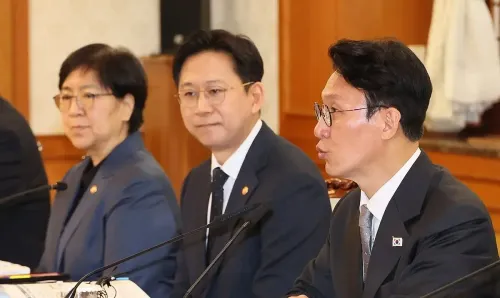
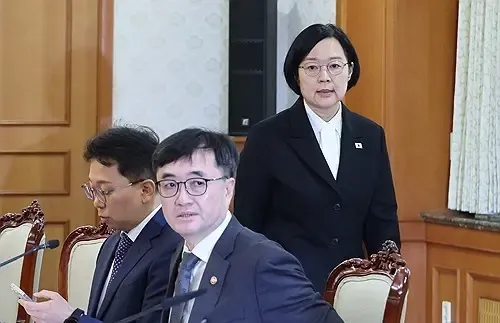
'We must concentrate all national capabilities to thoroughly prepare against any misconduct involving the misuse of advanced AI technology,' Prime Minister Han said during an emergency meeting convened to address the crisis.
Han announced the formation of an interagency emergency response team specifically for the 2027 CSAT — the government's designation for this year's upcoming exam — tasked with developing and implementing both preventive and follow-up measures. She further directed officials to extend similar safeguards to all other state-administered examinations.
Notably, Han also called for scrutiny of results even after the exam concludes. 'Should abnormal signs defying common sense be found even after the exam, they should be thoroughly looked into based on objective data,' she said, underscoring the government's intent to treat post-exam data anomalies as grounds for formal investigation.
Why Conventional Methods Are No Longer Enough
'With AI technology advancing rapidly, there are limits in conventional exam management methods to responding to new forms of cheating,' the Prime Minister acknowledged. She specifically flagged the emergence of AI-enabled glasses, ultra-small electronic devices, and real-time assistance from accomplices outside examination halls as threats that existing protocols cannot adequately address.
Han instructed officials to explore AI-powered detection technologies and develop a comprehensive national strategy for examination security. This comes amid broader global concern that generative AI tools have outpaced institutional safeguards in academic and professional testing environments.
What It Means for CSAT Candidates and Beyond
The CSAT is the single most consequential examination in South Korean society, determining university admissions and, by extension, career trajectories for hundreds of thousands of students. Any credible threat to its integrity carries enormous social and political weight. The confession has deepened public anxiety not just about this year's sitting, but about the reliability of results from past exams that may have gone unchallenged.
'Creating a fair testing environment that the people can trust is a fundamental duty that the government must fulfil,' Han said. 'Upholding the fairness of examinations is directly linked to public trust, and each government ministry should develop effective measures and ensure they are implemented thoroughly.'
With the CSAT days away and an emergency task force now in motion, South Korea's response to AI-assisted cheating will be closely watched as a potential template for other countries grappling with the same technological challenge.
Point of View
But because it almost didn't surface — and raises the uncomfortable question of how many similar cases have gone undetected. PM Han's response is politically necessary but operationally vague; an 'interagency task force' is a process, not a solution. The deeper issue is that AI-assisted cheating is not a Korean problem — it is a global one — and Seoul's next moves will be studied by education ministries from Delhi to London.
NationPress
16 Nov 2026
Frequently Asked Questions
Why is South Korea's PM mobilising 'all national capabilities' against AI cheating?
Prime Minister Han Seong-sook issued the directive after the top scorer of South Korea's certified tax accountant exam confessed to using generative AI, a miniature camera, and a smartphone to cheat. The confession raised fears that similar methods could be used in the upcoming CSAT, the country's most important college entrance examination, just days away.
What did the exam cheater confess to doing?
The individual admitted to using a miniature camera, a smartphone, and generative AI tools in both rounds of the certified tax accountant examination, achieving scores officials described as statistically impossible by legitimate means. He also disclosed using the same technique in a certified public accountant exam.
What is the CSAT and why does it matter?
The College Scholastic Ability Test (CSAT) is South Korea's nationwide college entrance examination, sitting at the apex of its education system and determining university admissions for hundreds of thousands of students each year. Its integrity is considered a matter of national importance, with results shaping careers and social outcomes.
What measures is the South Korean government taking?
The government is forming an interagency emergency response team specifically for the 2027 CSAT to develop and deploy AI-powered detection technologies. PM Han also directed officials to extend preventive measures to all other state-administered exams and to investigate any statistically 'abnormal' results even after the exam is completed.
Could AI cheating have gone undetected in other South Korean exams?
According to South Korean authorities, the confession raised serious concerns that AI-assisted cheating may be more widespread than previously recognised and could have gone unnoticed in examinations beyond the tax accountant test. Officials have been instructed to review other state exams for similar anomalies.