TOEIC cheating: AI glasses used in South Korea's first such case
Synopsis
South Korea has recorded its first known cases of AI glasses being used to cheat on the TOEIC English proficiency test — and the incidents are already prompting authorities to consider banning such devices from the country's high-stakes college entrance exam. As AI hardware becomes harder to distinguish from regular eyewear, test administrators worldwide face a detection problem that training alone may not solve.
Key Takeaways
Two individuals were caught cheating on the TOEIC test using AI glasses on 10 May and 31 May — the first such cases in South Korea .
The Korea TOEIC Committee invalidated both results and imposed a four-year ban on the individuals.
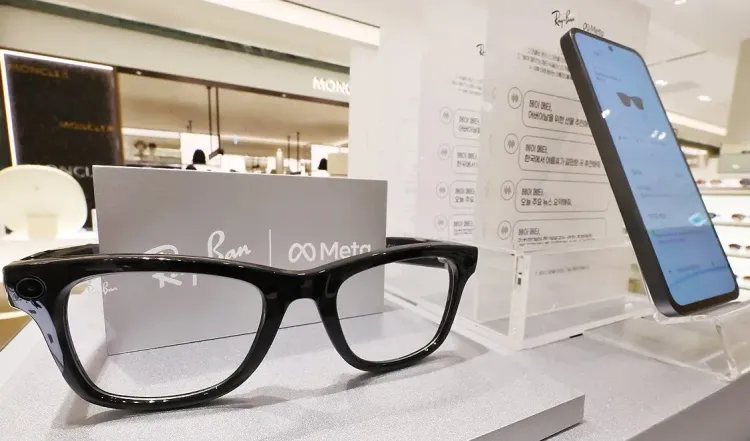
AI glasses use cameras, microphones, and generative AI to relay real-time answers to the wearer.
Some AI glasses models closely resemble standard spectacles, complicating visual detection.
Education authorities are reportedly considering banning AI wearables from South Korea's annual college entrance exam .
SK Telecom , NTT Inc. , and Chunghwa Telecom separately announced a joint US$500 million AI investment fund called Catalight Capital .
Two individuals have been caught cheating on the TOEIC English-language proficiency test using artificial intelligence (AI) glasses in what the Korea TOEIC Committee has confirmed as the first such incident in South Korea. The cases were detected on 10 May and 31 May, respectively, after proctors flagged suspicions about the devices being worn during the exam.
How the Cheating Was Detected
Proctors at the test centres reported their suspicions after observing the two candidates wearing what appeared to be AI-enabled eyewear. The Korea TOEIC Committee, which administers the exam, confirmed both detections and subsequently invalidated the test results of both individuals. Under committee regulations, the two are now barred from sitting the TOEIC for the next four years.
What AI Glasses Can Do
AI glasses combine built-in cameras and microphones with generative AI capabilities, allowing the device to analyse images captured in real time and relay information back to the wearer — either through the lenses or via built-in speakers. Critically, several recently released models are designed to closely resemble ordinary spectacles, making visual detection without specialised training considerably difficult.
Steps Being Taken to Prevent Future Incidents
The committee said it has begun training proctors specifically to identify AI glasses during examinations. Education authorities have also reportedly been weighing a ban on bringing such devices into test centres for the country's annual college entrance exam — a far higher-stakes assessment than the TOEIC. This comes amid a broader global concern over AI-assisted academic dishonesty, as wearable AI hardware becomes increasingly accessible and indistinguishable from standard eyewear.
Wider Context: South Korea's AI Investment Push
Separately, SK Telecom Co. (SKT) announced on Wednesday that it has partnered with NTT Inc. of Japan and Chunghwa Telecom Co. of Taiwan to establish Catalight Capital, a jointly managed fund of approximately US$500 million targeting AI startups across North America, Asia, and Europe. Investment areas span the full AI value chain — from cooling infrastructure and AI chips to service applications. Chip manufacturer SK hynix Inc. is also reportedly preparing to join the fund. 'We expect the fund will serve as an opportunity to connect the AI, ICT, semiconductor and network technology capabilities of East Asian countries, including South Korea and Japan, with the global innovation ecosystem,' SKT said in a statement. The dual developments underscore South Korea's position at the intersection of AI adoption and AI investment — grappling simultaneously with the disruptive risks and the commercial opportunities the technology presents.
Point of View
But a prohibition without enforcement technology is largely symbolic. The deeper issue is that generative AI has collapsed the barrier between knowing an answer and having access to one, and no exam format designed before 2022 was built to account for that.
NationPress
19 Sept 2026
Frequently Asked Questions
What happened in South Korea's TOEIC AI glasses cheating case?
Two individuals were caught using AI-enabled glasses to cheat during the TOEIC English proficiency test on 10 May and 31 May respectively — the first confirmed cases of this kind in South Korea. The Korea TOEIC Committee invalidated their results and banned both from taking the test for four years.
How do AI glasses enable cheating in exams?
AI glasses embed cameras and microphones that capture exam content and feed it to a generative AI system, which then relays answers back to the wearer through the lenses or built-in speakers. Newer models are designed to look like ordinary spectacles, making them hard to spot.
What action has the Korea TOEIC Committee taken?
The committee invalidated the test results of both individuals and imposed a four-year ban on their participation in future TOEIC exams. It has also begun training proctors to better identify AI-enabled wearables during tests.
Could AI glasses be banned from South Korea's college entrance exam?
Education authorities are reportedly considering a ban on AI wearable devices at test centres for South Korea's annual college entrance exam, though no formal decision has been announced as of the report.
What is Catalight Capital and how is it related to this story?
Catalight Capital is a jointly managed AI investment fund of approximately US$500 million established by SK Telecom, Japan's NTT Inc., and Taiwan's Chunghwa Telecom. While separate from the cheating incident, it reflects South Korea's simultaneous role as both a country managing AI-related risks and a major investor in AI technologies globally.