Uttarakhand CM Office: Pithoragarh Woman Scales Self-Reliance via Poultry
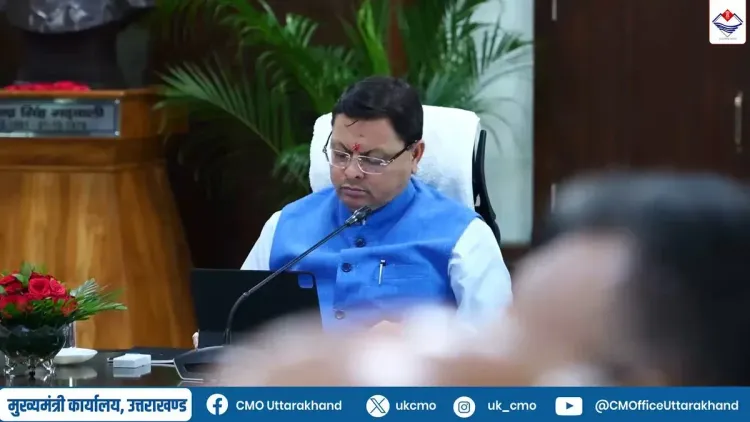
Synopsis
The Uttarakhand Chief Minister's Office spotlights Manju Devi of village Vishkholi in Pithoragarh, who is scaling up her poultry farming business with support from the state's Gramoththan Pariyojana, becoming a model of rural women's self-reliance in a remote border district.
Key Takeaways
Manju Devi of village Vishkholi, Pithoragarh is expanding a poultry farming enterprise with state support.
The Gramoththan Pariyojana (Village Upliftment Project) is the Uttarakhand government scheme enabling her livelihood growth.
The Uttarakhand Chief Minister's Office amplified her story on November 3, 2026 , signalling a wider push for scheme enrollment.
Pithoragarh is a border district sharing frontiers with Nepal and Tibet, making rural retention a strategic as well as economic priority.
Poultry farming offers low entry costs and short production cycles — well-suited to the district's terrain and economic profile.
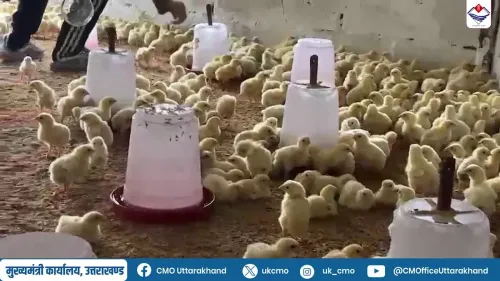
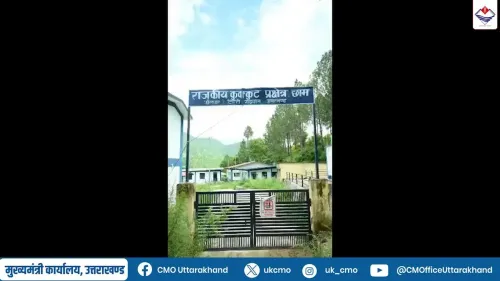
From a small village in the high hills of Pithoragarh, a woman named Manju Devi is quietly rewriting what economic independence looks like in rural Uttarakhand — one poultry shed at a time. The Chief Minister's Office of Uttarakhand highlighted her story on Tuesday, November 3, 2026, spotlighting how the state's Gramoththan Pariyojana (Village Upliftment Project) is turning grassroots ambition into measurable livelihoods.
The post, shared from the official CMO handle, notes that Manju Devi of village Vishkholi, Pithoragarh district, is expanding her poultry farming enterprise with direct support from the Gramoththan scheme — stepping steadily toward aatmnirbharta (self-reliance), as the CMO put it.
Vishkholi to a viable business: Manju Devi's journey
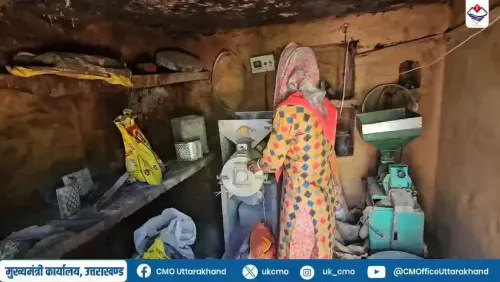
Poultry farming is one of the fastest routes to supplementary income in Uttarakhand's mountain villages, where arable land is scarce and seasonal migration has long drained rural households of working-age members. For women like Manju Devi, a structured support scheme — providing training, seed capital, or supply-chain linkages — can be the difference between subsistence and a scalable enterprise. The CMO's post frames her expansion not as charity but as entrepreneurship backed by state infrastructure.
Gramoththan Pariyojana's role in Uttarakhand's rural economy
The Gramoththan Pariyojana is a Uttarakhand government initiative designed to catalyse rural livelihoods through sector-specific support — agriculture, animal husbandry, cottage industries, and allied activities. Poultry farming fits squarely within its ambit, offering relatively low entry costs, short production cycles, and steady demand. By channelling institutional support to individual beneficiaries in remote districts like Pithoragarh — which borders Nepal and Tibet and has historically lagged in economic connectivity — the scheme targets some of the state's most underserved geography.
The CMO's decision to amplify Manju Devi's story is also a communications signal: the government is curating proof-of-concept narratives ahead of what is likely a push to widen scheme enrollment in border and hill districts.
Why Pithoragarh stories matter beyond the hills
Pithoragarh is not just remote — it is strategically significant. A district that shares international borders demands a resident, economically stable population. Rural out-migration hollows out border villages, creating both a demographic and a security concern. Programmes that anchor women-led micro-enterprises in places like Vishkholi serve a dual purpose: economic empowerment and demographic retention. Manju Devi's expanding poultry unit is, in that sense, a small but concrete data point in a much larger state strategy.
The hills are watching — and so, it seems, is the Chief Minister's Office.
Point of View
It carries strong political and administrative proof-of-concept value for Uttarakhand's broader rural economy agenda.
NationPress
3 Nov 2026
Frequently Asked Questions
Who is Manju Devi from Pithoragarh?
Manju Devi is a resident of village Vishkholi in Pithoragarh district , Uttarakhand, who is expanding her poultry farming business with support from the state government's Gramoththan Pariyojana scheme.
What is Gramoththan Pariyojana in Uttarakhand?
The Gramoththan Pariyojana is a Uttarakhand government initiative aimed at boosting rural livelihoods by providing support in sectors like agriculture, animal husbandry, and cottage industries to beneficiaries in villages across the state.
How does poultry farming help women in Uttarakhand villages?
Poultry farming offers women in Uttarakhand's hill villages a low-cost, scalable livelihood option with steady demand, helping them achieve financial independence without requiring large land holdings or heavy capital investment.
Why does Pithoragarh need rural livelihood schemes?
Pithoragarh is a remote border district that faces challenges of seasonal out-migration and limited economic connectivity. Rural livelihood schemes help retain population and build economic stability in an area that also holds strategic importance due to its borders with Nepal and Tibet.
What did the Uttarakhand CMO post on November 3, 2026?
On November 3, 2026 , the Chief Minister's Office of Uttarakhand shared a post highlighting how Manju Devi of Vishkholi village in Pithoragarh is expanding her poultry farming business under the Gramoththan Pariyojana and moving toward self-reliance.